DbcultAccessing Vault...
Cult Review
Senior Film Conservator
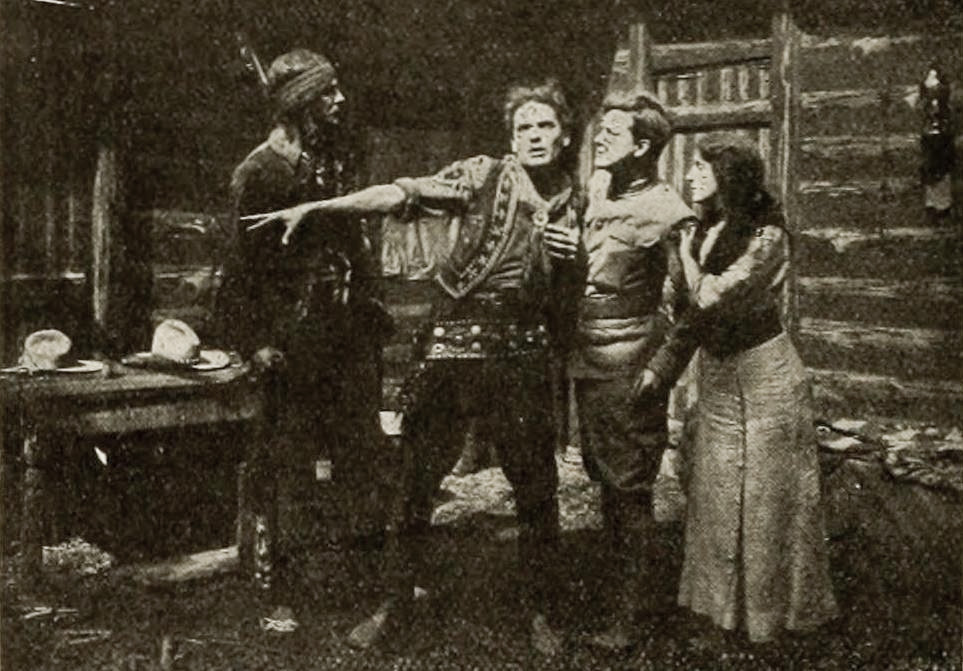
There's a certain undeniable charm to the cinematic narratives that emerged from the nascent years of filmmaking – stories often painted with broad, dramatic strokes, yet imbued with an earnestness that transcends their technical limitations. Hearts United, a film that plunges headfirst into a maelstrom of mistaken identity, avarice, and the unyielding pursuit of true affection, stands as a testament to this era's storytelling prowess. It’s a melodrama, yes, but one that weaves its intricate tapestry of human folly and fortitude with a compelling rhythm, drawing the viewer into a world where morality is tested at every turn and the lines between good and evil are starkly, if sometimes theatrically, drawn.
From its very inception, the film sets a stage ripe for dramatic convolution. We are introduced to Professor Allen Dodd, a figure of academic distinction, whose seemingly benign desire to unite his daughter, Alma, with the son of an old friend, Robert Harris, inadvertently triggers a chain of events both tragic and thrilling. The professor’s well-intentioned matchmaking, while rooted in a desire for his daughter's happiness and perhaps a touch of social engineering, becomes the catalyst for a grand deception. The untimely demise of the genuine Robert Harris, brought on by a weak heart and the sheer excitement of an impending journey, is a narrative contrivance that, while perhaps a touch convenient, immediately propels the plot into motion. It’s a classic setup for the melodramatic stage, where fate's cruel hand often clears the path for human ambition and deceit.
Enter Robert Haines, portrayed with a chilling blend of charm and menace by Charles T. Danforth. Haines is not merely a villain; he is a force of nature, driven by an insatiable hunger for wealth. His uncanny resemblance to the deceased Harris is the linchpin of the entire narrative, a stroke of narrative luck that he exploits with ruthless efficiency. This isn't just about a con; it's about the complete appropriation of another man's identity, a bold and audacious gamble for a fortune. Danforth's performance, even in the silent era's often exaggerated style, manages to convey a cunning intelligence beneath the veneer of respectability. He embodies the 'wolf in sheep's clothing' archetype with disquieting conviction, making his machinations feel genuinely perilous. His character’s audacious impersonation might remind viewers of the intricate deceptions found in other early thrillers, perhaps even hinting at the criminal masterminds seen in serials like Zigomar contre Nick Carter, where a cunning intellect is pitted against unsuspecting protagonists.
The immediate acceptance of Haines by Professor Dodd and Alma (Katherine Bjorling) underscores the vulnerability of even the most discerning individuals when confronted with a compelling facade. It’s a poignant commentary on how easily appearances can be mistaken for reality, especially when fueled by a hopeful yearning for a pre-ordained future. Alma, in particular, becomes a tragic figure of circumstance, her heart already given to Joe Craig (Joseph Kelly), the honest and hardworking chauffeur. This creates a classic love triangle, but one skewed by deception, where Alma’s affections are genuine, but her perception of her suitor is tragically flawed. Bjorling imbues Alma with a delicate strength, a woman caught between societal expectations and the fervent dictates of her own heart.
Haines’s discovery of Alma’s true affections for Joe Craig is a pivotal moment, transforming his calculated greed into a more vindictive malevolence. His subsequent fabrication of Joe’s marital status is a masterstroke of psychological manipulation, designed to sever the bond between the lovers irrevocably. The scene where Alma, heartbroken and feeling betrayed, curtly dismisses Joe, is fraught with silent anguish. Joseph Kelly, as Joe, conveys the depth of his character’s pain with a raw honesty, his wounded pride driving him not to despair, but to a desperate quest for purpose in the untamed Northwest. This journey, a classic trope of the era, symbolizes not just a physical escape but a spiritual one, a search for redemption and self-worth away from the perfidy of civilization. It echoes the themes of venturing into the unknown for self-discovery, much like the characters in The Boundary Rider or the adventurous spirit found in Caloola, or The Adventures of a Jackeroo.
Alma’s eventual realization of Haines’s trickery ignites a fierce determination within her. Her swift journey to Joe's house, only to find it desolate, is a moment of profound despair, quickly followed by a resolute drive for reconciliation. Her cunning in convincing her father to travel to the Northwest, ostensibly for his ethnological studies, is a delightful display of her burgeoning agency and intelligence. This shift in Alma from a somewhat passive object of affection to an active protagonist seeking her own destiny is a refreshing element, demonstrating a subtle proto-feminist streak that occasionally surfaces in films of this period. She is not merely waiting to be rescued; she is orchestrating her own pursuit of happiness, a stark contrast to the more conventional heroines often depicted in contemporary narratives.
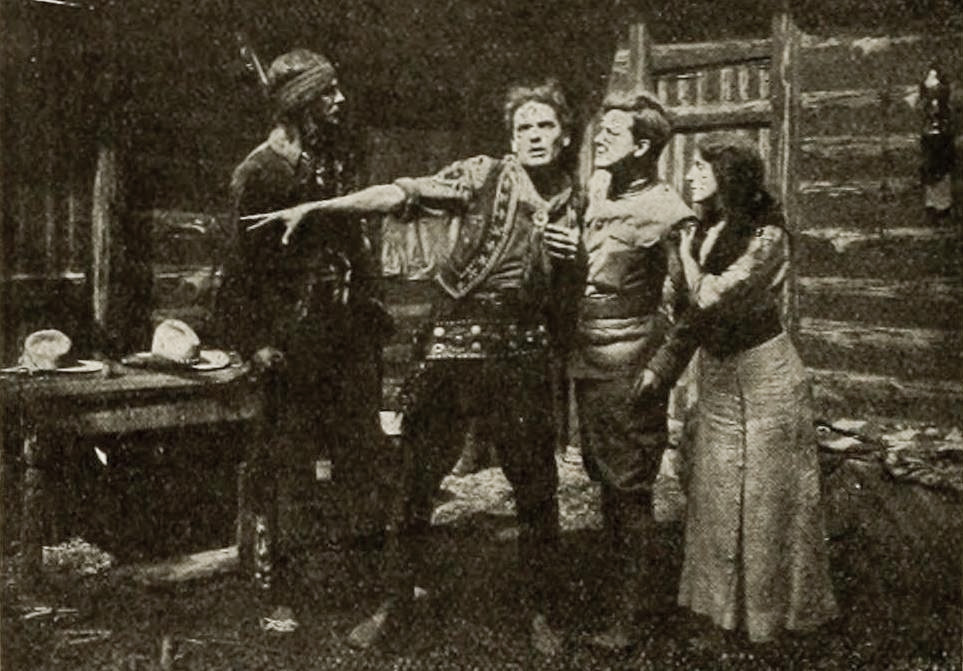
The Northwest setting provides a rugged, expansive backdrop for the unfolding drama, a stage where human passions and natural dangers intertwine. Haines, ever the opportunistic predator, follows, donning yet another disguise – that of a fellow professor – to maintain his proximity and control. This continuous masquerade highlights his pathological need for deception and his relentless pursuit of Alma’s fortune, reminding us that even in the vastness of the wilderness, human malice can find its prey. Meanwhile, Joe's integration with the local indigenous community, and his heroic act of saving Waterlily, the chief's daughter (Irene Kingsland), from death, serves a dual purpose. It establishes his innate goodness and bravery, cementing his status as the film's true hero, and introduces a powerful external force – the Native American tribe – that will ultimately play a crucial role in the climax. Irene Kingsland, as Waterlily, portrays a character of quiet strength and loyalty, her actions speaking volumes in a narrative where words are often secondary to visual storytelling.
The confrontation where Alma finally unmasks Haines is a moment of cathartic release. The ensuing abduction attempt, followed by Professor Dodd's valiant, if ultimately disastrous, intervention, escalates the tension dramatically. Haines's brutal act of throwing the professor over a cliff into the river is a shocking display of his depravity, solidifying his role as an irredeemable villain. This extreme act of violence, while perhaps melodramatic, serves to heighten the stakes and justify the audience's fervent desire for his comeuppance. Alma’s quick thinking, stunning Haines with a well-aimed rock, showcases her evolving resilience and resourcefulness, a vital trait for a heroine in such dire straits. Her subsequent flight to Joe's cabin symbolizes her seeking refuge and protection in genuine love, a stark contrast to the false security offered by Haines.
The final act of Hearts United is a thrilling crescendo of action and suspense. Joe's heroic rescue of Professor Dodd, coupled with the unexpected aid of a doctor (Edwin B. Tilton) who gallantly joins the defense against Haines’s hired ruffians, underscores the theme of unity against evil. The cabin siege is a classic Western trope, a desperate stand against overwhelming odds, reminiscent of the valiant struggles for justice seen in films like A Celebrated Case, albeit with more frontier grit. The tension is palpable as the defenders are eventually overcome, leading to Haines’s ultimate, chilling ultimatum: Alma’s hand in marriage in exchange for their lives. This moment, a nadir of despair for our protagonists, is precisely when the narrative demands a dramatic reversal.
And reverse it does, with the dramatic arrival of Waterlily, leading her father and the tribal warriors. This deus ex machina, while a common device in early cinema, feels earned here, a direct consequence of Joe’s earlier act of kindness and the indigenous community's sense of loyalty and justice. The swift and decisive defeat of Haines and his outlaws provides a deeply satisfying conclusion. The gambler Haines meets his just end, and the forces of good prevail. It’s a powerful affirmation of moral order, where greed is punished and virtue is rewarded. The final scene, with Alma and Joe finding happiness in their love, is not just a romantic resolution but a testament to their enduring spirit and the triumph of authentic connection over calculated deceit. The journey they undertake, filled with trials and tribulations, truly makes their eventual union feel like a well-deserved legacy of happiness.
Hearts United, penned by N.E. Milligan, might be viewed through a contemporary lens as a straightforward melodrama, but its exploration of identity, the corrupting influence of wealth, and the resilience of true love remains remarkably potent. The film’s narrative structure, moving from genteel academic settings to the rugged wilderness, effectively uses contrasting environments to highlight the moral struggles faced by its characters. The portrayal of indigenous peoples, while perhaps simplistic by modern standards, positions them as allies and saviors, a more nuanced depiction than often found in early Westerns, adding a layer of depth to the heroic resolution.
The performances, particularly by Joseph Kelly as the earnest Joe and Katherine Bjorling as the spirited Alma, ground the more fantastical elements of the plot in genuine human emotion. Charles T. Danforth’s turn as Haines is a standout, providing a memorable antagonist who is both insidious and undeniably compelling. The film, despite its age, manages to deliver a thrilling and emotionally resonant experience. It serves as a fascinating artifact of early cinema, showcasing how universal themes of love, betrayal, and redemption were explored with a raw, visceral energy that continues to captivate. It reminds us that even in an era of nascent cinematic language, the power of a well-told story, driven by compelling characters and high stakes, was, and remains, paramount. Hearts United is more than a historical curiosity; it is a vibrant narrative tapestry, a testament to the enduring appeal of human drama writ large against the backdrop of an untamed world.
IMDb 6.3
1929
Community
Log in to comment.