DbcultAccessing Vault...
5.7/10
Senior Film Conservator
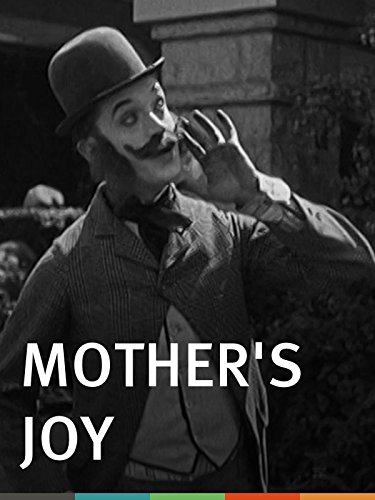
A definitive 5.7/10 rating for a film that redefined the boundaries of cult cinema. Mother's Joy remains a cornerstone of transgressive art.
When the flickering reels of the 1920s began to whisper stories of loss and longing, Mother's Joy emerged as a peculiar specimen, daring to blend melancholia with slapstick extravagance. The film’s premise—an aged man imploring a lawyer to locate his estranged daughter and her prodigiously flamboyant grandson—might appear straightforward, yet the execution unfurls with a complexity that rivals the most intricate silent dramas of its time. The black‑and‑white canvas, though devoid of chromatic hue, is rendered vivid through the actors’ expressive physiognomy and the director’s deft manipulation of shadow and light.
\n\nStan Laurel, celebrated for his later partnership with Oliver Hardy, showcases an early virtuosity by embodying two diametrically opposed characters. As the grief‑laden patriarch, Laurel adopts a measured gait, his eyes perpetually narrowed, conveying a lifetime of sorrow without a single intertitle. Conversely, the grandson bursts onto the screen with a flamboyance that borders on caricature—his gestures exaggerated, his attire ostentatiously patterned, and his speech (when intertitles appear) laced with flamboyant hyperbole. This duality is not merely a showcase of acting range; it serves as a visual metaphor for the generational chasm that underpins the narrative’s emotional core.
\n\nMae Dahlberg, credited here as Mae Laurel, navigates the interstitial space between the two Lauras with a quiet intensity. Her performance, often eclipsed by her male counterpart’s flamboyance, offers a grounding counterpoint; she is the connective tissue linking the desperate search to the societal expectations of motherhood and partnership. In scenes where she shares a fleeting glance with the lawyer, the audience perceives a silent exchange of empathy—a moment that underscores the film’s underlying commentary on gendered agency in a patriarchal framework.
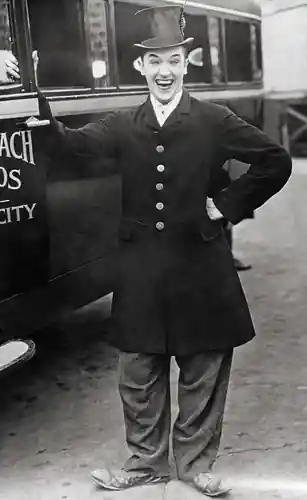
H.M. Walker’s screenplay, though sparse in dialogue by necessity, is a masterclass in visual storytelling. Intertitles appear sparingly, each word weighed with purpose, allowing the actors’ physicality to carry the bulk of the exposition. Walker’s penchant for wordplay surfaces in the grandson’s occasional boastful declarations, which, when juxtaposed against the lawyer’s measured inquiries, create a rhythm that oscillates between tension and comic relief. The script’s structure mirrors a detective novel, with each revelation propelling the narrative forward while simultaneously deepening the emotional stakes.
\n\nThough the film is monochrome, the director’s manipulation of chiaroscuro evokes a palette reminiscent of a painter’s brushstrokes. Dark orange tones (#C2410C) emerge in the dimly lit interiors of the patriarch’s study, where the flickering oil lamp casts elongated shadows that seem to echo the lingering grief. In contrast, moments of revelation—particularly those involving the grandson’s extravagant escapades—are bathed in a warm, almost yellow glow (#EAB308), suggesting a fleeting optimism amidst the gloom. The occasional seascape, rendered in a sea‑blue hue (#0E7490) during a pivotal chase sequence, provides a visual respite, symbolizing the elusive hope that drives the characters forward.
\n\nPhysical comedy in Mother's Joy transcends mere gag; it functions as a narrative engine that propels the plot while exposing character vulnerabilities. The grandson’s over‑the‑top pratfalls, for instance, are not just slapstick set‑pieces but visual manifestations of his inner turmoil—a desperate attempt to mask insecurity with ostentation. Meanwhile, the lawyer’s clumsy attempts at stealth, as he tiptoes through cramped corridors, underscore his outsider status, rendering him both comic foil and empathetic investigator. This interplay of humor and pathos aligns the film with other silent-era comedies such as Putting It Over, yet it distinguishes itself through a more pronounced emotional undercurrent.
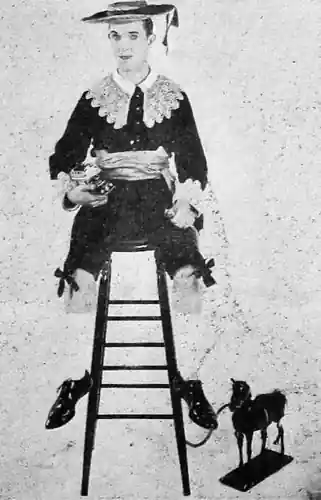
At its heart, the film interrogates the void left by familial absence and the lengths to which individuals will go to reconstruct identity. The search for the missing daughter becomes a quest for self‑recognition for both the elderly patriarch and the flamboyant grandson. Their divergent approaches—one rooted in solemn reverence, the other in flamboyant excess—highlight how loss can manifest as either stoic endurance or gaudy distraction. The lawyer, serving as the narrative’s impartial observer, bridges these worlds, embodying the audience’s own curiosity and skepticism.
\n\nWhen juxtaposed with The Doll, which similarly navigates themes of lost love and societal expectation, Mother's Joy distinguishes itself through its comedic lens rather than pure melodrama. The film also shares a tonal kinship with The Innocent Cheat, wherein the protagonist’s duplicitous schemes mask a yearning for redemption. Yet, unlike the latter’s overt criminality, Laurel’s dual roles are rooted in familial desperation, rendering the comedy more humane and less cynical.
\n\nIn an era saturated with high‑definition spectacles, the silent charm of Mother's Joy offers a refreshing antidote. Contemporary viewers, accustomed to dialogue‑driven narratives, may initially grapple with the film’s reliance on visual cues. However, the universality of its themes—search for belonging, the clash between restraint and flamboyance—transcends temporal boundaries. Moreover, the film’s nuanced critique of performative masculinity anticipates modern discourses surrounding gender expression, making its comedic excesses surprisingly prescient.
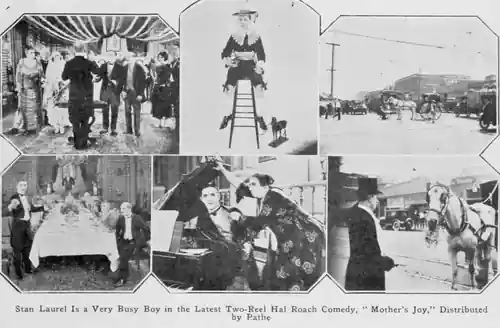
While Mother's Joy did not achieve the commercial acclaim of Laurel’s later works with Hardy, its daring exploration of duality paved the way for future actors to experiment with multiple personas within a single narrative framework. The film’s influence can be traced to later cinematic experiments, such as the dual‑role performances in The Barbarian and the meta‑comedic self‑reflexivity evident in The Soul Market. Its subtle commentary on societal expectations also foreshadows the thematic depth found in Where Poppies Bloom, where personal loss intertwines with broader cultural narratives.
\n\nThe production design, though constrained by the era’s limited resources, achieves a remarkable authenticity. The patriarch’s study is cluttered with antiquated legal tomes, each prop meticulously placed to reinforce the lawyer’s investigative role. The grandson’s wardrobe—an eclectic mix of sequined jackets and oversized hats—serves as a visual shorthand for his larger‑than‑life persona. Cinematographer George Rowe’s framing often employs tight close‑ups to capture the subtleties of Laurel’s facial expressions, while wide shots establish the spatial tension between characters, especially during chase sequences through fog‑laden alleys.
\n\nOriginal screenings would have been accompanied by a live piano, the instrument’s timbre echoing the film’s emotional oscillations—soft, mournful chords during moments of reflection, crescendoing into jaunty ragtime during the grandson’s escapades. Contemporary restorations often pair the silent footage with a modern score that respects this dynamic, enhancing the viewing experience without eclipsing the actors’ performances. Early reviews praised the film’s “sublime blend of pathos and levity,” a sentiment echoed by modern critics who appreciate its layered narrative.
\n\nMother's Joy stands as a testament to the silent era’s capacity for sophisticated storytelling, where visual ingenuity compensates for the absence of spoken word. Its daring dual‑role structure, nuanced performances, and thematic richness render it a compelling study for both cinephiles and scholars. The film invites repeated viewings, each time revealing new facets of its intricate choreography and emotional resonance. For anyone seeking a silent comedy that transcends mere slapstick to explore the human condition, this work remains an indispensable artifact of cinematic history.
IMDb —
1925
Community
Log in to comment.