DbcultAccessing Vault...
Cult Review
Senior Film Conservator
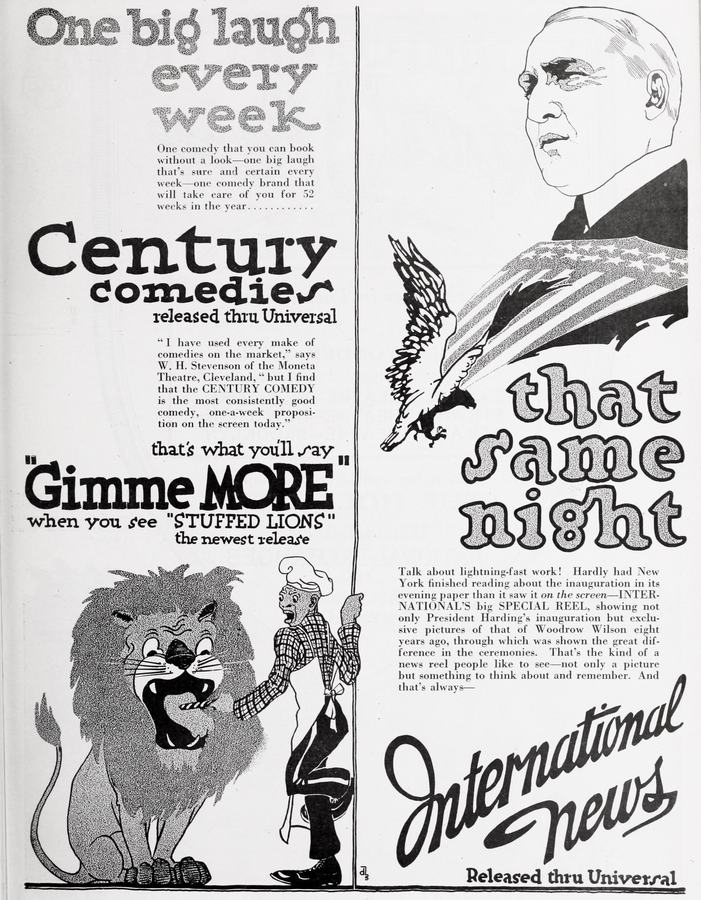
*Stuffed Lions* (1937) is a film that thrives in the interstitial spaces—between art and crime, illusion and reality, morality and survival. Directed with a directorial eye for chiaroscuro shadows and moral ambiguity, it is a work that prizes obfuscation as much as revelation. At its core lies Chuck, a man whose limp is both his livelihood and his lie, navigating a world where authenticity is a currency spent too freely. The film’s premise—a taxidermist using his workshop to smuggle liquor through taxidermied animals—is less a plot contrivance than a thematic anchor. The stuffed lions, deer, and birds-in-the-hand are not mere props; they are metaphors, each stitch in their preservation a reminder of the characters’ own attempts to freeze themselves in time, to outsmart the entropy of their circumstances.
Charles Reisner’s script, which he also wrote, is a masterstroke of elliptical dialogue and psychological tension. The taxidermist, a figure whose artistry is both grotesque and mesmerizing, is never named—a deliberate choice that elevates him to the realm of archetype. His workshop, a cathedral of preserved life, becomes a site of quiet rebellion against the natural order. The liquor hidden in the hollowed-out creatures is a grotesque parody of the American Dream: sweet, intoxicating, and ultimately corrosive. The film’s greatest achievement is its refusal to moralize. There are no heroes here, only survivors, and the taxidermist’s cold pragmatism is as admirable as it is repulsive. This moral neutrality is what makes *Stuffed Lions* so unsettling. It does not ask the audience to judge, only to observe the machinery of deception in motion.
The Century Lions, who plays Chuck, delivers a performance that is as much about absence as presence. His limp is not a disability but a performance, a carefully constructed identity that allows him to exist on the margins of society. When the truth of his deception is exposed, the film does not offer catharsis—only the slow, inevitable unraveling of a life built on artifice. The chemistry between Lions and Dixie Lamont is electric, their scenes together crackling with a tension that suggests both shared secrets and unspoken betrayals. Lamont’s character, a woman navigating a world of men, is a study in contrasts: her beauty is luminous, yet her choices are pragmatic to the point of ruthlessness. It is in these performances that the film finds its emotional core, a beating heart hidden beneath its clinical exterior.
Visually, *Stuffed Lions* is a feast for the eyes. The use of shadows is not merely atmospheric—it is narrative. The taxidermist’s workshop is bathed in a greenish light, the preserved animals glowing like relics from a forgotten civilization. The camera lingers on these creatures, their glass eyes staring into the void, a silent testament to the film’s central theme: the impossibility of true preservation. The liquor smuggling sequence, shot in a sequence of tight close-ups, is a marvel of technical precision. Each drop of liquid that is hidden, retrieved, or consumed is a metonym for the characters’ moral compromise. The film’s pacing is deliberate, almost glacial, allowing the audience to feel the weight of each decision, each lie.
When comparing *Stuffed Lions* to other films of the era, its uniqueness becomes even more apparent. Unlike *The Upheaval*, which leans into romantic idealism, or *An Elephant’s Nightmare*, which indulges in surrealism, *Stuffed Lions* grounds its absurdity in the stark realism of its characters’ choices. The film’s closest kin is perhaps *Bars of Iron*, another noir-tinged tale of subterfuge, but here the prison is not literal—it is the self, the inescapable prison of one’s own lies. The taxidermist’s workshop is a microcosm of this theme, a place where the past is preserved not out of reverence, but as a tool for survival.
The film’s final act is a masterclass in quiet devastation. Chuck’s attempts to escape his past are not grand or heroic; they are mundane and futile. The taxidermist’s fate, when it finally arrives, is neither tragic nor triumphant—it is inevitable, a conclusion written in the first act. The film’s final image, of a lion’s head mounted on a wall, its eyes reflecting the dim light, lingers long after the credits roll. It is a reminder that, in *Stuffed Lions*, life is not lived forward but preserved in layers, each one a mask, each one a lie.
Technically, the film is a marvel. The sound design, though rudimentary by modern standards, is used with precision. The clink of glass bottles hidden in taxidermied carcasses, the soft rustle of fabric as characters move through the workshop—these details are not mere noise; they are the film’s heartbeat. The score, a sparse and haunting melody, complements the visuals without overwhelming them. Every element of *Stuffed Lions* works in concert to create an atmosphere that is both oppressive and hypnotic.
In the broader context of noir cinema, *Stuffed Lions* occupies a unique niche. It is not a film of overt action or dramatic reversals; it is a film of psychological dissection. Its influence can be seen in later works like *Skyfire*, which similarly explores the intersection of art and crime, or *Lady Godiva*, which delves into the performative nature of identity. But *Stuffed Lions* is its own beast, a film that resists categorization and rewards repeat viewings with new layers of meaning.
To watch *Stuffed Lions* is to witness a masterwork of cinematic economy. Every frame, every line of dialogue, every subtle shift in lighting contributes to the film’s overarching thesis: that survival in a corrupt world demands the sacrifice of the self. The characters are not villains or heroes but fragments of a broken mirror, each reflection more unsettling than the last. The taxidermied animals, frozen in time yet teetering on the edge of decay, are the film’s perfect metaphor. In the end, *Stuffed Lions* is not about the liquor, the crime, or the deception—it is about the cost of living in a world where authenticity is a myth, and survival is an act of artistry.
IMDb 7.3
1936
Community
Log in to comment.