DbcultAccessing Vault...
Cult Review
Senior Film Conservator
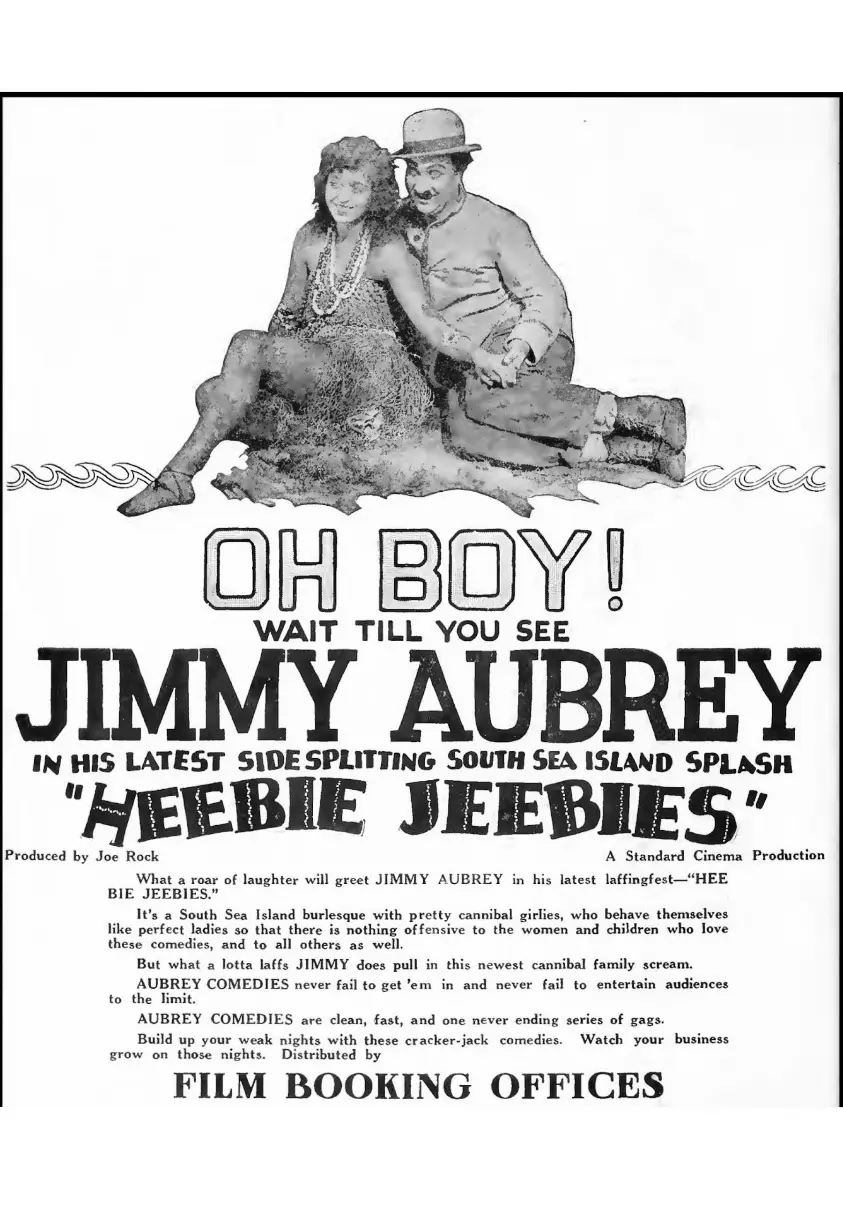
Step right up, silent film aficionados and curious cinephiles alike, because today we're diving headfirst into the wonderfully wacky, utterly unhinged world of 1924's Heebie Jeebies. Forget your preconceived notions of early cinema; this isn't some staid, melodramatic period piece. Oh no, this is a rollicking, high-octane adventure that throws a hapless hero into the most improbable of predicaments, all wrapped up in a package of pure, unadulterated slapstick charm. It’s a film that demands your attention, not with grand pronouncements, but with a relentless barrage of visual gags and an escalating sense of the absurd that few contemporary productions dare to attempt.
From its very opening frames, Heebie Jeebies wastes no time establishing its protagonist's unenviable lot in life. Our hero, embodied with a delightful blend of physical comedy and wide-eyed bewilderment by the inimitable Jimmy Aubrey, is a man simply seeking a place to lay his weary head. But in the grand tradition of silent film comedy, nothing is ever simple. His quest for a peaceful slumber quickly devolves into a desperate scramble for survival, an encounter with a rather hungry lion setting the tone for the perilous journey ahead. This initial sequence, a masterclass in building tension through exaggerated physical reactions and clever editing, immediately pulls you into Aubrey's plight. It’s a testament to the era's filmmakers that they could evoke such visceral reactions without a single spoken word, relying instead on the universal language of fear, surprise, and the sheer comedic timing of a man desperately trying to outwit a predator. The visual storytelling here is crisp, clear, and utterly engaging, demonstrating a profound understanding of how to communicate complex ideas and emotions through purely cinematic means.
Just when you think our hero might finally catch a break, the film pivots with a stroke of genius that could only exist in the fantastical realm of silent cinema. His ingenious, albeit ill-advised, use of a parachute as a makeshift blanket leads to an unexpected ascent, whisking him away from terrestrial dangers and into the boundless blue. This aerial interlude, while brief, is a moment of pure visual poetry and comedic irony. It's an escape not by design, but by sheer, ludicrous accident, perfectly encapsulating the chaotic energy that defines the film. The world of Heebie Jeebies isn't one where meticulous plans succeed; it's a world where fate, or perhaps a mischievous deity, delights in orchestrating the most outlandish circumstances. This sequence, in its whimsical absurdity, might even draw parallels to the early dreamscapes found in films like Capitan Groog and Other Strange Creatures, where fantastical journeys to unknown lands are par for the course, albeit with a slightly less comedic bent.
His descent is, of course, equally dramatic, landing him squarely on a cannibal island – a narrative trope that, while problematic through a modern lens, was a common, if often simplistic, device for injecting exotic peril into adventure stories of the era. The immediate threat of becoming the main course for a tribe of hungry islanders sets the stakes incredibly high, transforming Aubrey’s character from a mere vagabond into a man fighting for his very existence. This is where the film truly begins to flex its comedic muscles, finding humor in the most dire of situations. The visual gags involving the cannibals, their eager anticipation, and Aubrey’s frantic attempts to understand and appease them are executed with a broad, physical style that is both endearing and genuinely funny. It’s a dance of cultural misunderstanding and desperate improvisation, with Aubrey’s expressive face conveying a thousand words of terror and bewilderment.
The film then introduces its central romantic dilemma, a comedic cornerstone that drives much of the subsequent action. Our hero's only hope of escaping the cooking pot is to marry the chieftain's daughter, a prospect made less than appealing by her rather 'pictorially displeasing' appearance. This setup, while relying on outdated humor, provides a fertile ground for Aubrey's comedic genius. His visible discomfort, his attempts to feign enthusiasm, and his internal struggle are played out with a delightful subtlety that speaks volumes. But as fate would have it, his heart has already been captured by another – the chieftain's favorite maiden, a vision of beauty and grace amidst the savage setting. This love triangle, fraught with peril and cultural taboos, becomes the engine of the plot, propelling Aubrey into increasingly desperate and hilarious schemes to avoid his arranged marriage and win the hand of his true love.
The comedic interplay between Aubrey and the various islanders is a highlight, showcasing the universal language of physical comedy. Whether he's dodging spears, attempting to communicate through exaggerated gestures, or inadvertently causing chaos, Aubrey's performance is a masterclass in silent film acting. He embodies the 'everyman' thrown into extraordinary circumstances, making his struggles relatable even within the fantastical setting. One might compare the sheer physical demands and comedic timing to other adventure-comedies of the era, perhaps even the more adventurous sequences in a film like Flirting with Terror, though Heebie Jeebies leans much harder into the outright absurd. The film also cleverly uses the reactions of the tribal members to amplify the humor, their stoic or bewildered expressions serving as perfect foils to Aubrey's frantic antics.
True to the spirit of classic silent comedies, our hero's escape and eventual triumph are less about meticulous planning and more about sheer, dumb luck. It's a series of fortunate accidents and unintended consequences that ultimately lead him to freedom and, remarkably, to a position of leadership within the very tribe that sought to make him dinner. This turn of events, while fantastical, is deeply satisfying from a comedic perspective. It subverts expectations and rewards the audience with a hero who, despite his bumbling nature, somehow manages to come out on top. The film revels in these moments of serendipitous success, reinforcing the idea that sometimes, the best way to navigate chaos is simply to survive it with a dash of unintended ingenuity.
The climax, involving his triumphant wedding to the cannibal maiden he loves, is a joyous celebration of improbable romance. It’s a testament to the film's ability to blend slapstick with genuine heart. Despite the outlandish premise, the audience is genuinely invested in Aubrey's romantic success, a credit to his charming portrayal. The resolution, where he not only weds his beloved but also assumes leadership of the tribe, is the ultimate comedic payoff. It's a rags-to-riches story told through the lens of a jungle adventure, a narrative arc that feels both earned and utterly delightful. This kind of unexpected social elevation through a series of misadventures could be seen in other comedic pieces, perhaps even echoing the accidental heroism found in a film like The Ranch Romeo, where a protagonist's unlikely charm leads to unexpected romantic and social victories.
Years later, the film offers a charming epilogue, showing our hero as the proud father of an extensive family. This final scene, a quiet and humorous affirmation of his new life, brings the madcap journey to a surprisingly sweet and satisfying close. It’s a poignant reminder that even in the most bizarre of circumstances, life finds a way, and love can blossom in the most unexpected places. The visual of Aubrey, now a seasoned tribal leader and patriarch, is a lovely bookend to the frantic energy of his earlier escapades, highlighting a transformation from a bewildered wanderer to a contented leader.
From a technical perspective, Heebie Jeebies, like many films of its era, showcases the ingenuity of early cinema. The cinematography, while not groundbreaking, is effective in conveying the action and enhancing the comedic timing. The use of intertitles is sparse but impactful, delivering key plot points and punchlines with precision. The editing is brisk and dynamic, keeping the pace lively and ensuring that the audience is constantly engaged. The film’s ability to tell such a complex and entertaining story without the benefit of synchronized sound is a testament to the artistry of silent filmmakers. It reminds us of the power of visual storytelling, where every gesture, every expression, and every cut carries significant weight.
Jimmy Aubrey's performance is, without a doubt, the beating heart of Heebie Jeebies. His rubbery face, his exaggerated movements, and his innate ability to convey a multitude of emotions without uttering a single word are simply captivating. He embodies the spirit of early screen comedy, a blend of physical prowess and empathetic vulnerability that makes his character instantly likable and rootable. Aubrey was a prolific actor in the silent era, often playing similar everyman characters caught in predicaments, and this film allows him to shine brightly. His nuanced portrayal elevates the material beyond mere slapstick, injecting it with a humanity that resonates even a century later. His ability to elicit both laughter and sympathy from the audience is a true mark of his talent.
While some elements of the film, particularly its depiction of indigenous cultures, are undoubtedly products of their time and might be viewed critically today, it's important to appreciate Heebie Jeebies within its historical context. It was a film designed for escapism and laughter, utilizing prevalent adventure tropes to entertain audiences. Rather than dwelling on anachronistic sensibilities, it’s more fruitful to focus on its undeniable strengths: its comedic timing, its inventive plot, and the magnetic performance of its lead actor. It’s a film that speaks to the enduring appeal of the underdog story, a testament to resilience and the surprising turns life can take.
The sheer imagination on display, from the parachute-turned-flying-carpet to the elaborate tribal customs, is what makes Heebie Jeebies such a memorable watch. It’s a film that doesn't just tell a story; it creates an entire, albeit fantastical, world for its audience to inhabit. In an age dominated by special effects, there's something wonderfully refreshing about a film that achieves its magic through clever staging, physical comedy, and the power of suggestion. It's a reminder that sometimes, the simplest tools can yield the most extraordinary results. Even when considering other thrill-seeking features from the era, such as Thrills, Heebie Jeebies manages to carve out a distinct niche with its unique blend of peril and persistent humor.
In conclusion, Heebie Jeebies is more than just an old silent film; it’s a vibrant, energetic piece of cinematic history that still holds up as a genuinely entertaining experience. It’s a wild ride that demonstrates the boundless creativity of early filmmakers and the timeless appeal of a good laugh. If you're looking for a film that will transport you to a different era, make you chuckle, and leave you with a smile, then do yourself a favor and seek out this forgotten gem. It’s a testament to the power of pure, unadulterated escapism, proving that sometimes, all you need is a man, a lion, a parachute, and a cannibal island to create cinematic magic. Its legacy, though perhaps not as widely celebrated as some of its contemporaries, is undoubtedly cemented in its ability to consistently deliver joy and surprise. So, grab your popcorn, dim the lights, and prepare for an adventure that will give you the good kind of Heebie Jeebies.
IMDb 4.8
1933
Community
Log in to comment.