DbcultAccessing Vault...
Cult Review
Senior Film Conservator
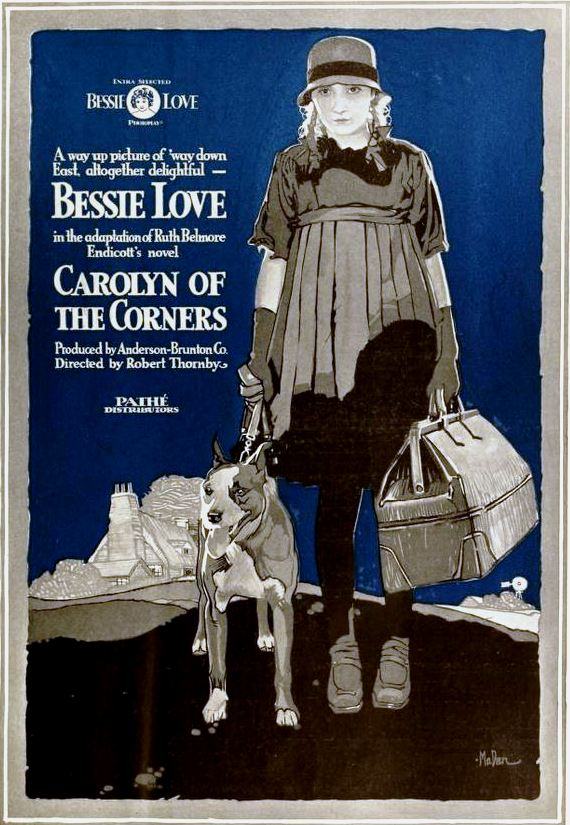
The silver screen, even in its nascent years, possessed an uncanny ability to distill complex human emotions into narratives that resonated deeply with audiences. Such is the enduring power of Carolyn of the Corners, a film that, despite its vintage, speaks volumes about the enduring themes of love, loss, and the redemptive power of an innocent heart. Directed by an uncredited master of the era and penned by the insightful Ruth Belmore Endicott and Frank S. Beresford, this cinematic endeavor transcends its silent origins to offer a moving portrayal of familial bonds and the intricate dance of reconciliation.
At its core, the film introduces us to Joseph Stagg, portrayed with formidable gravitas by Charles Edler, a man whose existence in a quiet New England village has become a veritable monument to embitterment. Stagg is not merely an older gentleman; he is a man carved from regret, his soul a barren landscape scarred by a past romantic betrayal. His daily routine, a monotonous rhythm of commerce and solitude, is only marginally softened by the presence of his housekeeper, the aptly named "Aunt Rose" (Eunice Murdock Moore), who navigates his cantankerous moods with a practiced, weary patience. This initial tableau paints a vivid picture of a life lived in emotional quarantine, a man seemingly content to let the world pass him by, lest it stir the dormant embers of his pain.
The catalyst for change arrives not as a gentle breeze, but as a devastating gale. A letter, bearing tidings of a shipwreck and the tragic loss of his sister and brother-in-law, shatters Joseph's carefully constructed world of isolation. This grim news, while undeniably sorrowful, also ushers in an unforeseen obligation: the guardianship of his young niece, Carolyn, depicted with an irresistible blend of innocence and spirited determination by Pauline Pulliam. Accompanying her is Prince, a loyal canine whose presence further underscores Carolyn’s inherent goodness. Her arrival is akin to a vibrant splash of color on a monochromatic canvas, injecting a much-needed jolt of youthful vitality into the Stagg household. The contrast between Joseph’s dour demeanor and Carolyn’s effervescent spirit forms the initial dramatic tension, a subtle yet profound clash of worlds that promises eventual transformation.
Carolyn, with the innate curiosity of childhood, quickly begins to peel back the layers of her uncle's emotional armor. Her encounters with Amanda Parlow (Charlotte Mineau), a local woman whose quiet dignity hints at a deeply felt past, provide the crucial narrative revelation. It is through these interactions that Carolyn uncovers the long-buried truth: her Uncle Joe and Amanda once shared a profound romantic connection, one that ended with Joseph nursing a deep and festering wound. Amanda, too, bears the quiet burden of this shared history, her expressions conveying a nuanced blend of regret and enduring affection. This discovery sets the stage for Carolyn’s audacious mission. She is not merely a child seeking comfort; she becomes an unwitting, yet determined, architect of reconciliation, her youthful optimism a stark contrast to the cynicism that has long gripped her uncle’s heart. This theme of an innocent outsider bringing healing to a fractured family dynamic echoes in films like Gretchen the Greenhorn, where a protagonist's fresh perspective often sparks profound change within a jaded environment.
Carolyn’s resolve to mend the broken bond between Joseph and Amanda is the narrative engine of the film. Her plans, conceived with the purity and unwavering belief only a child can possess, are a testament to the power of unconditional love. She orchestrates subtle encounters, plants seeds of memory, and gently nudges the two estranged lovers towards a path of rediscovery. The film masterfully portrays these delicate maneuvers, allowing the audience to witness the gradual thawing of Joseph’s icy exterior and the flicker of hope in Amanda’s eyes. It is a slow, arduous process, fraught with the lingering shadows of past hurt, yet Carolyn’s unwavering spirit acts as a constant, gentle pressure. This focus on the redemptive potential of love, even after significant emotional trauma, finds resonance in narratives such as Scars of Love, which similarly explores the arduous journey of healing from profound emotional wounds.
However, the path to reconciliation is rarely smooth, and Carolyn of the Corners introduces a dramatic external threat to heighten the stakes. A ferocious forest fire erupts in the mountains, precisely where Amanda and Carolyn are spending time. This sudden conflagration is more than just a plot device; it serves as a powerful metaphor for the destructive forces that threaten to consume not only their lives but also the fragile rekindling of hope. The roaring inferno symbolizes the lingering anger and bitterness that had long consumed Joseph, now manifesting as a literal, life-threatening blaze. The urgency of the situation forces characters to confront their deepest fears and re-evaluate their priorities, pushing them towards a climactic moment of truth.
In the era of silent film, the burden of conveying emotion rested heavily on the shoulders of the actors. Their expressions, gestures, and physical presence had to communicate nuances that dialogue would later articulate. The cast of Carolyn of the Corners rises to this challenge admirably. Charles Edler, as Joseph Stagg, delivers a performance of remarkable depth. His initial portrayal of a hardened, world-weary man is compelling, but it is his gradual softening, the subtle shifts in his demeanor as Carolyn’s influence takes hold, that truly captivates. Edler manages to convey the internal struggle of a man battling his own pride and pain, his eyes slowly losing their cynical glint to reveal a glimmer of the loving man he once was.
Charlotte Mineau’s Amanda Parlow is equally compelling. She imbues Amanda with a quiet strength and a palpable sense of lingering sorrow. Mineau’s ability to convey a history of heartbreak and enduring affection through subtle facial expressions and restrained gestures is a testament to her skill. One can almost feel the weight of her past, the unspoken longing that she carries. Her interactions with Carolyn are particularly touching, revealing a woman who, despite her own pain, possesses a profound capacity for warmth and kindness.
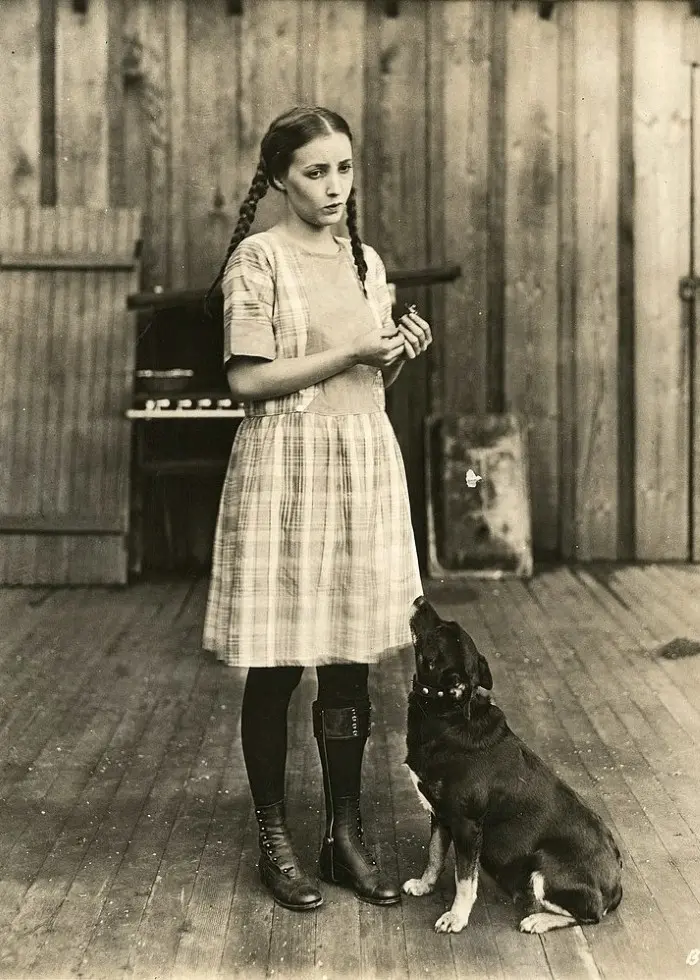
Pauline Pulliam, as the titular Carolyn, is nothing short of a revelation. Child actors in silent cinema often risked being overly theatrical, but Pulliam strikes a perfect balance of youthful exuberance and genuine emotional intelligence. Her portrayal of Carolyn is infused with an infectious optimism that never feels saccharine. She is the moral compass of the film, her unwavering belief in love and reconciliation serving as a powerful counterpoint to the adult world’s complexities. Her bond with Prince, her loyal dog, adds another layer of charm and authenticity to her character. This kind of innocent, transformative influence is a beloved trope, often seen in works that champion the purity of childhood to heal adult grievances.
The supporting cast also contributes significantly to the film’s rich tapestry. Eunice Murdock Moore’s "Aunt Rose" provides a grounding presence, her quiet observations and steadfast loyalty to Joseph offering a glimpse into the long-suffering patience required to live with a man like Stagg. Carl Miller, Margaret Cullington, and Bessie Love round out the ensemble, each contributing to the authentic portrayal of a close-knit New England community. Bessie Love, in particular, despite a relatively smaller role, brings her characteristic vivacity and charm, adding a dash of star power that would become more prominent in her later career. The collective effort of these performers ensures that even without spoken dialogue, the emotional landscape of the story remains vibrant and easily decipherable.
The screenwriters, Ruth Belmore Endicott and Frank S. Beresford, deserve considerable praise for constructing a narrative that is both emotionally resonant and structurally sound. Their script, adapted for the silent screen, relies heavily on visual storytelling and the power of character arcs. They meticulously build Joseph’s character, making his initial bitterness understandable, if not entirely sympathetic, before embarking on his journey of redemption. Carolyn’s role as the catalyst is intelligently woven into the fabric of the plot, not as a mere plot device, but as an active agent of change whose motivations are pure and believable.
The pacing of the film is deliberate, allowing the audience to fully absorb the emotional weight of each interaction. The discovery of Joseph and Amanda’s past affair is handled with sensitivity, revealing the layers of their shared history without resorting to melodramatic excess. The introduction of the forest fire, while a dramatic escalation, feels earned within the narrative, serving to consolidate the emotional stakes and force a powerful resolution. The writers understand that true drama often arises from internal conflict as much as external peril, and they skillfully balance both elements. The narrative’s careful unfolding of past secrets and present dangers can be seen in other compelling dramas of the era, such as The Invisible Power, which also delves into hidden truths and their profound impact on characters' lives.
Even without the benefit of sound, Carolyn of the Corners manages to create a rich visual experience. The New England setting is evoked through careful cinematography, capturing the quaint charm of the village and the rugged beauty of the mountains. The contrast between the idyllic natural surroundings and the internal turmoil of the characters is often striking. The use of close-ups, particularly during moments of emotional intensity, allows the audience to connect intimately with the characters’ inner worlds, a technique that was continually refined in early cinema. The burning forest scenes, while perhaps limited by the technology of the time, are effectively staged to convey a sense of genuine peril and urgency, adding a thrilling dimension to the emotional drama.
Thematically, the film explores several profound ideas. Forgiveness is paramount, not just for the recipient, but for the one who extends it, as Joseph’s journey demonstrates. The narrative champions the idea that love, even when wounded, can be rekindled, and that past mistakes do not necessarily define one’s future. The film also subtly touches upon the generational divide, highlighting how the unburdened perspective of a child can often cut through the complexities and hardened attitudes of adults. It’s a powerful reminder that sometimes, the simplest acts of kindness and belief can effect the most profound transformations. This exploration of enduring love and the possibility of redemption, even in the face of significant obstacles, draws parallels with the emotional landscape depicted in The Scarlet Letter, albeit with a less somber and more optimistic resolution.
Moreover, the film's depiction of a community, however small, grappling with personal histories and communal events, adds a layer of social realism. The village itself, though largely a backdrop, feels like a living entity, its residents implicitly aware of the Stagg-Parlow history, and subtly observing Carolyn's efforts. This sense of a collective consciousness, where private dramas unfold under the public eye, is a common thread in many classic narratives, emphasizing the interwoven nature of human lives. The film’s quiet strength lies in its ability to tell a universal story of human connection and healing, demonstrating that emotional complexities are timeless, regardless of the technological advancements in filmmaking.
In an era where cinematic spectacle often overshadows genuine human drama, Carolyn of the Corners serves as a powerful reminder of the enduring appeal of well-told stories centered on relatable characters. It’s a film that, despite its age, feels remarkably current in its exploration of themes that continue to resonate with audiences today: the struggle to overcome past hurts, the courage to forgive, and the transformative power of love, particularly when championed by an innocent heart. The performances, especially those of Edler, Mineau, and Pulliam, are masterclasses in silent acting, conveying a spectrum of emotions with subtlety and conviction.
For those interested in the history of cinema, or simply in a heartwarming story that champions the best of human nature, Carolyn of the Corners is a must-watch. It’s a testament to the fact that compelling narratives and deeply felt characters transcend the limitations of technology, proving that the silent era was anything but silent in its emotional impact. This film stands as a gentle, yet firm, assertion that even the most jaded heart can be softened, and the most fractured relationships mended, often by the most unexpected of sources. It is a cinematic experience that leaves one with a lingering sense of warmth and a renewed belief in the power of hope and reconciliation.
IMDb 6.3
1936
Community
Log in to comment.