DbcultAccessing Vault...
Cult Review
Senior Film Conservator
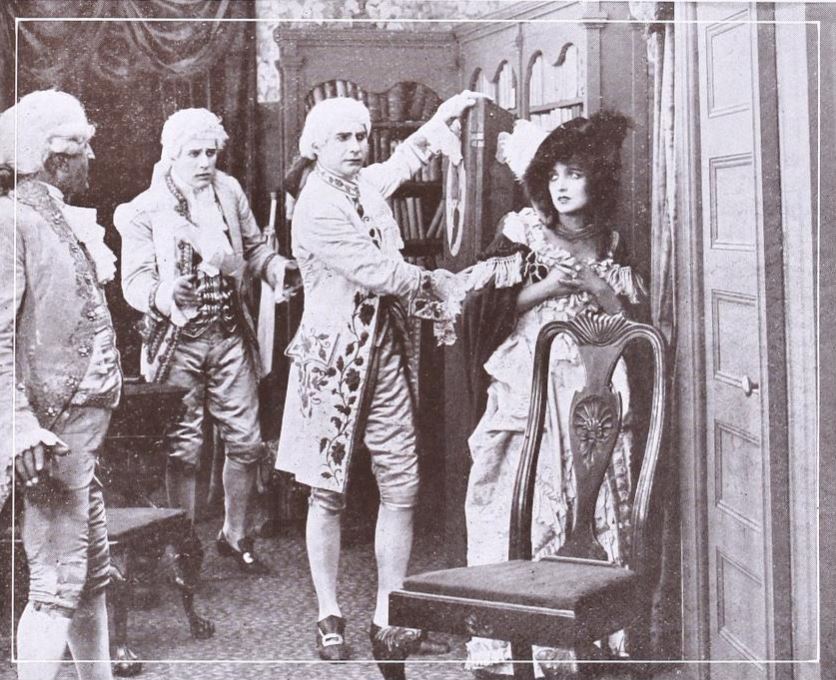
The first time I watched this brittle 35 mm print flicker through a hand-cranked projector, I half expected the film itself to blush. Richard Brinsley Sheridan’s 1777 comedy—already a scalpel in satin gloves—survives the jump to silent cinema with its epigrams replaced by intertitles that snap like mousetraps. Director Frank S. Mottershaw, trading words for iris fades, turns each frame into a peephole through which we spy on a world where gossip is the only renewable currency.
Irene Boyle’s Lady Sneerwell slinks across the screen in gowns the color of bruised peacocks; every time she smiles, the edge of the frame seems to frost. It’s a performance calibrated not in grand gestures but in micro-tremors: the quiver of a fan, the half-second pause before a handshake. Boyle understands that malice, to be seductive, must appear bored.
Meanwhile Joseph Cordova’s Charles Surface—usually played as a lovable rake—is here a man exhausted by his own extravagance. Cordova lets his shoulders sag, his eyes carry the violet weight of hangovers, so that when he finally flings his last guinea into the fire we sense not bravado but a kind of sacramental relief. The camera, starved of sound, clings to these bodies like a confessor.
The real revelation is Augusta Burmeister’s Lady Teazle. In the stage play she is a pert country lamb; Burmeister plays her as a woman who learns, in real time, that the metropolis runs on appetite. Watch the way her gloved fingers drum against her thigh when Sir Peter scolds her for a £300 bonnet—she is counting beats until she can bite back. When she finally hides behind Joseph’s screen, the close-up of her eye through a lace panel is a silent scream: she sees the trap closing, and she sees that she helped build it.
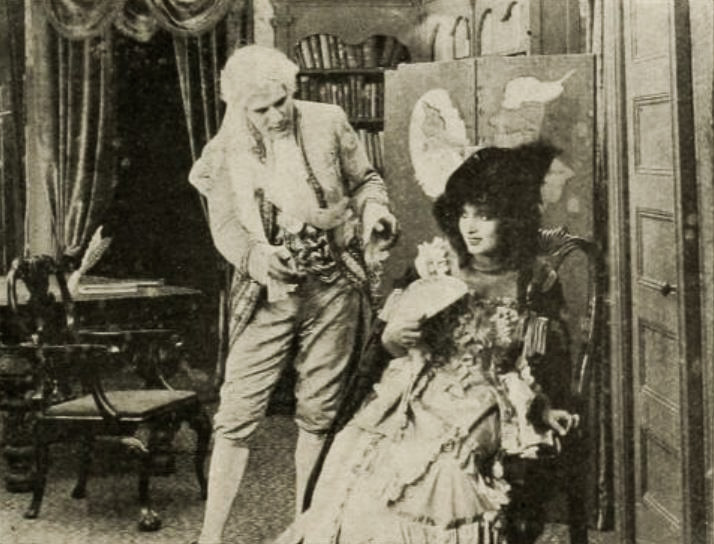
James Cooper’s Sir Peter Teazle carries the bulk of audience sympathy, yet the film refuses to let him off as a mere cuckolded old fool. His gait is a metronome of gout and regret; every stair-step is a negotiation with mortality. Cooper’s subtlest choice: he never looks directly at his young wife until the final reel, as if afraid the mirror of her gaze will show him his own decay.
The silent medium amplifies the comedy of objects: a quizzing glass becomes a weapon, a snuffbox a ticking bomb. In the famous screen scene—the Rosetta Stone of stage comedy—Mottershaw uses a triple-exposure so that we see Joseph’s hypocritical bow, Lady Teazle’s trembling ankles, and Sir Peter’s approaching silhouette simultaneously. The gag is no longer who’s behind the screen, but who’s in front of it.
Comparisons to contemporaneous silents are instructive. Where The Patchwork Girl of Oz builds wonder through cardboard surrealism, The School for Scandal mines tension from drawing-room claustrophobia. If The Merchant of Venice (1914) moralizes through caricature, here the moral is the caricature: everyone is guilty, therefore no one is.
The intertitles, attributed to scenarist Phil Lang, deserve their own curtain call. “A lie travels halfway round the ballroom before truth has tied its cravat,” reads one, over a shot of dancers dissolving into wolves. Another, drenched in sea-blue tint, warns: “Reputation is porcelain—once cracked, it rings forever.” Lang refuses Victorian pieties; his lines hiss with modern cynicism.
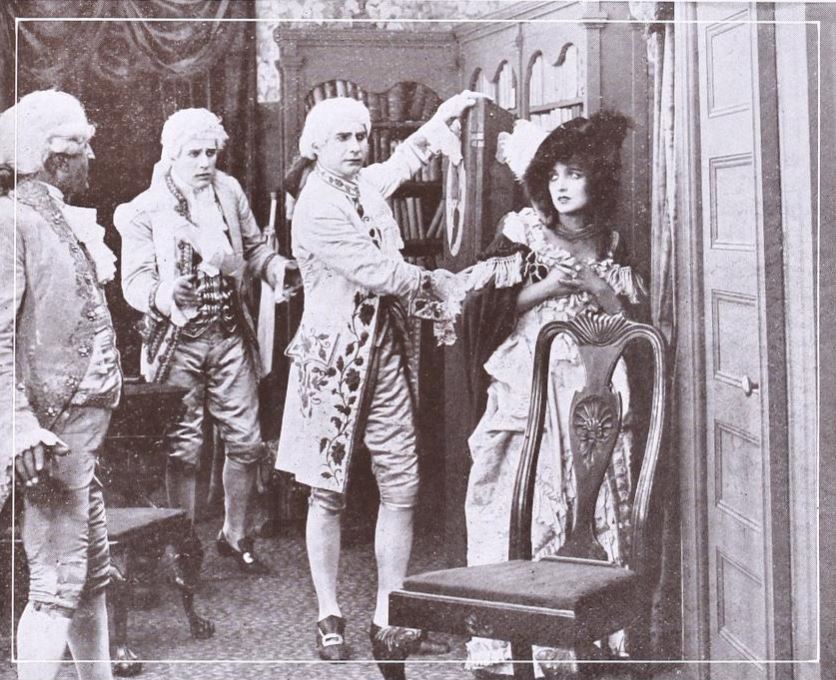
Yet the film is not flawless. The Indian prologue—shot on a soundstage draped in gauze to suggest Calcutta—feels like a lantern slide lecture. And Maria, the ostensible ingénue, is so underwritten that she fades into the wallpaper even when foregrounded. Mary Ross does what she can with eyelid flutters, but the role is a moral signpost disguised as a woman.
The restoration I viewed, courtesy of Eye Filmmuseum, pairs amber nitrate decomposition with a new score by Maud Nelissen—syncopated jazz riffs that slink through scenes like a clandestine lover. The juxtaposition is jarring at first; by the finale it feels inevitable, as if Charleston rhythms were always latent in Sheridan’s pentameter.
What lingers longest is the film’s uneasy resonance with our influencer age. Replace quills with keyboards, carriages with DMs, and the School for Scandal is reborn as Twitter. Lady Sneerwell’s salon, lit by guttering candles, is the algorithmic feed—endless, ravenous, forever hungry for the next morsel of ruin.
In the final shot, Charles and Maria walk toward a sunrise that looks suspiciously like a soundstage halo. Behind them, the city’s roofs glint like broken promises. The camera tilts up, abandoning the lovers, and for a second we glimpse smoke curling from a chimney—gossip still cooking in some unseen kitchen. The film doesn’t end; it merely adjourns. And that, dear reader, is the most scandalous thing of all.
IMDb —
1920
Community
Log in to comment.