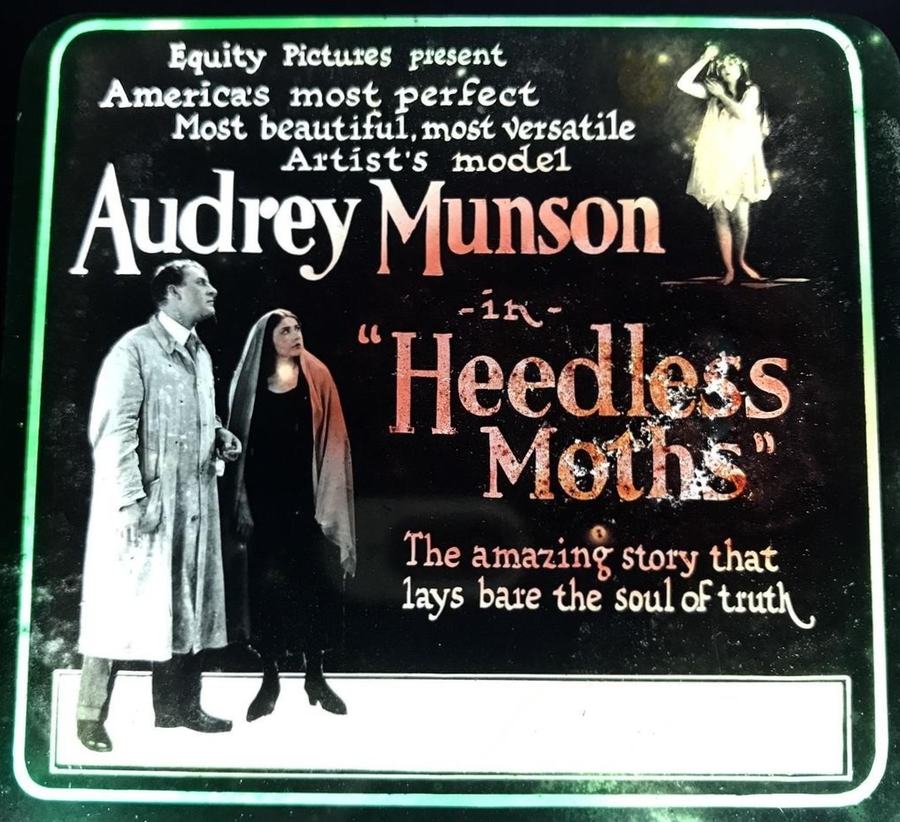
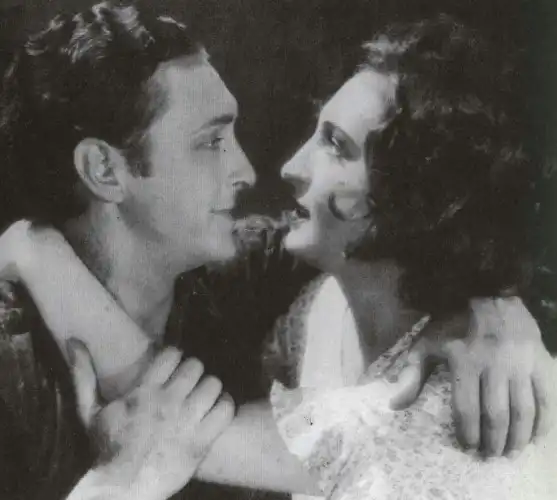
The silent film *Heedless Moths* (1922), directed by Robert Z. Leonard and written by the enigmatic Audrey Munson, is a psychological chamber piece that dissects the paradoxes of love, identity, and artistic creation. Set against the backdrop of a bohemian art scene, the film’s protagonist, Clara (Irma Harrison), is a muse whose beauty and idealism become both her weapon and her undoing. When sculptor Julian (Tom Burrough)’s marriage founders under the weight of his wife’s infidelity, Clara steps into the role of the absent wife, a masquerade that blurs the lines between performance and reality. The film’s title—a metaphor for beings drawn to destruction—haunts every frame, as Clara’s noble intentions spiral into a vortex of personal and moral sacrifice.Munson’s script, co-authored with Leonard, is a masterclass in subtext, using the studio’s constraints to amplify the characters’ internal chaos. Clara’s transformation from model to surrogate wife is rendered with aching subtlety, her gestures echoing the delicate yet fatal dance of a moth near a flame. The cinematography, stark and expressionistic, mirrors the fractured psyche of Julian, whose artistic obsession with capturing Clara’s form becomes a literal and metaphorical prison. The contrast between the sculptor’s chisel and Clara’s ephemeral presence in the studio is a motif that lingers, questioning whether art immortalizes or erases its subject.Irma Harrison’s performance is a revelation, blending vulnerability and resolve in a role that demands both physical and emotional metamorphosis. Her Clara is not a saintly savior but a woman who understands too late that her selflessness is a form of self-erasure. Tom Burrough, as Julian, embodies the tortured artist archetype with a rawness that feels startlingly modern, his portrayal of marital paralysis a study in stillness and trembling. Hedda Hopper, as the sculptor’s increasingly unhinged wife, is a chilling counterpoint, her unraveling a reminder of the societal constraints that turn women into commodities even when they are the ones in power.The film’s narrative structure is deceptively simple, yet it accumulates layers of complexity through its visual language. Shadows in the studio scenes are not mere absences of light but metaphors for the secrets that fester in Julian’s marriage. One standout sequence—a silent duet between Clara and Julian in front of his half-finished sculpture—uses pantomime to convey a lifetime of longing and regret. The camera circles them slowly, a silent accomplice to their unspoken truths, as the sculpture itself becomes a symbol of their doomed connection. This sequence alone places *Heedless Moths* in the same league as *The Gilded Cage* (1928), where artifice and reality collide with equal tragic force.What elevates *Heedless Moths* beyond its era’s romantic melodramas is its unflinching examination of the cost of selflessness. Clara’s decision to impersonate the wife is not framed as a moral triumph but as a tragic miscalculation. Her idealism, rather than saving Julian, exposes the hollowness of his commitment and the fragility of her own identity. The film’s final act, in which Clara’s masquerade leads to irreversible consequences, is a masterstroke of quiet devastation. There are no grand gestures, only the slow, inevitable collapse of a world built on lies. This narrative restraint echoes the introspective tone of *The Invisible Divorce* (1919), where the emotional toll of infidelity is dissected with equal nuance.The supporting cast, though given less screen time, adds texture to the film’s moral grayscale. Jane Thomas, as Julian’s estranged wife, is a study in repressed fury, her every glance a reminder of the betrayal Clara inadvertently replaces. Holmes Herbert’s role as the philandering lover is chillingly understated, his charm a veneer for a predation that feels all too contemporary. These performances, coupled with the film’s meticulous set design—particularly the sculptor’s studio, a labyrinth of half-finished forms and broken tools—create an atmosphere of creative and emotional stasis.Thematically, *Heedless Moths* interrogates the duality of art as both salvation and entrapment. Julian’s sculptures, frozen in the process of becoming, mirror his inability to move past the emotional paralysis of his marriage. Clara, the living model, is caught in a similar limbo, her identity suspended between her own desires and the roles she plays for others. The film’s most provocative line, delivered in a moment of quiet defiance by Clara, is that "to be loved as a dream is to be loved as nothing." This line, etched into the memory like the sculptor’s chisel into marble, encapsulates the film’s central tragedy: that self-sacrifice, in its purest form, can become a kind of erasure.Comparisons to other works of the era highlight *Heedless Moths*’ originality. Unlike the lurid melodrama of *The Conspiracy* (1918), which leans into sensationalism, this film’s power lies in its restraint. It shares a thematic kinship with *The Maelstrom* (1926), where characters are swept up in forces beyond their control, yet its emotional core feels more intimate, almost like a private diary entry. The film’s exploration of identity also resonates with *Pierrot the Prodigal* (1925), though here the focus is on the female protagonist’s agency rather than male disillusionment.Technically, the film is a marvel of silent cinema. The use of intertitles is sparse and poetic, allowing the actors’ expressions and the mise-en-scène to carry the weight of the narrative. One particularly haunting shot—a close-up of Clara’s face reflected in a mirror, her image fractured by the sculptor’s tools—captures the film’s preoccupation with self-perception and distortion. The score, though period-accurate, is subtle, enhancing the film’s introspective mood without overwhelming its delicate balance of sound and silence.In the context of 1920s cinema, *Heedless Moths* stands out for its refusal to offer simplistic resolutions. The film’s ending, rather than delivering catharsis, lingers in ambiguity. Clara’s fate is left unresolved, a deliberate choice that underscores the futility of her self-sacrifice. There is no redemption, no vindication—only the quiet acknowledgment that some acts of love are doomed to be misunderstood. This narrative choice aligns the film with the existential dread of *Under False Colors* (1917), yet its emotional depth transcends mere tragedy, inviting viewers to reflect on the cost of authenticity in a world of performance.For modern audiences, *Heedless Moths* is a haunting reminder of the silent film era’s capacity for psychological complexity. Its meditation on identity and sacrifice feels eerily prescient, echoing contemporary debates about the performative nature of relationships and the toll of caregiving. The film’s aesthetic choices—its chiaroscuro lighting, its use of mirrors and reflective surfaces—remain strikingly modern, a testament to the visual language of early cinema. It is a work that rewards multiple viewings, each time revealing new layers in its exploration of human vulnerability.In conclusion, *Heedless Moths* is not just a relic of 1920s cinema but a timeless inquiry into the paradoxes of love and art. Its themes of identity, sacrifice, and moral ambiguity remain as resonant today as they were nearly a century ago. For those seeking a film that challenges as much as it moves, this is an essential viewing. It is a work that demands to be felt rather than merely watched, and its legacy endures in the countless stories that wrestle with the same questions of who we are—and who we become—when we are loved, or when we choose to love in return.To explore similar films, consider *The Gilded Cage* (1928), which delves into the constraints of societal expectations, or *The Invisible Divorce* (1919), another tale of marital disintegration. For a contrasting look at artistic ambition, *The Gasoline Buckaroo* (1923) offers a wilder, more comedic take. These works, like *Heedless Moths*, are touchstones of early cinema’s rich and varied landscape.