DbcultAccessing Vault...
Cult Review
Senior Film Conservator
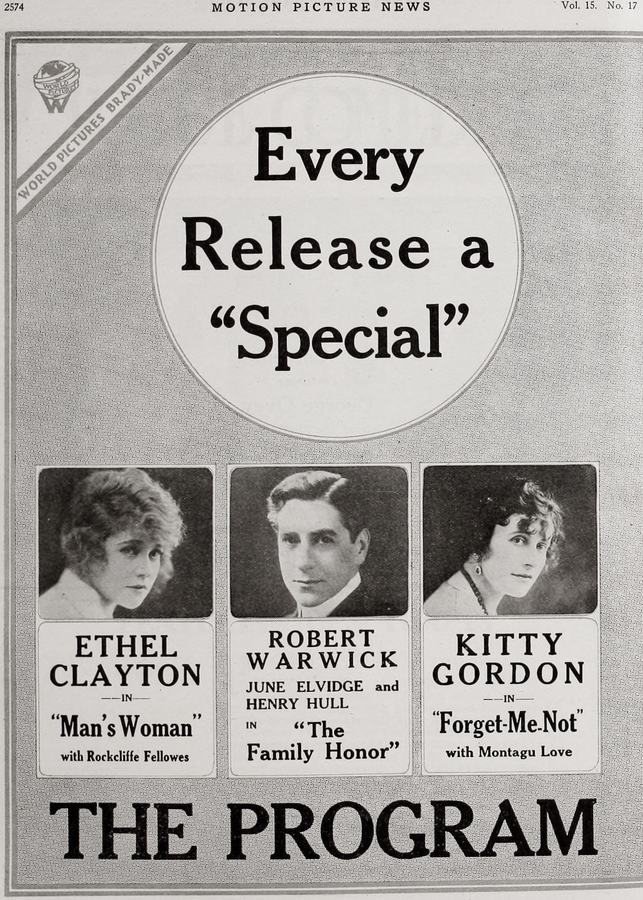
There’s a certain allure to the silent era, isn't there? A profound whisper of a bygone cinematic age, where storytelling relied less on dialogue and more on the eloquent dance of expression, the grand sweep of gesture, and the evocative power of the intertitle. Man's Woman, a 1917 drama penned by the prolific William Addison Lathrop, stands as a fascinating artifact from this period, not merely as a historical curiosity, but as a surprisingly incisive exploration of societal expectations, personal sacrifice, and the intricate dynamics of marriage. It’s a film that, despite its century-plus vintage, resonates with themes that remain remarkably pertinent, particularly concerning the evolving role of women and the often-unseen struggles within domesticity.
At its core, Man's Woman presents us with Violet Galloway, portrayed with compelling nuance by Ethel Clayton. Violet is introduced as a woman of considerable capability and self-possession, accustomed to managing her grandfather's household with an assertive hand. This initial depiction is crucial, for it establishes a baseline of independence and purpose that makes her subsequent transformation all the more poignant. Her marriage to Roger Kendall, brought to life by Rockliffe Fellowes, ostensibly promises a life of ease and adoration. Indeed, Roger's affection manifests as an almost suffocating deluge of pampering, insulating Violet from any semblance of responsibility or meaningful engagement outside of maintaining her impeccable appearance. This, the film subtly argues, is not liberation but a gilded cage. Violet, stripped of her agency and intellectual stimulation, finds herself adrift in a sea of discontent, a state that many women of the era, transitioning from burgeoning independence to the prescribed roles of wife and homemaker, might have acutely understood. Her ennui is palpable, a silent scream against the monotony of her prescribed existence.
Into this simmering cauldron of marital disquiet steps George W. Graham, a former lover and now the district attorney, played by Johnny Hines. Graham's re-entry is not a gentle rekindling of past flames but a forceful, almost violent reassertion of his desire for Violet. His presence introduces a potent external conflict, complicating Violet's internal struggles and testing the fragile peace of her marriage. Here, the film begins to weave a tighter web of intrigue, moving beyond a simple domestic drama. Roger Kendall, as Graham's assistant, is depicted as a man of principle and unwavering resolve, diligently prosecuting a powerful gambling syndicate. This commitment to justice, however, places him squarely in the crosshairs of dangerous political forces. Graham, caught between his professional duties and the insidious pressures brought to bear by these powerful, unseen hands, attempts to dissuade Roger from his righteous path. The silent film, through its expressive acting and narrative economy, conveys the insidious nature of this political corruption without needing a single spoken word, allowing the audience to infer the gravity of the situation through the tension in the actors’ postures and the urgency of their glances.
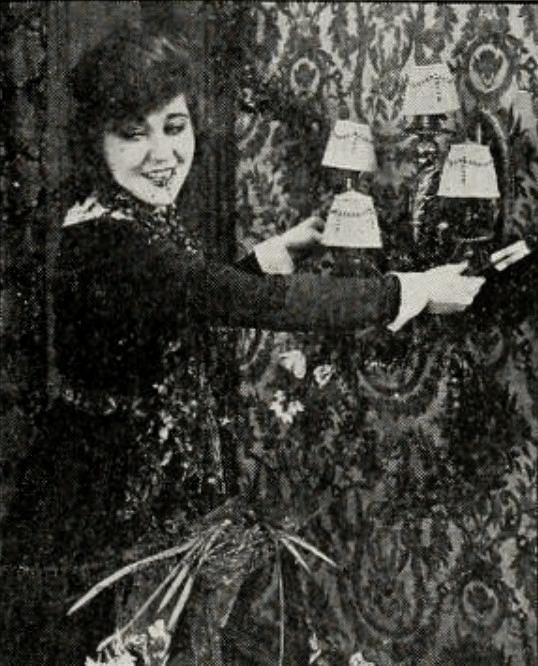
The stakes escalate dramatically when the gamblers, feeling the relentless pressure of Kendall's prosecution, decide upon a ruthless solution: eliminate him. Graham, privy to this sinister plot, becomes a reluctant keeper of a deadly secret. It is at this critical juncture that the narrative introduces another pivotal character – a man whose life Violet had once touched with kindness. This grateful individual, a silent observer of Graham's duplicity or perhaps an unwitting recipient of a whispered truth, discerns the peril lurking for Kendall and, in a desperate act of reciprocation, dispatches a cryptic note to Violet. This moment is a powerful turning point, transforming Violet from a passive recipient of her fate into an active agent in her own story. Her discontent is momentarily forgotten, replaced by a surge of fierce protective instinct.
Violet's decision to confront Graham, to lure him to her home to extract the full details of the assassination plot, is an act of remarkable courage, fraught with immense personal risk. It’s a gamble that puts her reputation, her marriage, and her very life on the line. The tension in these scenes, conveyed through the dramatic close-ups and the actors' heightened expressions, must have been palpable for contemporary audiences. As Violet presses Graham for the truth, the film builds to its tragic climax. The hired assassin, lurking in the shadows, mistakes Graham for Kendall, unleashing a fatal shot. The sudden, brutal violence of this moment, even in the stylized confines of silent cinema, serves as a stark reminder of the deadly consequences of political corruption and the ultimate sacrifice of an unwitting victim. It is a moment of profound irony and devastating impact, echoing the dramatic reversals found in other silent era melodramas like The Seventh Sin, where moral ambiguities often lead to unforeseen, tragic outcomes.
The aftermath of Graham's death is where the film truly explores its themes of redemption and marital healing. Roger, confronted with the brutal reality of what his wife risked for him, experiences a profound revelation. The pampered wife he had unwittingly stifled had, in his moment of gravest danger, transformed into a fearless protector. This realization shatters his prior perceptions and forces him to confront the underlying issues within their marriage. A significant obstacle to their happiness, we discover, has been the meddlesome influence of Roger's maiden aunts. These characters, often a source of comedic relief or social commentary in silent films, are here portrayed as agents of discord, their judgmental pronouncements and interference contributing significantly to Violet's unhappiness and the strain on the Kendall marriage. Roger's decisive act of expelling them from their home symbolizes his newfound understanding and commitment to Violet, a clear demarcation of his priorities. With the external threats neutralized and the internal discord addressed, the film concludes with the promise of a renewed and stronger union, a testament to the power of shared adversity and mutual respect.
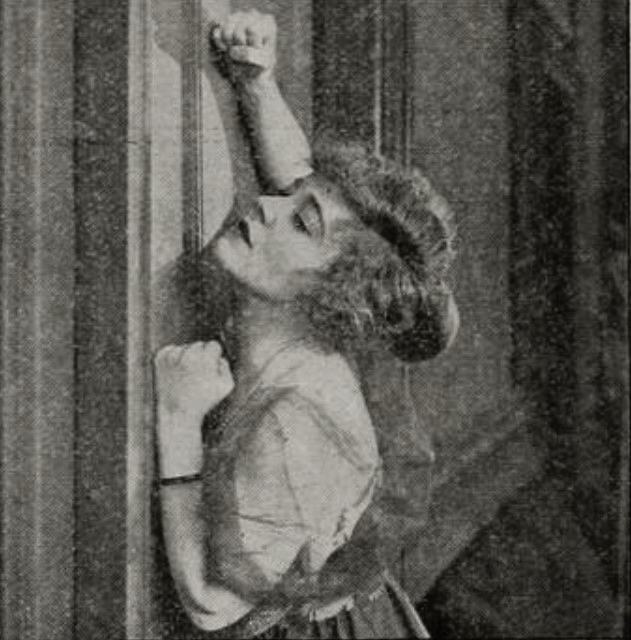
Ethel Clayton, as Violet, delivers a performance that transcends the theatrical conventions of the era. Her ability to convey Violet's initial vivacity, her subsequent descent into discontent, her internal conflict regarding Graham, and finally, her heroic resolve, is truly masterful. Without the aid of spoken dialogue, Clayton relies on her expressive eyes, the subtle shifts in her posture, and the carefully calibrated gestures to communicate a rich tapestry of emotions. Her portrayal is a testament to the power of silent acting, where every movement, every flicker of emotion, had to carry the weight of the narrative. Rockliffe Fellowes, as Roger Kendall, manages to convey both his character's initial blindness to Violet's unhappiness and his eventual dawning realization of her strength and sacrifice. Johnny Hines, as the morally ambiguous Graham, adds a layer of complexity to the antagonist, his 'violent love' adding an unsettling dimension to the story. The supporting cast, including Eugenie Woodward, Magda Foy, Frank Goldsmith, Ned Burton, Justine Cutting, and Edward Kimball, collectively contribute to the rich tapestry of the film, each playing their part in the intricate web of relationships and societal pressures.
William Addison Lathrop's screenplay, while adhering to the dramatic conventions of the time, manages to imbue Man's Woman with a surprising depth. It's not just a tale of crime and romance; it's a commentary on the societal constraints placed upon women, the often-unseen struggles within marriage, and the redemptive power of self-sacrifice. The narrative arc, moving from domestic discontent to high-stakes political intrigue and ultimately to personal growth, is skillfully constructed. The film's pacing, characteristic of silent dramas, allows for moments of quiet reflection punctuated by bursts of intense action. The use of intertitles, far from being mere exposition, often serves to heighten the emotional impact, delivering key lines or internal monologues that deepen our understanding of the characters' motivations.
Visually, the film, like many of its contemporaries, would have relied on strong compositions, dramatic lighting, and carefully staged scenes to convey meaning. The absence of sound necessitated a heightened visual language, where every prop, every costume, every set piece contributed to the overall narrative. While specific details of its cinematography might be lost to time or limited by available prints, the narrative structure suggests a deliberate approach to visual storytelling, emphasizing character expressions and pivotal actions. The film doesn't shy away from the darker aspects of human nature – political corruption, illicit desires, and the threat of violence – yet it ultimately champions the virtues of loyalty and understanding within a marital bond. It’s a fascinating contrast to more overt propaganda films of the era, such as The Fall of a Nation, focusing instead on internal, interpersonal drama.
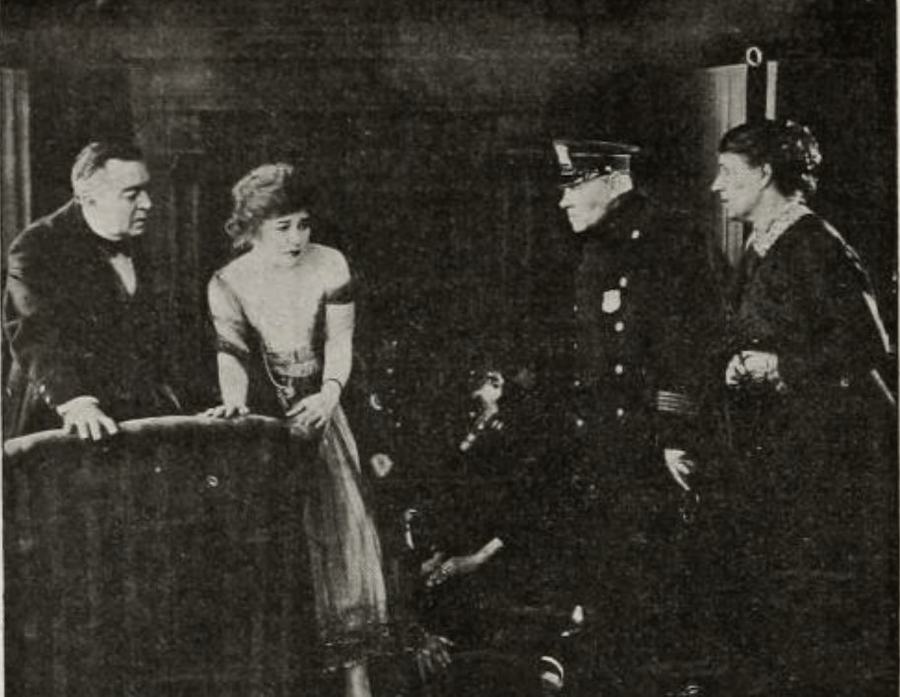
The title itself, Man's Woman, is ripe for interpretation, reflecting the patriarchal societal norms of the period while simultaneously being subverted by Violet's actions. Is she merely 'Man's Woman,' defined by her relationships with Roger and Graham, or does the film argue for a deeper, more complex female identity that emerges through adversity? Her journey from passive discontent to active heroism challenges the very notion of a woman solely existing as an appendage to a man. In this sense, the film, perhaps inadvertently, touches upon nascent feminist themes, hinting at a desire for women to find purpose and agency beyond the confines of domesticity. This exploration of female identity and agency, even within a seemingly traditional narrative, offers a compelling parallel to other films of the time that explored women’s roles, such as Her Greatest Performance, which also delved into the sacrifices and triumphs of its female protagonist.
The resolution, with Roger's belated understanding and the expulsion of the meddlesome aunts, provides a satisfying, if somewhat conventional, conclusion. Yet, the journey to that conclusion is anything but pedestrian. It’s a winding path through jealousy, political machinations, and a harrowing act of self-sacrifice. The film suggests that true marital happiness is not found in superficial pampering but in mutual respect, shared understanding, and the recognition of one another's inherent strength and value. The aunts, in their busybody interference, represent the societal pressures and familial expectations that often complicate and strain relationships, making their removal a symbolic cleansing, paving the way for a more authentic connection between Roger and Violet.
In conclusion, Man's Woman is far more than a relic of the silent screen; it is a vibrant, emotionally charged drama that offers a window into the social and psychological landscape of its time. Ethel Clayton's performance is a particular highlight, anchoring the film with her expressive portrayal of a woman navigating the complexities of love, duty, and self-discovery. It reminds us that even without spoken words, cinema possesses an extraordinary capacity to tell deeply human stories, to explore the intricacies of the heart, and to comment on the enduring challenges of societal expectations. For those willing to immerse themselves in the unique artistry of the silent era, Man's Woman offers a rich and rewarding experience, a testament to the timeless power of compelling narrative and nuanced performance. It’s a film that quietly demands our attention, rewarding us with a story that lingers long after the final intertitle fades, proving that the human spirit, especially that of a woman finding her voice, is anything but silent.
IMDb 6.8
1935
Community
Log in to comment.