DbcultAccessing Vault...
Cult Review
Senior Film Conservator
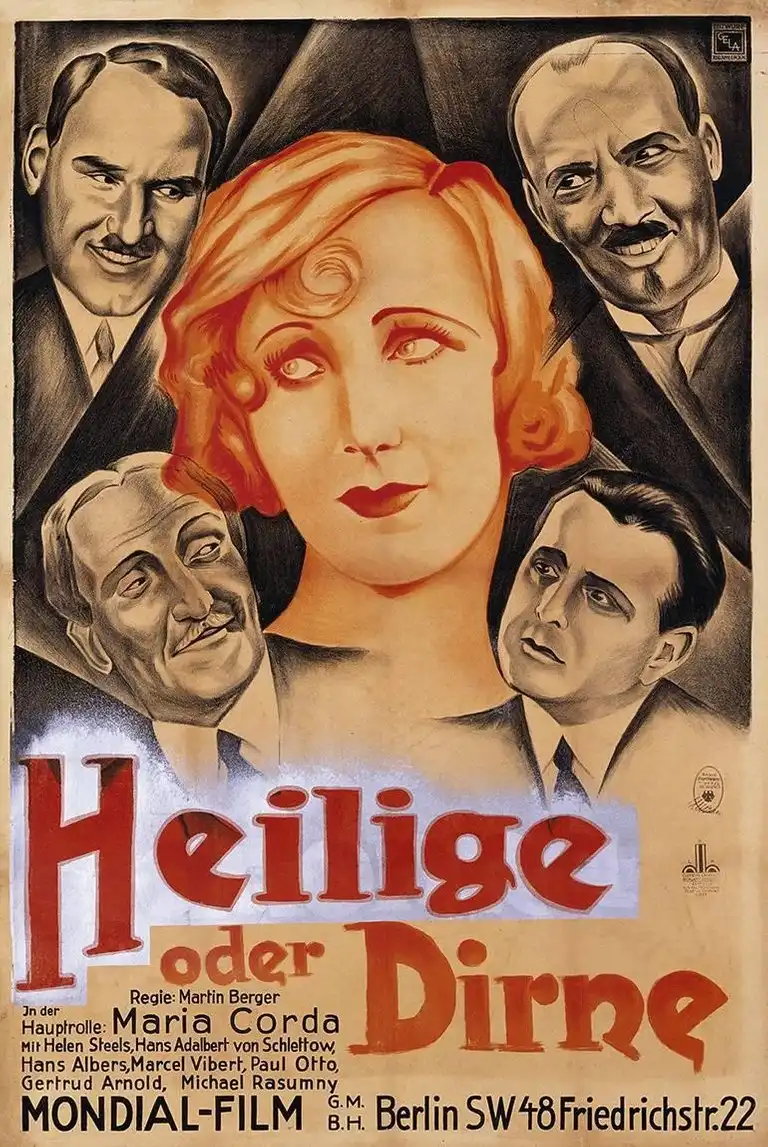
So, Heilige oder Dirne. A silent film from 1929. Is it worth tracking down today? Well, if you’re into that particular era of cinema, if you have a soft spot for big emotions and dramatic gestures, then absolutely. But if you need snappy dialogue or modern subtlety, you’ll probably find yourself checking your watch quite a bit. This one’s for the patient, the cinephiles, maybe even those who just appreciate seeing where it all started. 🎞️
From the get-go, you know exactly what kind of movie this is. It’s melodrama, pure and unadulterated. The title itself, “Saint or Harlot,” lays out the whole conflict right there.
Hilde von Stolz, as our lead, just carries so much of it on her shoulders. Her expressions are everything here, of course. There’s this one close-up, her eyes wide, a tear just escaping, and you feel the weight of the world on her. It’s a performance that doesn’t whisper; it shouts with every tilt of the head, every hand wring.
Then you have Gertrud Eysoldt, who plays a bit part but really makes you notice her. She has this kind of quiet menace that even in a silent film comes through clearly. It’s not about what she says, but how she just looks at people. Gives you the shivers.
The pacing, as you’d expect from a film this old, is… deliberate. Sometimes, a scene goes on about 20 seconds too long, and the silence starts to feel awkward rather than emotional. You can almost feel the movie trying to convince you this moment matters, stretching it out.
And Hans Albers, always a joy to see, even in his earlier work. He shows up and you just know he’s gonna cause trouble. That confident swagger, that little smirk. It’s a different kind of acting than the leading lady’s deep anguish, a nice counterpoint.
The intertitles are fascinating too. They’re not just dialogue; they often set the mood, or summarize feelings. Some of them are quite poetic, others just state the obvious. It’s a rhythm you have to get used to, waiting for the text, then watching the reaction.
One scene, our heroine is walking through what looks like a very stark, almost empty street set. The light hits her just so. It’s beautiful, yes, but also a little lonely. You wonder where all the other people are. The crowd scenes have this oddly empty feeling, like half the extras wandered off for a coffee break.
The whole moral struggle, the 'saint or harlot' question, it’s laid on pretty thick. It’s not subtle. The film really wants you to understand the gravity of social judgment back then. Like, _really_ wants you to get it. There are a few moments where you just want to shake the characters and tell them to chill out. It’s so much drama. 🎭
Mikhail Rasumny pops up too, and he brings this interesting energy. He’s not as overtly expressive as von Stolz, but there’s a quiet intensity to him that suggests a lot more going on beneath the surface. He’s one of those actors whose presence just… shifts the scene, you know?
Watching this, you really get a sense of the filmmaking techniques of the time. The camera mostly stays still, letting the actors do the work. When it does move, it feels like a big deal. A slow pan, a dolly shot, these are moments that stand out because they’re so rare.
There’s a small subplot involving a document or a letter, I forget the exact details, but it gets passed around in a very dramatic way. Every time it appears, the music swells. It’s a classic MacGuffin, silent film style.
And the ending… well, it’s a silent film melodrama. You can probably guess the general direction. It ties things up, but not necessarily in a way that feels completely satisfying to modern eyes. It's more about the journey through all that emotional turmoil.
Didja notice?
Overall, Heilige oder Dirne is a fascinating look into a specific kind of storytelling. It's not for everyone, but if you let it wash over you, there’s a certain charm to its earnestness. It’s a time capsule, a reminder of what moved audiences almost a century ago.
IMDb —
1919
Community
Log in to comment.