DbcultAccessing Vault...
Cult Review
Senior Film Conservator
Mum’s the Word is a sharp, if slightly repetitive, comedy that trades sentiment for a cynical bit of leverage. It is worth watching for anyone who finds the 'wholesome' veneer of silent cinema a bit grating and prefers a protagonist who wins via blackmail rather than virtue. If you are looking for a high-art technical showcase, look elsewhere; this is a film of punchlines and social embarrassment.
Yes, but only if you appreciate the meaner side of silent-era farce. Unlike the earnestness found in Grandma's Child, this film leans into the idea that everyone—from the law-abiding judge to the street-side flirt—is a hypocrite. It’s a fast-paced 1927 comedy that doesn't waste much time on character growth, which is its greatest strength.
This film works because it avoids the trap of making its protagonist a 'good' person. He’s a pest, and the film acknowledges it by punishing him before letting him win through sheer opportunism.
This film fails because the middle act in the department store feels like a series of discarded sketches that don't quite fit the stakes of the opening and closing scenes.
You should watch it if you want to see a 1920s comedy that feels surprisingly modern in its cynicism toward authority figures.
The 'masher' is a character archetype that has aged poorly, yet Nick Stuart plays him with a breezy, almost sociopathic confidence that keeps the film from feeling like a museum piece. He isn't a romantic lead in the traditional sense; he’s a stalker who gets lucky. When the judge sentences him to walk the streets with a sign, the film hits its stride. There is a genuine bite to the comedy here that is missing from more 'polite' films of the era like Her Husband's Secret.
The public shaming is staged with a bluntness that feels more like a social experiment than a comedy bit. People stare, the protagonist squirming under the weight of the placard, and for a moment, the film feels like it might actually be a morality play. Then, it pivots back to pure farce. This shift is jarring, but it prevents the movie from becoming a lecture.
Harry Dunkinson as the judge provides the necessary weight to the film’s conflict. His 'sternness' isn't just a character trait; it’s a plot device that sets up the inevitable payoff. When he eventually finds himself in the wrong apartment, his panic is far more satisfying than the protagonist's earlier embarrassment. It’s a classic case of the moralist being caught with his pants down—literally or figuratively—and Dunkinson plays the transition from authority to cowardice with great timing.
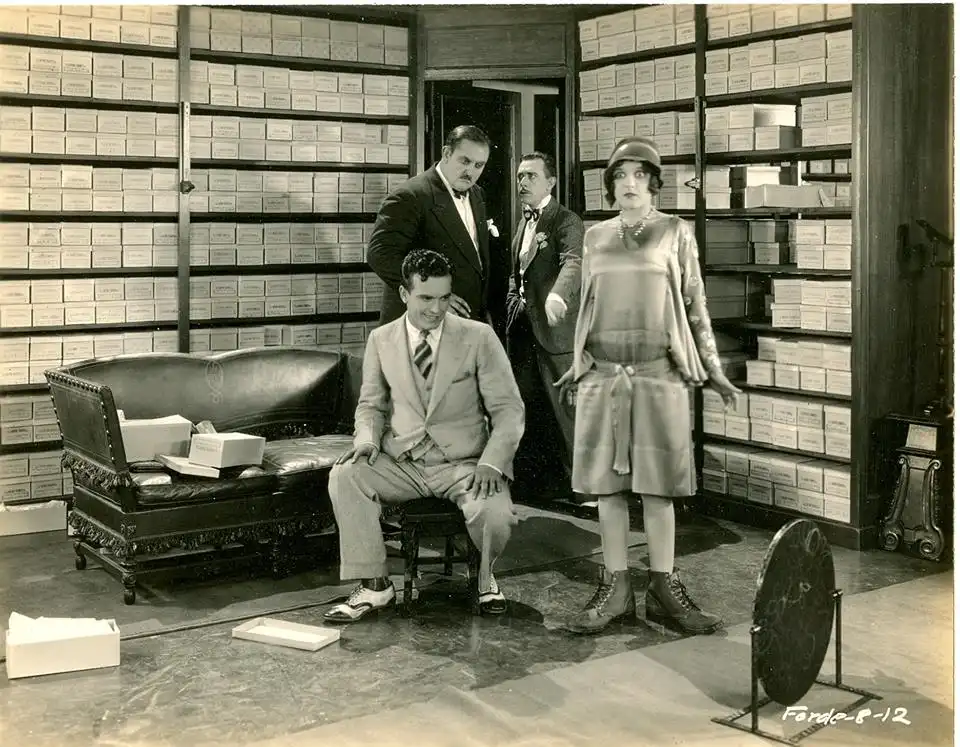
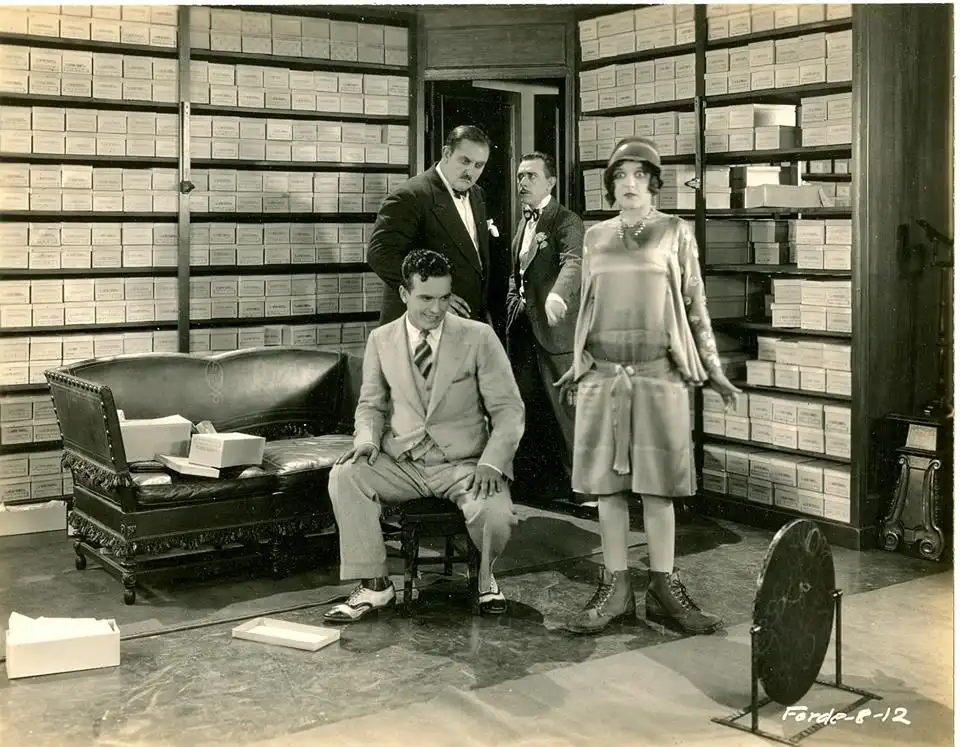
The department store sequence is where the film stutters. While the physical comedy is competent, it feels like it belongs in a different movie, perhaps something more akin to the chaos of The Haunted House. The interaction between Stuart and the store detective is standard fare, lacking the specific edge that the blackmail plot provides. It’s filler, and at times, it’s obvious.
Pros:
- The blackmail twist is genuinely funny and well-earned.
- Nick Stuart has a charismatic, albeit annoying, screen presence.
- The film avoids the sappy, sentimental endings common in 1920s romances.
Cons:
- The middle section drags and feels disconnected from the main plot.
- The female lead, Sally Phipps, is given very little to do other than be pursued.
- Some of the physical gags are dated and predictable.
Mum’s the Word is a cynical little gem that works because it understands that everyone has a secret. It’s not a deep film, and it certainly isn't a technical marvel on par with the greats of its decade, but it has a mean streak that makes it memorable. The silent era often gets a reputation for being overly precious or theatrical; this film is neither. It is a transactional comedy where love is won through leverage.
It is a refreshing change of pace to see a silent-era hero who doesn't win by being the best man, but by being the one who knows where the bodies are buried.
If you can get past the repetitive nature of the department store gags, the finale offers a satisfying payoff that justifies the runtime. It’s a film about the collapse of dignity, and in that regard, it succeeds completely. It isn't essential viewing for the casual fan, but for those who want to see the DNA of the modern 'cringe' comedy, it’s a fascinating look at how little human nature has changed since 1927.
IMDb —
1920
Community
Log in to comment.