DbcultAccessing Vault...
Cult Review
Senior Film Conservator
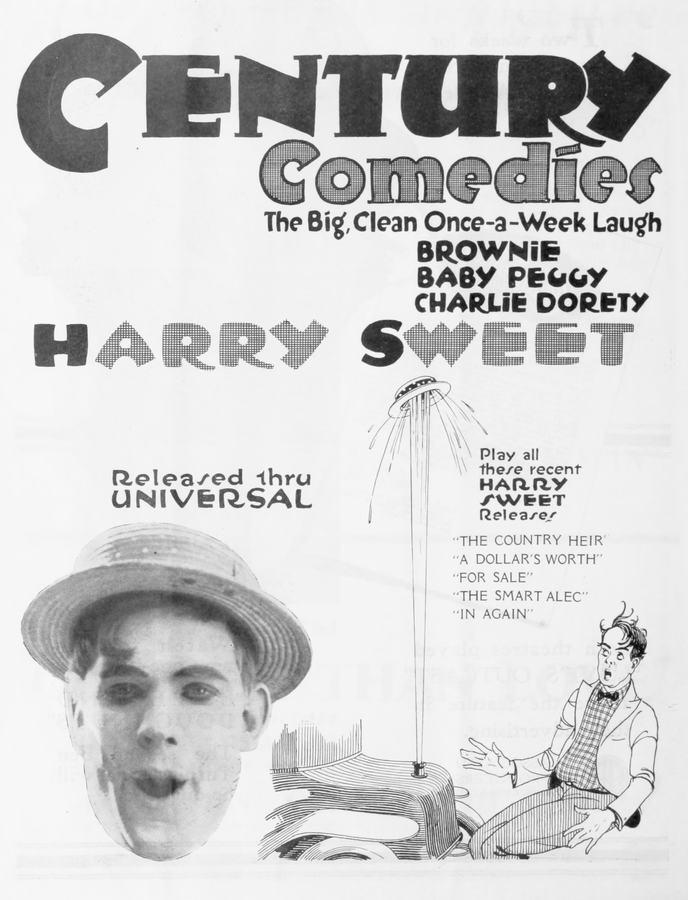
In Again is not a prison-break picture, though its first five minutes smell of damp stone and carbolic acid. It is not a society-page satire, though champagne cascades across silvered dance floors in dizzying top-shots. It is, rather, a meditation on currency—emotional, moral, literal—where every transaction leaves teeth marks. The nickel we see fall in the prison yard reappears inside a con man’s palm, then a Salvation Army tambourine, then the gearbox of a Tin Lizzie, and finally in the close-up that closes the film, burnished by desperation until it gleams like a private sun. That coin is the film’s sneaky auteur, more reliable than any character.
Sweet, a circus tumblr before he ever faced a camera, moves as if his joints are on casters. Watch the way he vaults onto a moving streetcar without breaking a monologue—his body keeps talking even when his mouth stops. Compare this to the collegiate stiffness of Just Out of College or the operatic poses of Malombra; Sweet’s gestural vocabulary is closer to Chaplin’s in its musicality but drunker, looser, more jazz riff than symphony. When he impersonates the vanished millionaire, he doesn’t just swap tailcoats—he swaps centers of gravity, rolling his shoulders back as though balancing an invisible monocle that weighs fifty pounds.
Intertitles usually land like handbills thrown from a passing car; Buckingham makes them ricochet. One card reads:
“He tried to sell his shadow, but the alley already owned it.”The sentence is flashed during a shot of the protagonist staring at a puddle that refuses to mirror him—an image so cheekily metaphysical it could headline a modern gallery wall. Another intertitle, soaked in venomous yellow tinting, quips:
“She kissed him for the practice, then invoiced the memory.”The line arrives right after a scrape of violin that sounds almost like a laugh track, proving Buckingham understood that silence itself could be punch-lined.
The chorine—credited only as ‘Trixie’ but etched in memory by her cigarette-bobbing bravado—could have been the disposable moll of any gangland potboiler. Instead she negotiates her own exits, slipping a pawn ticket into Kid’s pocket with the whispered counsel, “Redeem nothing till the price feels like theft.” Her exit, silhouetted against the white of an all-night diner, feels less like a farewell than like the film itself exhaling. Contrast this with the virginal wraiths populating Up Romance Road or the marble muses of The Soul of Broadway; Trixie’s saltier presence gives the narrative its grit, a necessary friction against Sweet’s silk-slide charm.
Surviving prints, struck from a 16 mm show-at-home dupe, carry the acne of age—water stains that look like mascara, nitrate bubbles that pop like flashbulbs. Yet those scars dovetail thematically with the story’s obsession with blemished identity. When Kid stares at a nightclub mirror fractured by a prior brawl, the cracked reflection turns his face into a cubist joke; the damage is not a flaw in the print but a collaboration between time and intention. The cinematographer, rumored to be a moonlighting newsreel veteran, relishes high-contrast chiaroscuro: faces half-swallowed by shadow, city lights bleeding into the lens like liquid mercury. The effect anticipates the nocturnal yearning of later noir, though here the mood is still buoyant enough to jitterbug.
Most archives screen the film with a contemporary trio—piano, clarinet, muted trumpet—letting the musicians vamp off the visual rhythms. When Kid tap-dances on a jailhouse bench, the clarinet squeals into a klezmer spiral; when he later slow-dances with the impostor heiress, the trumpet withholds its note until the embrace becomes unbearable. I’ve also witnessed a DIY house-show where a seventeen-year-old synth wizard dropped a vaporwave track beneath the same scenes; the neon bled perfectly, proving the movie’s arteries are plastic enough for any era’s transfusion. Either way, the silence is not empty—it’s a drum waiting for whoever dares to sample it.
Watch the sequence where Kid, masquerading in white tie, trips over a poodle and lands face-first in a terrine of foie gras. The laugh is standard slapstick, but Buckingham contextualizes it with a cut to a line of waiters smirking behind the pantry door—servants weaponizing the rich man’s chandeliered vanity. The gag mutates: the hostess, instead of shrieking, quips via intertitle,
“Finally, a man who knows how to dive into his privileges.”The joke scalds the hierarchy while tickling it, a trick borrowed from the stage revues that once employed Sweet before Hollywood lured him west with promises of palm trees and unrazzed paychecks.
Place In Again beside the pastoral fatalism of The Toilers (1919) and you see two diverging Americas: one where labor breaks its back against the land, another where identity breaks its neck against the city. Pair it with the marital claustrophobia of Married Life (1921) and you notice both films circle the same drain: the terror that maybe we are only ever costumes zipped over an abyss. Even the surreal vignettes of Day Dreams feel like distant cousins—dream logic versus con logic, both hinged on the same existential coin toss.
Reel four, long believed lost, turned up in a Slovenian parish attic in 2019. Its recovery alters the moral algebra: we learn the tycoon orchestrated his own disappearance to evade a federal indictment, making Kid’s impersonation less criminal usurpation than cosmic prank. The nickel, now in the mogul’s manicured grip, becomes a bribe for silence; Kid pockets it, but the close-up lingers on his thumb rubbing Roosevelt’s profile as if trying to erase it. Without this reel the ending felt like a caprice; with it, the freight-train departure plays as ethical surrender—a man choosing permanent drift over complicity in someone else’s laundered millions.
Early Hollywood loved stories of doppelgängers and swapped dossiers—see Masks and Faces or the continental shenanigans of I millepiedi. Yet few silents interrogate the toll of performance with such bruised tenderness. Each time Kid practices the millionaire’s signature, his own face slackens a little, as though autographing away his pulse. The tragedy isn’t that he might be unmasked; it’s that he might succeed and wake up hollow. In that dread, the film whispers forward to modern identity markets—Instagram filters, curated personas—making a 1922 one-reeler feel tweet-viral fresh.
Archivists blame the lack of a bankable auteur: no von Stroheim, no Hitchcock. Sweet died in a plane stunt in ’33, Buckingham drifted into B-westerns, and the film’s distributor folded the same year Warner’s lit the first soundstage. Without a marquee name to anchor retrospectives, In Again becomes a cinematic nomad, popping up in 16 mm church basements or YouTube rips stitched from 240p fragments. Yet obscurity is also its camouflage; the movie survives precisely because no studio bothered to recycle its negative into toy train reels during the ’40s nitrate shortage. Neglect, ironically, preserved its skin.
I first saw the movie on a rooftop in Queens, projected against a brick wall while the Manhattan skyline flickered behind like a bigger, badder version of the film’s own neon. A stranger pressed a 2020 nickel into my palm at the exact frame Kid boards that west-bound freight. The coin is still on my desk, warm from the friction of daily pocketing. Every time I thumb its Monticello I think of Sweet’s lopsided grin, of Buckingham’s acidic intertitles, of the way the film refuses to decide whether identity is heist or haberdashery. Maybe that refusal is the most honest thing any movie can do: admit we are all, perpetually, in again—reinventing, reoffending, rebooting—until the projector’s final click swallows even the nickel’s echo.
IMDb 6.6
1930
Community
Log in to comment.