DbcultAccessing Vault...
7.1/10
Senior Film Conservator
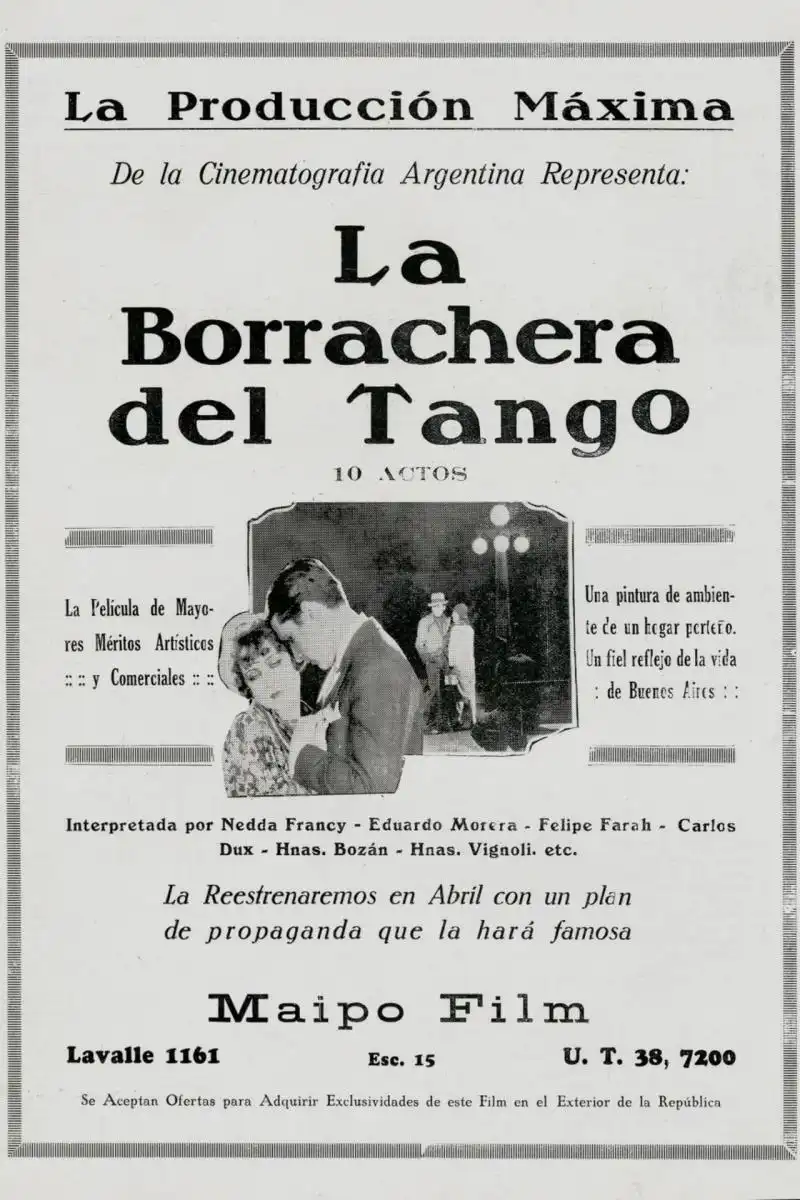
A definitive 7.1/10 rating for a film that redefined the boundaries of cult cinema. La borrachera del tango remains a cornerstone of transgressive art.
Alright, so you’re thinking about digging into La borrachera del tango? 🧐 Honestly, it’s probably not for your average Friday night movie watcher. This one is really more for the folks who love unearthing **old cinema**—the real deep dives into film history, especially early Argentine stuff. If you’re into quiet, character-driven dramas from a bygone era, you might find some charm. Everyone else? You’ll probably find it a bit slow, maybe even *a lot* slow.
The core of the film is super simple: two brothers, two very different lives. One, the engineer, the family pride. The other, well, he’s out enjoying the cabarets. It's a pretty classic setup, right?
What struck me first was the atmosphere. It’s got this dusty, almost faded photograph feel to it, which, for a film this old, is kinda perfect. Buenos Aires itself, or at least the idea of it, really comes through even with the limited sets. You can practically hear the distant music.
Nedda Francy, as the female lead, has this sort of quiet intensity. She doesn't have huge, dramatic monologues. Instead, a lot of her performance lives in her eyes, in how she carries herself when she’s watching the brothers interact. It’s subtle, *almost too subtle* sometimes, but it’s there.
The engineer brother, played by Carlos Dux, is exactly what you’d expect: earnest, a little stiff, always trying to do the right thing. He’s the anchor, the sensible one. You feel the weight of his family’s expectations on him. He carries it well, but you wonder if he ever just wanted to kick back a bit.
Then there's the playboy brother, Felipe Farah. He's the one drawn to the tango halls. His portrayal is interesting because he's not just a bad guy. There's a certain **melancholy** to his choices, like he’s running from something. You see him in these dimly lit cabaret scenes, swaying to the music, and it doesn't feel entirely joyful. More like a temporary escape.
There's a scene where the engineer brother tries to talk sense into his sibling in one of those tango spots. The camera just sort of holds on their faces. The background noise of the music and chatter is almost overwhelming. You can really feel the *disconnect* between them, even when they're physically close. It goes on a bit long, that shot, making you really soak in the awkward tension.
The pacing is… deliberate. Let's say that. If you're used to anything post-1950s, this will feel like watching paint dry. But if you settle into it, let it wash over you, there's a certain charm to how slowly the story unfolds. It’s not trying to rush you to a big conclusion.
I found myself wondering about the extras in some of the crowd scenes. They're just… standing there. Sometimes they look directly at the camera. It’s endearing, in a way, like they're just as curious about the movie as we are watching it now. Very different from how things are blocked today.
The title itself, La borrachera del tango, implies a kind of intoxicating spell, right? And you really get that sense from the playboy's storyline. It's not just about drinking, but the *drunkenness* of the whole lifestyle – the music, the late nights, the emotional highs and lows. It feels almost inescapable for him.
One small thing, the sets for the family home feel so lived-in. Not grand, but definitely middle-class, with little details that just make you believe this is their place. A vase here, a framed picture there. It’s not overdone, which I appreciate. 🏠
I wouldn't say this film is a **must-see** for anyone outside of very specific interests. It’s a piece of history, a quiet drama that tells a simple story without a lot of flash. It's a snapshot, really. If you're studying early cinema, or just have a soft spot for historical Argentine films, then sure, give it a go. Otherwise, you might find yourself checking your watch more than once. It’s *fine* for what it is, just know what you're getting into.
Did you notice?
IMDb 3.1
1926
Community
Log in to comment.