DbcultAccessing Vault...
Cult Review
Senior Film Conservator
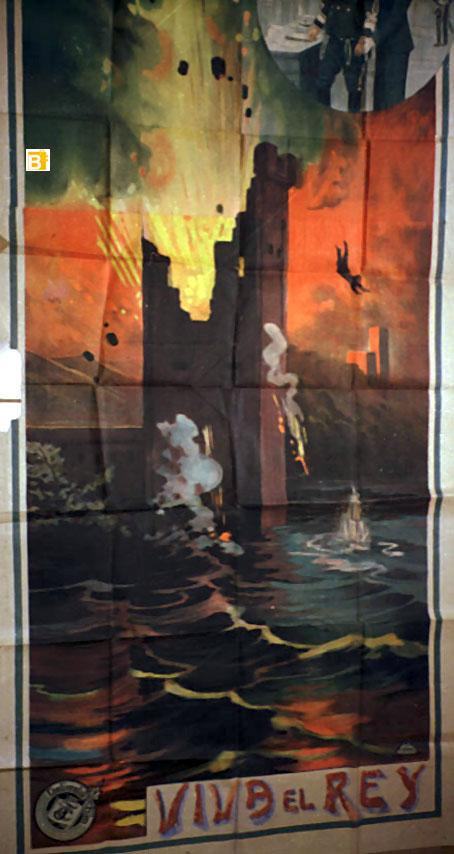
Paris, 1913. Cars still smell of kerosene, pigeons outnumber telephones, and cinema—barely eighteen—already nurses a sweet tooth for Grand-Guignol. Into this gas-lit cradle drops Held for Ransom, a one-reel amphetamine rush that kidnaps the viewer as ruthlessly as its hooded villains snatch golden-haired Ruth from under her father’s gold-knobbed cane.
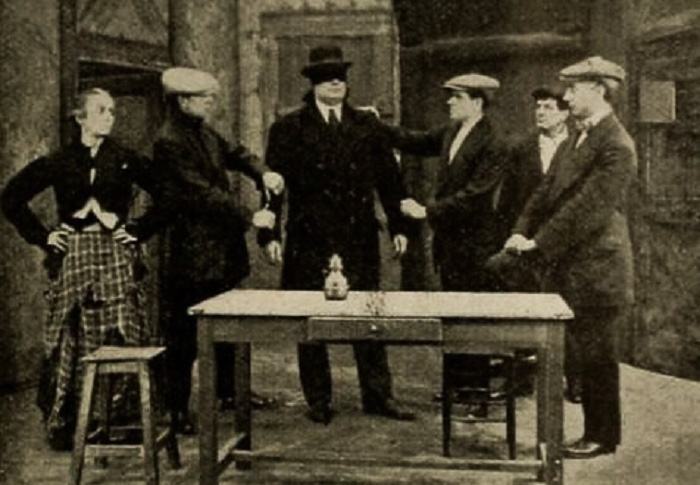
Millionaire Brewster, whose top-hat gleams like polished obsidian, is midway through the urban ritual of glad-handing when his daughter evaporates into a cloud of side-valve exhaust. Cue the first of the film’s many spatial whiplashes: the camera hurtles from sidewalk to speeding tonneau, letting the audience taste gravel in their teeth. Enter Detective Byrnes—part Sherlock, part Houdini—who deciphers a letter smelling of cheap violet ink and stages an oneiric home-invasion reversal, bagging two heavies with the casual flair of a trout-fly fisherman.
But the abductors, crafty as mercury, contrive a hall-of-mirrors gambit: they will abduct the abductor-hunter. Byrnes, tipped off by shadows that stretch a half-second too long, turns the trap into a matryoshka of double-crosses. A dwarf—yes, a pocket-sized human jack-in-the-box—erupts from a trick valise strapped to a motorcycle side-chair, scuttles across the turtle-deck of the getaway Panhard, and launches a pigeon like a feathery flare. The message? Sunlight ricocheted off a looking-glass, dot-dot-dashing “Come heavy or not at all.”
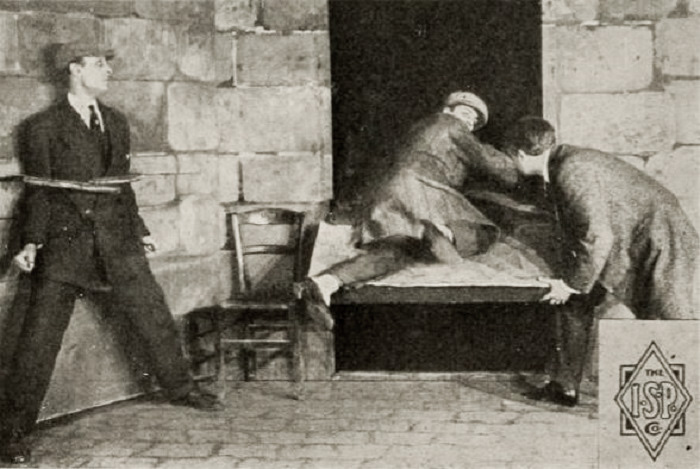
Shot in the dog-days of summer behind Fort Lee’s palisades, the picture wrings every ounce of spectacle from a budget that couldn’t buy a single Tiffany lampshade. The Eiffel Tower climax—yes, that tower—was conjured with balsawood maquettes, forced perspective, and a matte painting washed in potassium ferricyanide blue. Yet the illusion sings; when Barney Lee, the dandy arch-criminal, slips on a beam and cartwheels into the Parisian void, the cut to a plummeting overcoat stuffed with straw still jerks a gasp from seasoned cinephiles weaned on CG.
Interiors, by contrast, revel in claustrophobia: Ruth’s cell is a coffin-wide set painted arsenic green, its single high window vomiting Expressionist shadows. The camera—hand-cranked, jittery—lingers on her silk sleeve trembling like a pinned butterfly, a visual metonym for the entire era’s feminine fragility sold to the highest bidder.
Because the lips are mute, the body must shout. Brewster’s shoulders implode inward when he first spies the ransom demand; the collapse is so minutely calibrated it feels like watching a Corinthian column fold into origami. The dwarf—credited only as “Little Toto”—communicates a lifetime of sideshow exile with a single upward flick of his derby. And Barney Lee, immaculate in dove-grey spats, tips his cane like a conductor presiding over the city’s doom, a Nijinsky of nihilism.
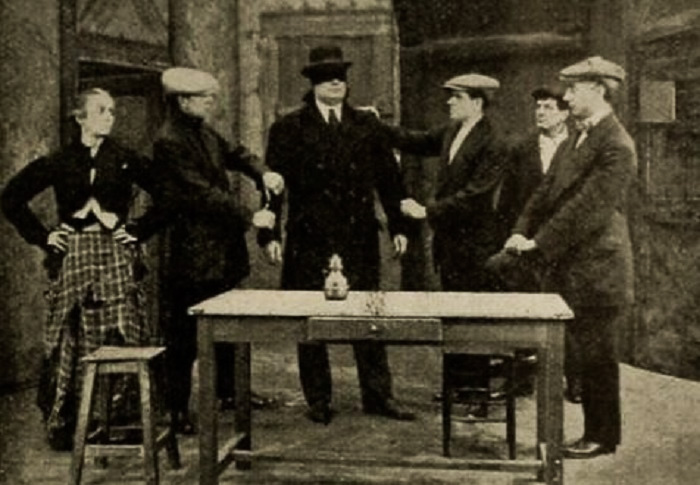
Detractors may carp that the emoting tilts toward the semaphore, but in 1913 close-ups were still carnal trespass; the actors navigate that liminal space between stagecraft and proto-method with astonishing poise.
The film clocks in at fourteen minutes, yet packs enough reversals for a modern two-hour procedural. Narrative beats arrive like platform bolts: kidnapping at 0:45, detective summons at 2:10, mirror-flash SOS at 9:20, Eiffel plummet at 13:00. The tempo is so relentless that when the final iris-in closes on Ruth cuddling the heroic pigeon, the audience itself needs an oxygen tent.
Shadows of the Moulin Rouge, shot the same year, luxuriates in bohemian melancholia; Held for Ransom opts for pulp adrenaline. Where The Convict Hero moralizes over penal injustice, this film trusts that sheer velocity is virtue enough. Only Den sorte Varieté matches its appetite for vertiginous peril, but that Danish fever-dream leans on circus surrealism, whereas Ransom stays street-level, grubby, American.
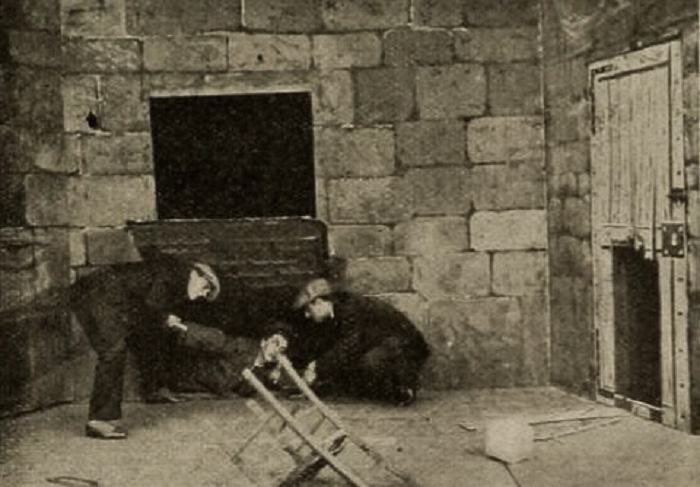
Modern thrillers—think Prisoners or Gone Baby Gone—obsess over moral greys. Here the moral compass spins so fast it becomes a buzz-saw: every character is either predator or prey, innocence is a commodity to be zip-tied and stashed in a root cellar. In an age when true-crime podcasts monetize anguish, the film’s frank transactional cruelty feels eerily prophetic.
Technically, the mirror-flash device prefigures both Batman’s sky-signal and our drone-era laser pointers; the dwarf-ex-machina anticipates the sudden left-field twists demanded by TikTok attention spans. Even the Eiffel Tower denouncement feels like a 1900s preview of Mission: Impossible vertigo-cams.
The intertitles—white on blinding white—sometimes evaporate against the glare, forcing the viewer to lip-read shadows. Ruth’s Stockholm attachment to her savior pigeon borders on the twee, and the geography between New Jersey stand-ins and Parisian landmarks collapses if scrutinized. Yet these are paper cuts on a thoroughbred galloping at full tilt.
A 4K photochemical rescue by the Centre National de la Cinématographie surfaced on boutique Blu in 2022, accompanied by a riotous electro-improv score by Quatuor Optryon. Stream it on SilentEcho or snag the limited steelbook via Kino Lorber; both sport the dwarf-bag shot that the Library of Congress print infamously dropped.
Held for Ransom is a pocket-sized stick of dynamite: loud, reckless, morally cavalier, yet humming with the adolescent energy of a medium discovering it can jolt hearts as well as nickel-and-dime them. Watch it once for the cliff-hanger chutzpah, re-watch it to study how much narrative muscle can be flexed before the celluloid itself starts to sweat. Then keep the pigeon as souvenir—because some rescues, like some falls, echo longer than the tower from which they plummet.

IMDb 5.8
1935
Community
Log in to comment.