DbcultAccessing Vault...
7.6/10
Senior Film Conservator
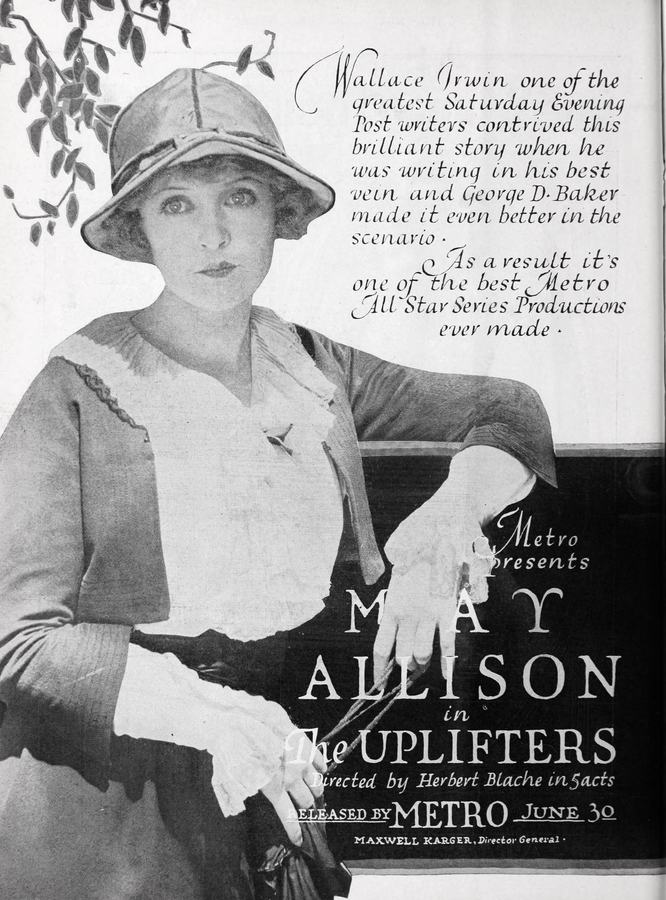
A definitive 7.6/10 rating for a film that redefined the boundaries of cult cinema. The Uplifters remains a cornerstone of transgressive art.
In the bustling crucible of early 20th-century American cinema, where nascent narratives often grappled with the profound societal shifts of the era, George D. Baker's 1919 silent drama, The Uplifters (slug: the-uplifters), emerges as a remarkably insightful, if somewhat didactic, examination of social reform, class consciousness, and the often-blurry lines between genuine altruism and self-serving ideology. Penned by Baker himself, alongside the prolific Wallace Irwin, this film doesn't merely tell a story; it dissects a cultural phenomenon, presenting a cautionary tale wrapped in a compelling romantic arc. At a time when the silver screen was rapidly evolving from a novelty to a powerful medium for social commentary, The Uplifters stands out for its nuanced portrayal of a young woman's awakening—not just to the perceived injustices of her world, but also to the deceptive allure of those who promise easy solutions. It’s a fascinating window into the anxieties and aspirations of a society grappling with rapid industrialization, burgeoning labor movements, and the intoxicating rhetoric of revolutionary change.
At the heart of The Uplifters is Hortense Troutt, portrayed with an earnest vulnerability by the talented Lois Wood. Hortense is initially presented as a quintessential figure of the burgeoning urban workforce: a stenographer diligently serving the wealthy clothes manufacturer, Saul Shilpick, Sr. Her life is one of routine, efficiency, and perhaps, a quiet yearning for something more profound than the clatter of a typewriter. This yearning finds its catalyst in the formidable figure of Harriet Peebles Cull, a charismatic orator whose lectures ignite within Hortense a fierce, if somewhat unexamined, conviction. Cull’s rhetoric, steeped in the lexicon of class struggle and the liberation of the "downtrodden slaves to labor," resonates deeply with Hortense, planting the seed of rebellion against her seemingly comfortable, yet ultimately confining, existence. It’s a common trope in early cinema, this sudden ideological conversion, but Wood imbues Hortense with a believable sincerity that elevates her beyond a mere plot device. Her transformation is not instantaneous but a gradual surrender to the persuasive power of a perceived higher calling, a quest for meaning beyond the mundane.
What makes Hortense's journey particularly poignant is the parallel narrative of Saul Shilpick, Jr., played by Pell Trenton. Shilpick, Jr. embodies the silent, steadfast suitor, his affection for Hortense a constant, understated presence that she, in her newfound ideological zeal, completely overlooks. This romantic subplot is deftly woven into the larger tapestry of social commentary, serving as a grounding force against the more radical elements. His love is genuine, unburdened by the performative activism that will soon ensnare Hortense. When Hortense, fueled by her conviction, abruptly severs ties with her employment and plunges headlong into Comrade Harriet's "uplifters," she believes she is stepping into a realm of liberation and purpose. The irony, however, is swift and brutal: in her infatuation with the mission, she fails to perceive that her new role as a general servant in Harriet’s household has merely exchanged one form of servitude for another, arguably more insidious one, cloaked in the guise of revolutionary fervor. This subtle yet powerful commentary on the practical realities versus the romanticized ideals of certain reform movements is where The Uplifters truly shines, offering a critique that feels surprisingly contemporary in its dissection of performative activism.
The film further complicates Hortense's emotional landscape with the introduction of Larry Holden, a character embodying the charismatic yet morally bankrupt aspects of certain reform figures. Portrayed by Howard Gaye, Holden is a "free-loader reformer" who espouses the doctrine of "free love," a concept that, in the context of the era, would have been deeply provocative and often associated with radical social fringes. Hortense, still navigating the tumultuous waters of her ideological awakening, becomes convinced she is in love with Holden. This infatuation is a testament to her naiveté and her vulnerability to strong personalities, especially those who articulate a vision of a "better" world. The revelation that Holden is, in fact, already married underscores the hypocrisy at the core of his purported ideals and the "uplifters" movement itself. It’s a stark reminder that not all who preach liberation are themselves liberated from conventional vices, or indeed, from outright deceit. This narrative thread resonates with the disillusionment often depicted in films like The Rainbow, where characters grapple with the collapse of their cherished ideals, or even My Madonna, which explores the complexities of idealized love encountering harsh reality.
The "uplifters" collective itself, under the nominal leadership of Harriet Peebles Cull (a role that, while pivotal to the plot's initiation, sees Cull's practical involvement quickly overshadowed by the film's focus on Hortense's domestic servitude), is depicted as a realm of performative activism rather than genuine societal change. It’s a world where rhetoric trumps action, and where the promise of liberation often translates into a new form of exploitation for the most vulnerable. Other cast members like Alfred Hollingsworth, May Allison, Kathleen Kerrigan, and Caroline Rankin fill out this world, creating a believable ensemble that oscillates between the truly committed and the self-serving opportunists. Their collective portrayal adds layers to the film's critique, showcasing the diverse motivations that can coalesce under the banner of a social movement. The sheer dedication of Shilpick, Jr. is then starkly contrasted against this backdrop of superficiality and manipulation. His decision to disguise himself as a "convert" to infiltrate the very movement that has captivated Hortense speaks volumes about his character. This act of subterfuge, reminiscent of plot devices in films like The Mystery of the Double Cross or The Burglar, is not born of malice but of a profound desire to rescue the woman he loves from a path of self-deception and exploitation. It’s a classic romantic gesture, repurposed for a narrative that aims to expose the darker undercurrents of social engineering.
Shilpick, Jr.'s undercover operation is the turning point of the film. His immersion into the "uplifters" allows him, and by extension, the audience, to witness firsthand the hollowness of their claims and the true nature of Larry Holden. His presence provides the necessary catalyst for Hortense's final, profound awakening. It is through his actions, rather than the empty words of the reformers, that genuine care and commitment are demonstrated. The rescue itself is not a grand, dramatic spectacle in the vein of adventure serials like The Mysterious Man of the Jungle, but a more subtle, emotional extraction from a web of ideological entanglement. It’s a rescue of the mind and heart, rather than merely the body. This narrative choice elevates the film beyond simple melodrama, imbuing it with a psychological depth that was somewhat ambitious for its time. The culmination of this arc sees Hortense finally recognizing Shilpick, Jr.'s unwavering devotion, a love that has patiently endured her misdirection and disillusionment. His victory is not just in winning her hand, but in winning her understanding, in guiding her back to a reality grounded in authentic human connection rather than abstract, often misleading, ideals.
George D. Baker's direction, coupled with the intricate screenplay by himself and Wallace Irwin, navigates these complex themes with a clarity and purpose that is commendable for a silent film. The challenge of conveying nuanced social critique and emotional arcs without spoken dialogue is immense, yet The Uplifters largely succeeds. Baker employs effective visual storytelling, utilizing facial expressions, body language, and carefully crafted intertitles to convey character motivations and plot developments. Lois Wood, in particular, delivers a performance that relies heavily on pantomime and subtle gestures, effectively communicating Hortense's emotional rollercoaster from wide-eyed idealism to weary disillusionment and finally, to contented realization. Pell Trenton’s Shilpick, Jr. is a masterclass in understated sincerity, his quiet demeanor speaking volumes about his steadfast love.
The film's visual aesthetic, while perhaps not groundbreaking for its era, is functional and serves the narrative well. Set designs would have subtly distinguished the opulent world of the Shilpicks from the more austere, yet ironically demanding, environment of the "uplifters." Costumes, too, would have played a crucial role in denoting class and character, from Hortense’s demure stenographer attire to the more bohemian, perhaps intentionally drab, clothing associated with the reform movement. The cinematography, a critical element in silent cinema, would have been tasked with capturing the emotional intensity of key scenes, employing close-ups to emphasize character reactions and wider shots to establish the social environments. The pacing, a common concern in early cinema, is handled with a steady hand, allowing the audience to fully grasp Hortense's gradual awakening without feeling rushed or bogged down. This attention to detail in visual communication is what makes many silent films, including The Uplifters, enduring works of art, proving that compelling storytelling transcends the need for spoken words.
Released in 1919, The Uplifters arrived at a pivotal moment in American history. The Progressive Era was winding down, but its ideals and the critiques of industrial society it spawned were still potent. Labor movements were gaining traction, women's suffrage was on the horizon, and various social and political ideologies, from socialism to anarchism, were debated in public squares and private parlors. The film shrewdly taps into this zeitgeist, offering a nuanced, albeit conservative, perspective on the promises and pitfalls of radical social change. It doesn't outright condemn all forms of reform; rather, it critiques the superficiality, the self-interest, and the outright deception that can sometimes masquerade as genuine advocacy. It asks its audience to look beyond the impassioned speeches and charismatic leaders, to discern true commitment from hollow rhetoric. This message, that genuine transformation often comes from within and through authentic human connection rather than external ideological dictates, remains remarkably relevant even today.
In an era where films often leaned towards clear-cut heroes and villains, The Uplifters presents characters with more complex motivations. Harriet Peebles Cull, while ultimately a catalyst for Hortense's disillusionment, is not necessarily portrayed as purely evil, but perhaps misguided or self-absorbed. Larry Holden is the more overt antagonist, yet his charm is undeniable, making Hortense's attraction to him understandable. This complexity elevates the film from a simple morality play to a more sophisticated commentary on human nature and social dynamics. It belongs to a lineage of films that dared to engage with serious societal questions, even if filtered through the lens of romantic drama. While perhaps not as overtly revolutionary as some European art films of the period, or as grand in scale as certain American epics, its quiet intelligence and keen observation of human folly give it a distinct place in silent film history. It doesn't preach, but rather illustrates the dangers of uncritical acceptance and the enduring value of discerning judgment.
Ultimately, The Uplifters is more than just a period piece; it’s a timeless narrative of self-discovery and the search for authentic connection. Hortense Troutt's journey from a disillusioned stenographer to an ideologically misled "uplifter," and finally to a woman who recognizes true love and genuine purpose, resonates deeply. It underscores the idea that sometimes, the greatest liberation comes not from dismantling external structures, but from dismantling the illusions within one's own mind. The film critiques the superficiality of certain social movements while championing the quiet strength of unwavering affection and integrity. It reminds us that true "uplifting" often comes in the form of sincere human relationships, rather than the grand, often empty, promises of radical change.
For cinephiles and historians alike, The Uplifters offers a valuable glimpse into the thematic concerns and narrative techniques of early 20th-century American cinema. It showcases the power of silent film to convey complex ideas and emotions, relying on strong performances, clear direction, and a well-structured screenplay. It serves as a testament to the enduring appeal of stories about personal transformation, the allure of idealism, and the ultimate triumph of genuine human connection over the ephemeral promises of fleeting causes. This film, though a century old, continues to speak to the perennial human quest for meaning, belonging, and an honest vision of a better world, reminding us to always look beyond the surface, whether in social movements or in matters of the heart. Its legacy lies not just in its historical context, but in its continued ability to provoke thought about sincerity, deception, and the true foundations of a fulfilling life.
IMDb —
1916
Community
Log in to comment.