DbcultAccessing Vault...
Cult Review
Senior Film Conservator
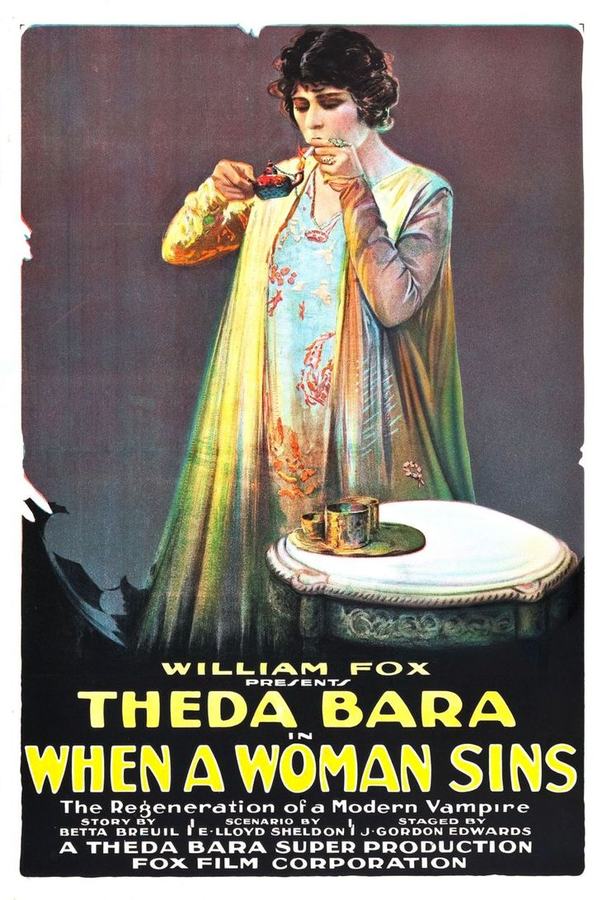
The first time I saw When a Woman Sins I was alone in a loft built inside a deconsecrated church; the projector’s clack echoed off stained glass still cracked from the 1906 quake. That felt right. This picture doesn’t merely screen—it exorcises.
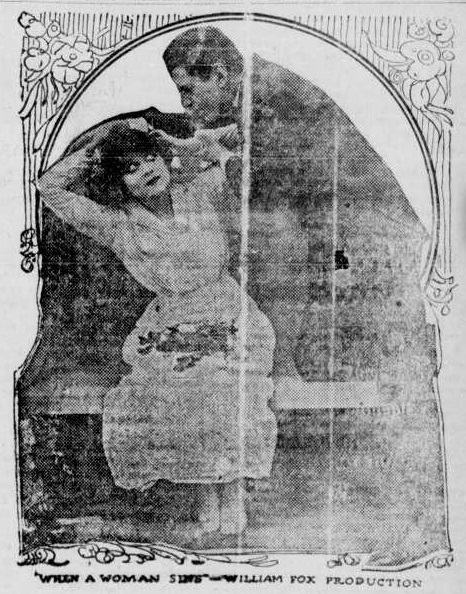
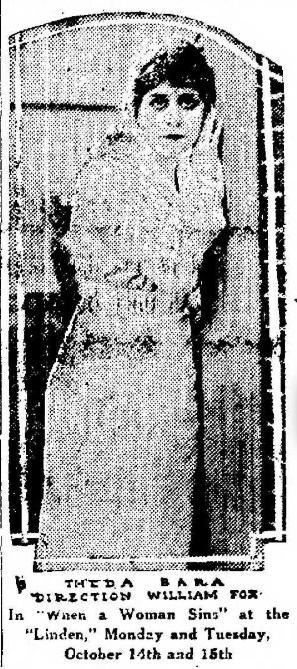
Theda Bara, the studio’s designated man-destroyer, here dons the starch of innocence with the same scorn a panther might wear lace. Her nurse—nameless, billed only as “Lil” in the surviving continuity sheets—glides through hospital corridors like a candle in a crypt, every frame double-exposed so that her shadow arrives a half-breath sooner than she does. It’s a visual confession: something feral trails even this supposedly cleansed incarnation.
Director E. Lloyd Sheldon, shackled by censors yet drunk on German-expressionist imports, stages the sanatorium like a fever etching: corridors narrowing to vanishing points, windows yawning into black trapezoids, nurses’ veils flapping like moth wings. The palette is slate, bone, nicotine—until the blood arrives. Then the tinting bath flares carmine, a jolt so lurid you can almost smell hot copper.
Mid-film, Bara’s Lil tends to Montague (Al Fremont), a financier ruined by a single glance at her. She reads him psalms; he hears obscenities in every psalm. One night she leans to adjust his oxygen mask, and the intertitle drips acid: “Your soul wheezes, sir—shall I loosen the valve?” Cut to the next morning: Montague’s brains fresco the ward’s freshly calcimined wall, a Pollock before Pollock. The camera does not cut away; instead it dollies backward so the splatter expands like a Rorschach bloom, swallowing the frame. Censors in Chicago clipped this shot; the Library of Congress print survives only because a projectionist in Butte smuggled a dupe roll inside a coffin shipped north.
Here’s the perverse miracle: Bara never incites him overtly. She simply permits his self-slaughter, her face a still lagoon reflecting his plummet. The performance is micro-symphony: a flare of nostril, a blink held half a second too long. In that abyssal pause the entire moral scaffolding of 1918 collapses.
Enter Reverend Hallett, played by Alan Roscoe with the consumptive glow of a Keats sonnet. He meets Lil in the morgue, where she’s scrubbing cerebral flecks from under her fingernails. Salvation, in silent cinema, is often a smash-cut: next frame she’s in a cottage parlor, hair uncoiled, wearing the chaste collar of a missionary’s wife. No psychology, only iconography—yet Bara threads terror through the conversion. When she kneels for baptism, the ripple in her shoulder blades suggests not reverence but repression, a lioness drinking from a trough while eyeing the horizon.
The final tableau—bridal veil lifted by the priest’s trembling hand—freezes on a glitch in the negative: a scratch that resembles a serpent’s tail curling from her lips. Whether divine or diabolical, the artifact undercuts the happy ending more savagely than any modern ironic voice-over.
Modern viewers, trained to read psychology into nostril flare, may scoff at the silent-era semaphore. Resist the urge. Watch Bara’s shoulders: they rise a millimeter when the priest says “wedding,” as if the word itself were a yoke. Watch her pupils in the baptismal font reflection—never perfectly round, always jagged, like bullet holes in glass. These are not accidents; they are hieroglyphs of a body that knows it is being fossilized twenty-four frames per second.
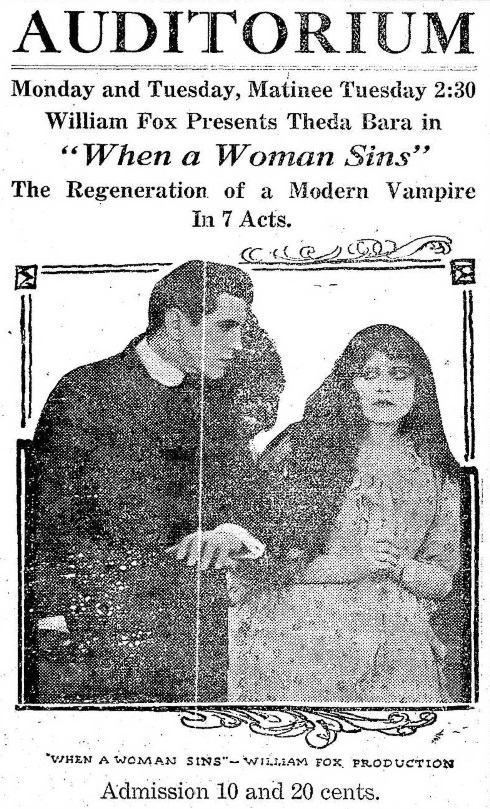
Compare her to the virginal swirl of Seventeen’s flapper or the anarchic slapstick in Susan Rocks the Boat. Bara alone seems conscious that the camera is tomb as well as mirror, and she acts for both audiences: the living 1918 crowd and the spectral 2024 viewer haunting the archive.
Beta Breuil’s scenario, rumored to be adapted from a confiscated French decadent pamphlet, is a palimpsest: Bible quotations scraped thin enough to let Baudelaire bleed through. Intertitles oscillate between King James majesty and pulp-shock: “Though your sins be scarlet…” shares a card with “He paid his debt with lead.” The tension between the two registers—salvation and sensationalism—turns every moral assertion into a double-exposed pun.
Sheldon’s direction intensifies the split. For Reverend Hallett’s sermons he parks the camera at pulpit height, congregants reduced to a sea of hats—a clerical POV. But when Lil listens, the camera swivels 180° so the cross looms like a guillotine. Spatial theology, pure and ruthless.
Reels 4 and 5 of the original seven are lost; nitrate decomposition gnawed them during the Depression. What survives is stitched with stills and a censored cue sheet. Paradoxically the absence amplifies the film’s mythic pulse. We never see the precise moment Lil’s heart pivots from stone to sponge; we infer it between jump-cuts, like breath caught between thunderclap and rain. The lacuna infects the surviving footage with a strobe-like anxiety—every cut feels capable of skipping over another atrocity.
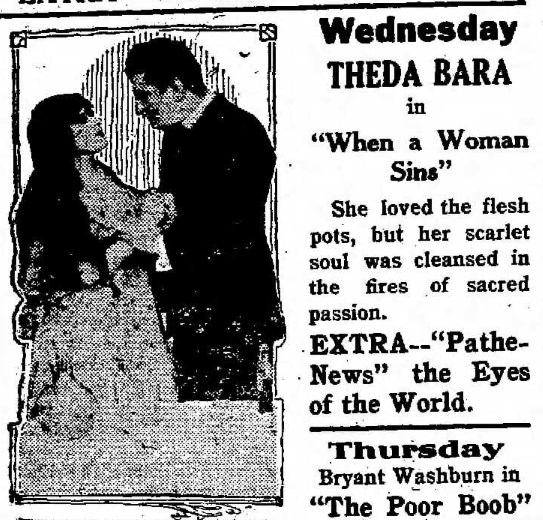
Cine-mystics claim the missing sections depicted a failed exorcism in the hospital chapel, complete with levitating bedpans and a nurse speaking in Aramaic. Studio memos deny it, but memos lie; scratches on the extant print show a sudden spike in emulsion damage right where the reel ends, as if something tried to claw out.
Though monochrome, the film was distributed with hand-painted cue cards for exhibitors to flash colored lights: viridian for greed, amber for covetousness, bruise-purple for despair. Archival projection logs testify that some Kansas City projectionist, drunk on wartime absinthe, ran the entire amber filter during the suicide scene, turning blood into molten gold. The audience reportedly rioted, half hosanna, half harlot-shriek.
Watching the current restoration, I slipped a yellow gel over my laptop during the final marriage close-up; the bride’s veil became sulphur, the priest’s collar a sodium flare. Try it—suddenly the so-called happy ending feels like a cautionary eclipse.
The original score, a medley of Chopin funeral marches stitched with Salvation Army hymns, is forever lost. Modern festivals commission new accompaniments—solo cello, Moog drones, even black-metal trios. None suffice. The true score is the negative space where the gunshot would reside if the film had talkie capabilities. Every time Lil’s gaze lingers on a man’s temple, the phantom crack ricochets inside your skull, louder than Dolby.
During my latest rewatch I muted the disc entirely and played instead the 1918 battlefield recordings preserved by the Imperial War Museum: distant artillery, men coughing gas. Synchronicity occurred unbidden—the suicide coincided with a shell-whistle that crescendoed into silence. The effect was so unnerving I had to pause the film and walk barefoot across winter asphalt just to remind myself I was still embodied.
Studio publicists sold Bara as the serpent du jour, yet this film toys with that brand. Advertising posters show her nursing a skull while wearing a nurse’s cap—a Madonna cradling memento mori. Critics of the time, notably the New York Herald, bristled at the contradiction: “If Miss Bara can be virtuous, then no man is safe from reform.” The panic is palpable—the vamp who might domesticate herself threatens the social order more than the vamp who merely devours. Redemption, after all, implies choice, and choice makes female power exponentially more terrifying.
Compare the gender politics here to The Walls of Jericho where the heroine topples patriarchal gates with lawyerly savvy, or to Annoula’s Dowry whose tragic bride is pure sacrifice. Lil alone straddles both polarities—she is both Delilah clipping strength and Eve proffering salvation’s apple under the guise of Eucharist.
Note the priest’s missionary zeal: he dreams of taking Lil to the Belgian Congo, where he’ll build mud-brick chapels. The African continent exists only as a sketch on his parlor wall—yet the casual imperial gaze reminds us redemption here is also conquest. Lil’s body becomes the dark territory he intends to civilize. Post-colonial theorists could dine on this subtext for semesters.
Meanwhile, Josef Swickard’s turn as the hospital’s patron, a velvet-gloved industrialist, hints at the moneyed machinery underwriting both medicine and mission. His single-scene cameo—funding the chapel extension—lasts forty seconds but carries the weight of entire trusts, railroads, and munitions plants. Capital, the film whispers, baptizes its own sins first.
Stack this against Forgiven; or, the Jack of Diamonds where penance arrives via card-shark martyrdom, or The Dishonored Medal whose soldier-hero earns redemption on a battlefield pyre. All trade in the same currency: sin as spectacle, absolution as fade-out. Yet none dares implicate the viewer so directly—When a Woman Sins ends with the couple walking toward the camera, iris closing so the black circle swallows them while your own reflection lingers in the dead center of the screen. You, too, are implicated; you, too, must choose between pulp thrillers on Sunday morning or hymns whispered through projector hum.
The 2022 4K restoration by EYE Filmmuseum used machine-learning to reconstruct tinting. Algorithms guessed at the palette by analyzing publicity stills hand-colored in Amsterdam. Purists screamed heresy; I say the AI merely continued the film’s original sin—substituting simulacra for flesh. The automated amber, slightly too neon, makes the suicide look like a lurid comic panel, which inadvertently restores the scandal the original censors tried to erase. Sometimes blasphemy preserves the faith.
If you track down the Blu-ray, toggle between the “archival” and “AI” color tracks. The shift feels like watching two versions of the soul debate each other across a century-wide chasm.
We pretend we have outgrown the simplistic math of sin plus redemption equals narrative. Yet every day social media doles out miniatures of this plot: a starlet shamed, a comeback campaign, a tearful interview under soft-box halo. The technology is new; the archetype is antique. When a Woman Sins endures because it stages the transaction in such brazen silhouette that we can’t dodge our own reflection in the communion plate.
Watch it at 2 a.m. with all lights off. When the suicide tint flashes crimson, place your hand over the screen; the heat of the bulb will brand your palm. Carry that faint burn to bed—an intimate stigmata linking you to every 1918 audience member who gasped, every censor who snipped, every archivist who fought nitrate rot. The film survives not in vaults but in that throbbing after-image, proof that even a woman who never sinned can still make the world bleed.
(For further catharsis, pair with Way Outback’s savage landscapes or Yulian Otstupnik’s heretic martyrdom—both traffic in the same combustible currency of flesh and faith.)
IMDb 5.6
1929
Community
Log in to comment.