DbcultAccessing Vault...
Cult Review
Senior Film Conservator
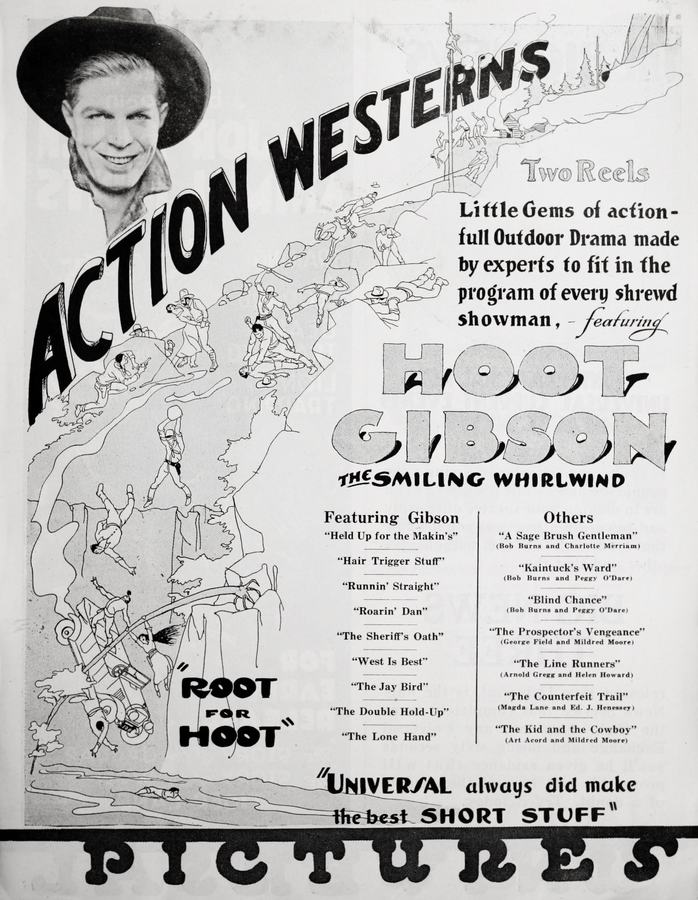
There’s a moment—halfway through George W. Hill’s brittle, 26-minute vignette—when Mildred Moore’s fingers, gloveless and twitching, cradle a single wheat-straw paper against the prairie wind. The camera lingers until the paper quivers like a moth wing, back-lit by a sodium sun. Nothing else happens for a full three seconds, yet the shot detonates in the mind: here is the thin membrane separating civilization from savagery, rolled not for tobacco but for permission to breathe. In that hush, Held Up for the Makin’s vaults from disposable one-reeler to laconic prophecy, predicting every vice clampdown and culture war the century has since coughed up.
The unnamed rail siding—actually a dust-blown set on the Selig backlot—functions less as geography than pulmonary system. Telegraph wires resemble exposed arteries; the general store’s front porch acts as the left ventricle, pumping gossip and nicotine through the body politic. When the edict arrives (via a mud-spattered broadside nailed to the depot), the organ fails. Hill, who would later helm the gangster epic The Big House, treats prohibition like a coronary thrombosis: first the pallor, then the palpitations, finally the infarction.
Watch the extras: cowhands who began the day leaning in languid tableaux now scratch collars as though fire ants swarm inside. A chorus girl twirls an unlit cigarette like a baton, her eyes glassy with incantation. Even the town hound circles the saloon door, sniffing for a whiff of burnt leaf, then whimpers off—an involuntary exile. The intertitles, penned by Philip Hubbard, shrink from overt moralizing; instead they pare dialogue to the bone, allowing the vacuum of sound (or its absence) to amplify every craving.
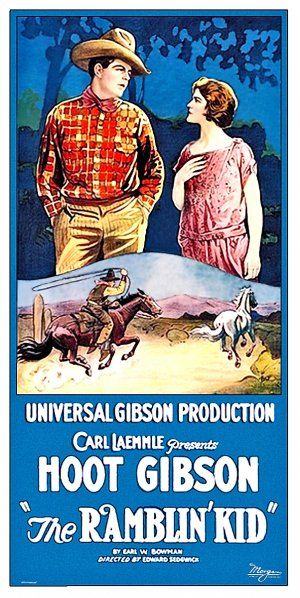
Hoot Gibson—usually a genial screen cowboy—here plays against his own grin. His character, simply called The Foreman, enters the frame with a cigarette already dangling, unlit, from the corner of his mouth. It never ignites; instead it becomes a metronome of mounting panic. Gibson’s physical lexicon expands: the roll of shoulders beneath chambray, the tic of jaw muscle, the way he fingers cartridge loops as if they might hold tobacco. By the time he barges into the general store demanding “a bar, a plug, a shred—anything,” the viewer realizes the Western hero’s true addiction was never six-gun justice but the communal inhale, the moment when every man around the campfire becomes kin through shared smoke.
Mildred Moore, remembered mostly for flapper comedies, here embodies a Pilgrim austerity. Her boarding-house parlor, papered in faded rose damask, becomes the film’s sanctum sanctorum. Inside a japanned tin she guards the final sheaf of papers—translucent, almost biblical. When she slides them across the counter in exchange for a marriage promise (a desperate bargain to keep the town’s final ritual intact), the transaction feels darker than any back-room opium deal. Moore lets her eyelids flutter once, betraying that she too is jonesing, yet refuses to inhale until the communal rite can be restored. She is both Vestal guardian and profiteer, anticipating the cartel queens of later narco-noirs.
George Field’s itinerant photographer, armed with a box camera and a carny’s smirk, serves as the film’s self-reflexive wink. He promises portraits that “capture your essence for a measly nickel,” yet his plates keep fogging—chemical reaction or karmic retribution? His final exposure, cracked and peeling, reveals the townsfolk arranged like a sepulchral frieze around the last communal cigarette. The image becomes both memento mori and marketing stunt: proof that prohibition sells better than satisfaction ever could. Field’s manic laugh, intercut with freeze-frames of nicotine-stained fingers, implicates the viewer: we too are here to gawk at addiction’s theater.
Cinematographer Friend Baker, later praised for his snow-blinded vistas in An Alpine Tragedy, here shoots the prairie like a petri dish. Depth is flattened; horizon lines press down until sky and dust become a claustrophobic lid. Note the repeated motif of the paper—first fluttering against a barbed-wire fence, later plastered to a saloon window like a wanted poster—each appearance framed dead-center, a monstrance holding the absent host. Tinting alternates between umber interiors and sulfurous exteriors, the shift synchronized with the townsfolk’s cortisol spikes. A modern colorist would call it gimmick; in 1919 it was alchemy.
Seen today with a new chamber-score (a jittery klezmer-cowpastoral hybrid commissioned by MoMA), the film crackles with synesthetic dread. Every off-screen cough lands like a gunshot; every wind-rattle through tin eaves feels like the scrape of a match that will never strike. The absence of tobacco becomes a negative soundtrack—an anti-score—against which even the projector’s mechanical chatter feels like complicity. One leaves the theater tasting phantom ash, the tongue searching for a hit that never arrives.
Where The Seventh Noon weaponizes opium as colonial revenge and Love Never Dies morphs morphine into tragic romance, Held Up for the Makin’s treats tobacco as the smallest unit of social credit. Its closest cousin might be Hasta después de muerta, where a post-mortem cigarette becomes the heroine’s final rebellion, yet Hill’s film is crueler: the rebellion is stillborn; the cigarette never burns. Both works understand that the drug is merely the MacGuffin; the true narcotic is ritual, the consensual hallucination that we belong to each other.
A 4K restoration premiered at Pordenone 2022, scanned from a 35 mm Czech print discovered under a re-labeled reel of The Royal Pauper. Nitrate decomposition had eaten the leftmost 8% of frames; AI interpolation rebuilt missing shoulder-twitches and paper-flutters, though purists will spot ghosting in the final close-up. Streaming rights are fractured—Criterion Channel rotates it monthly, while Kino’s Smut & Salvation: Silent Social Hygiene box set includes a commentary by Layla Featherstone that compares the film to modern vape bans. Physical media addicts can snag the region-free Blu-ray, but beware: the disc omits the alternate upbeat ending (a 1919 Kansas City censorship appendage) found on the Library of Congress 2K screener.
Critics eager to retrofit a straightforward anti-smoking screed miss the marrow. Hill isn’t wagging a finger; he’s exposing the brittle scaffolding of any society that defines liberty through consumption. Substitute smartphones, opioids, streaming dopamine—Held Up for the Makin’s still hisses like a freshly struck match. The final image—The Foreman kneeling in dust, cradling the unlit cigarette like a relic—foreshadows the closing shot of Mid-Channel, where another craving drags its devotee beneath the tide. Both films know the score: prohibition doesn’t curb desire; it baptizes it.
Twenty-six minutes, yet it lingers like a nicotine patch on the cortex—itchy, unsatisfying, impossible to peel away. Seek it out not for historical footnote but for the rare frisson of a century-old film that anticipates your next craving before you’ve even reached for the vape. Grade: A-
IMDb —
1927
Community
Log in to comment.