DbcultAccessing Vault...
Cult Review
Senior Film Conservator
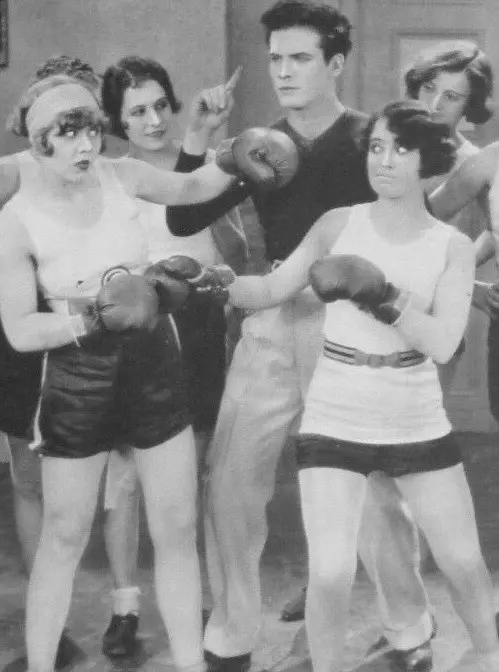
Is 'Helene of Troy, N.Y.' worth watching today? Short answer: yes, but with significant caveats. This rare silent comedy offers a fascinating glimpse into the comedic sensibilities of its era, delivering laughs through physical humor and a surprisingly resonant social commentary, yet its antiquated pacing and reliance on repetitive gags might deter modern viewers.
This film is best for cinephiles, particularly those with an appreciation for early cinema, silent film enthusiasts, and anyone curious about the foundational elements of slapstick comedy. It’s also a delightful watch for those who enjoy character-driven farces where human folly is the central theme. Conversely, it is NOT for viewers seeking fast-paced, contemporary humor, intricate plotlines, or high-budget spectacle. If you struggle with the visual storytelling conventions of the silent era or prefer dialogue-driven narratives, this might prove a challenging watch.
This film works because: Its core premise is timeless, its physical comedy is genuinely inventive in moments, and the ensemble cast delivers committed, expressive performances that transcend the lack of spoken dialogue.
This film fails because: Certain comedic beats are stretched beyond their natural lifespan, leading to occasional lulls in momentum, and its technical limitations, while understandable for the period, can be jarring for an uninitiated audience.
You should watch it if: You have an inherent curiosity for cinematic history and appreciate the art of silent storytelling, or if you simply need a lighthearted, if somewhat unpolished, escape into a world of charmingly absurd human behavior.
'Helene of Troy, N.Y.' doesn't merely tell a story; it playfully reinterprets a foundational myth within the most mundane of settings. The film opens by establishing Troy, N.Y. as a bastion of quiet predictability, a town where the most exciting event might be the postman’s daily rounds. This tranquility, however, is a mere prelude to the delightful chaos that is about to ensue with the arrival of Helene.
Helene is not presented as a femme fatale in the traditional sense, but rather as an unwitting catalyst. Her beauty, almost ethereal in the stark black and white cinematography, acts as a magnet, drawing in every eligible bachelor – and some perhaps less eligible – into her orbit. The central conflict quickly crystallizes around the burgeoning rivalry between Al Cooke's character, a local everyman whose heart is as big as his capacity for clumsiness, and Kit Guard's character, a more conniving, perpetually frustrated figure.
The film excels in illustrating the absurdity of male infatuation. We see grand gestures turn into pratfalls, serenades devolve into public spectacles, and earnest declarations become fodder for community gossip. One memorable sequence involves Al attempting to present Helene with a bouquet of flowers, only to trip over a stray dog, sending both himself and the flowers tumbling into a fountain. Kit, witnessing this, attempts a more 'suave' approach, only to find himself equally entangled in a fishing net, a testament to the inescapable comedic energy Helene's presence generates.
The narrative, while simple, is effective in building a cumulative sense of pandemonium. It's a testament to the film's charm that even without dialogue, the escalating tension and farcical stakes are perfectly clear. The women of Troy, N.Y., particularly Lorraine Eason’s pragmatic friend and Thelma Hill’s observant neighbor, serve as a grounding force, their knowing glances and exasperated sighs providing a crucial counterpoint to the men's antics. They are the audience within the film, witnessing the foolishness unfold.
The strength of 'Helene of Troy, N.Y.' largely rests on the shoulders of its talented comedic cast, each bringing a distinct flavor to the simmering pot of small-town rivalry. Al Cooke, a stalwart of early comedy, delivers a performance that is both endearing and physically demanding. His character is the quintessential 'good guy' whose intentions are pure, but whose execution is anything but graceful. Cooke's ability to convey earnestness even while executing complex physical gags—such as his frantic attempts to retrieve a dropped engagement ring from a fast-moving stream, splashing wildly and inadvertently soaking onlookers—is truly remarkable.
Opposite him, Kit Guard embodies the perfect comedic foil. Guard's character is less a villain and more a self-important buffoon, whose attempts at sabotage invariably backfire in spectacular fashion. His exaggerated sneers and cartoonish body language, particularly in a scene where he tries to trip Al with a strategically placed banana peel only to slip on it himself, are textbook silent film villainy, played with a delightful lack of subtlety. It's a performance that reminds one of the broader strokes favored in the era, yet never feels entirely one-note.
Lorraine Eason, as Helene's confidante, offers a performance of understated charm. Her role is less about grand gestures and more about reaction shots, her expressive eyes and subtle facial movements conveying a wealth of amusement, concern, and occasional exasperation at the men's antics. In a film dominated by overt physical comedy, Eason's quiet presence provides a welcome anchor, a voice of reason (or at least, observation) in the storm. Her knowing side-eye to the camera after Danny O'Shea's character, the local sheriff, accidentally handcuffs himself to a lamppost while trying to break up a brawl, is a highlight.
Thelma Hill and Danny O'Shea round out the core ensemble with equally memorable contributions. Hill often plays the role of the town's resident busybody or a secondary romantic interest, her reactions to the unfolding drama adding another layer of comedic texture. O'Shea, often cast as an authority figure, brings a bewildered dignity to his role, constantly trying to impose order on a town that has fully embraced its chaos. His escalating frustration, communicated through increasingly wild gestures and a perpetually furrowed brow, is a running gag that never truly grows old. Each actor, in their own way, contributes to the vibrant, lived-in feel of Troy, N.Y.
The direction in 'Helene of Troy, N.Y.' is a masterclass in silent film storytelling, relying heavily on visual cues, dynamic staging, and a fluid understanding of comedic timing. The director (uncredited in the provided information, but clearly skilled) orchestrates the escalating chaos with precision, using wide shots to capture the full scope of the slapstick sequences and tighter framing to emphasize individual reactions. The pacing, especially during the numerous chase scenes, is brisk and energetic, a hallmark of short comedies from this period.
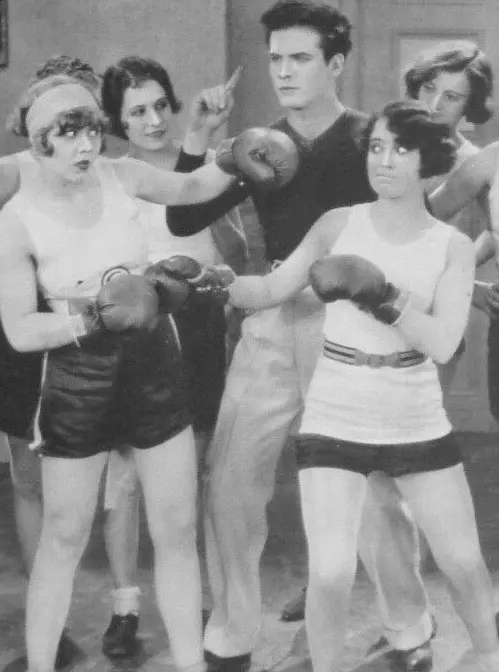
One particularly effective directorial choice is the use of parallel editing during the rivalry sequences. We frequently cut between Al's earnest but clumsy attempts to woo Helene and Kit's more underhanded, yet equally inept, schemes. This creates a sense of immediate comparison and heightens the comedic tension, allowing the audience to anticipate the inevitable mishaps. For instance, a sequence where Al attempts a romantic serenade from beneath Helene's window is intercut with Kit attempting to sabotage the ladder, building to a crescendo where both men end up in a heap, covered in paint that Kit had intended for Al.
The cinematography, while adhering to the technical limitations of the era, is surprisingly expressive. The black and white palette is utilized to great effect, highlighting the contrasts between light and shadow, which often adds to the comedic impact. The framing frequently emphasizes Helene's central, almost iconic, position, often placing her slightly elevated or in a spotlight, visually reinforcing her 'mythic' status as the object of desire. This isn't just a technical choice; it's a narrative one, elevating Helene beyond a mere character to a symbolic force. The subtle shifts in camera angle during crowd scenes effectively convey the town's collective gasp or burst of laughter, drawing the viewer into the communal experience of the film.
The tone is consistently lighthearted and farcical, never veering into genuine malice despite the competitive nature of the male characters. The director ensures that even the most disastrous outcomes are played for laughs rather than drama, maintaining a buoyant atmosphere throughout. This careful balance is crucial for a film that seeks to entertain through exaggeration and absurdity, rather than through emotional depth. It's a testament to the craft that the chaos feels controlled, the humor intentional, and the overall experience genuinely delightful, even a century later.
While 'Helene of Troy, N.Y.' is undeniably a vehicle for slapstick and physical comedy, its thematic undercurrents are surprisingly rich and, I'd argue, still relevant. The film, in its own charming way, offers a subtle critique of male vanity and the often-absurd lengths men will go to for female attention. The men of Troy, N.Y. aren't vying for Helene's affection out of true love, but often out of a desire for status, for the 'prize' of the most beautiful woman. This makes their efforts all the more ridiculous and their failures all the more satisfying.
Perhaps the most surprising aspect of 'Helene of Troy, N.Y.' isn't its humor, but how effectively it uses its titular character as less a person and more a symbolic force, a beautiful void onto which all male desire is projected. Helene herself remains largely passive, a silent observer of the chaos she inadvertently inspires. This unconventional choice highlights the superficiality of the men's pursuits; they are in love with an idea, a vision, rather than the person herself. This approach elevates the film from mere gag-reel to a piece with a more thoughtful, if comedic, observation on human nature.
The film also touches upon the disruption of routine by an external force. Troy, N.Y., is a microcosm of any community whose equilibrium is shattered by something new and alluring. This theme, while presented humorously, resonates with universal experiences of change and its ripple effects. The film suggests that even the most placid environments are susceptible to upheaval when confronted with something that sparks primal human emotions, particularly desire and competition. It's a charmingly simple premise with surprisingly complex implications, handled with a light touch.
One might draw parallels to the spirited physical comedy seen in shorts like Punches and Perfume or the societal observations in The Society Bug, though 'Helene of Troy, N.Y.' maintains a unique blend of mythic allusion and grounded, small-town humor. It’s a testament to the film's enduring appeal that its central conceit – the 'Helen of Troy' narrative in a modern setting – feels as fresh today as it likely did upon its release. The film doesn't preach, but rather invites the audience to laugh at themselves and the foibles inherent in human interaction.
The pacing of 'Helene of Troy, N.Y.' is, much like many films of its era, a double-edged sword. On one hand, the film is often relentlessly energetic, particularly during its numerous chase sequences and physical comedy set pieces. The rapid fire succession of gags, a hallmark of silent shorts, ensures that there's always something happening on screen, preventing boredom for much of its runtime. The editing propels the narrative forward with a commendable urgency, mirroring the frantic efforts of the male suitors.
However, this very energy can, at times, lead to a sense of repetition. While the individual gags are often clever, some are revisited or prolonged slightly beyond their comedic peak. A particularly long scene involving a misunderstanding at a picnic, where various characters accidentally swap food and drinks, leading to a chain reaction of spilled pies and overturned tables, feels stretched. While initially amusing, the extended nature of the sequence risks diminishing its impact. It works. But it’s flawed.
The film's structure is fairly episodic, a common characteristic of silent comedies that prioritized individual gags over complex narrative arcs. Each attempt to win Helene's heart forms a mini-chapter, culminating in a larger, town-wide comedic climax. This episodic nature contributes to the film's light, breezy feel, making it easy to digest. However, it also means that character development is minimal, and the overall arc is predictable, which might not appeal to viewers accustomed to more intricate storytelling.
Despite these minor structural eccentricities, the film's commitment to its comedic premise is unwavering. The director understands the strengths of the cast and the inherent humor in the situation, allowing the performers to fully inhabit their roles and deliver their gags with maximum impact. The film's relatively short runtime (typical for a silent comedy short) largely mitigates the pacing issues, ensuring that even the slightly weaker moments don't overstay their welcome. It's a testament to the robust nature of silent comedy that even with these minor flaws, the film remains engaging.
'Helene of Troy, N.Y.' is more than just a forgotten film; it's a delightful, if imperfect, window into the comedic landscape of its time. Its ability to extract broad humor from a simple, myth-inspired premise is commendable, and the energetic performances of its cast ensure that the film, for the most part, remains a highly entertaining watch. It's a testament to the enduring power of physical comedy and the universal absurdity of human desire.
While its pacing occasionally falters and its narrative structure might feel rudimentary by today's standards, these are minor quibbles in the face of its genuine charm and historical significance. It’s a film that asks for a certain level of engagement from its audience, a willingness to appreciate its particular brand of humor and its place in cinematic evolution. For those who answer that call, 'Helene of Troy, N.Y.' offers a rewarding and surprisingly insightful experience.
Ultimately, I wholeheartedly recommend 'Helene of Troy, N.Y.' to anyone with a passion for film history or a soft spot for classic slapstick. It's a film that proves that laughter truly is timeless, even when delivered without a single spoken word. It might not be a 'masterpiece' in the modern sense, but it is undeniably a valuable and enjoyable piece of cinematic heritage that deserves to be rediscovered and celebrated.
IMDb 7.2
1921
Community
Log in to comment.