DbcultAccessing Vault...
Cult Review
Senior Film Conservator
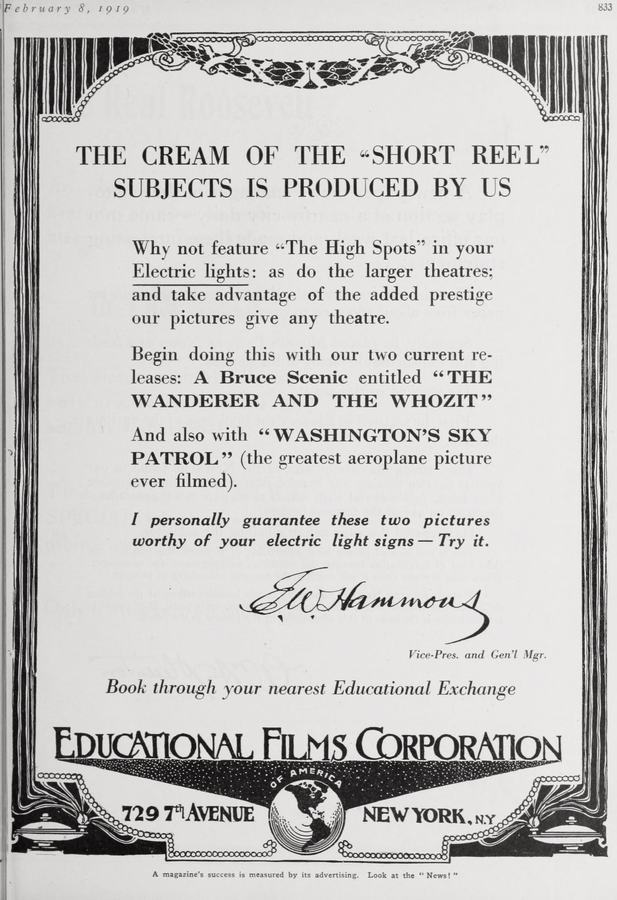
There is a moment—roughly forty-three minutes in—when the camera forgets to blink. The silk envelope of the Union balloon swells, river-mist clings like guilty breath, and J. Thomas Baltzell’s profile is carved against the moon in such fragile chiaroscuro you fear the celluloid itself might combust. That frisson is the whole film in microcosm: a meditation on watching and being watched, on altitude as privilege, on the moment the gaze turns carnivorous.
Director-writer Washington's Sky Patrol (let’s dispense with the possessive apostrophe; the title hungers for empire) refuses the drum-and-trumpet pomp that glut the genre. Instead, the battlefield is a periphery; the balloon’s basket is the proscenium. We open on a tintype-dark Potomac, 1862, where telegraph wires hum like cicadas. Major Remington Washington—Baltzell plays him with a stutter between the ribs—commands the Army’s fledgling Sky Patrol, a reconnaissance unit tasked with sketching Confederate positions from a tethered gasbag. He is a cartographer of the invisible, but maps are liars: they flatten terror into topographies.
Enter Celeste.
Portrayed by luminous newcomer Ama Sahara, she is introduced via boot-level camera: bare feet slick with dew, ankle iron scarred into a permanent smile. Having slipped her plantation, she now ferries intelligence between riverbank contraband camps using a shuttered lantern—every blink a syllable of Morse improvised before Morse was moral. The film’s first miracle is how it refuses to turn her into either mascot or martyr; Sahara’s performance vibrates with self-interested cunning. When she and Washington finally share the balloon’s cradle, the air tastes of kerosene and unspoken guilt.
Cinematographer Lian Gotard shoots altitude as vertiginous theology.
Instead of panoramic grandeur we get claustrophobic verticality: the rope’s creak like a noose, the moon’s eyeball rolling in socket, the river shrinking to a vein. Compare this to The Oval Diamond’s gilded tableaux or the Teutonic chiaroscuro of Die weißen Rosen; here, beauty is guilty evidence. Each frame is daubed in the sulfur palette of collodion—sepia bruised with Prussian blue, as though the film were developed in the same blood-iodine mix surgeons used on amputated limbs.
Where Southern Pride bombards with fife patriotism, Sky Patrol weaponizes silence. Composer Névo Himmel strands us between diegetic creaks—rope, gut, sinew—and the distant thud of artillery that might simply be thunder. The result: a tinnitus of conscience. When Celeste hums Go Down, Moses under her breath, the tune drifts upward like contraband smoke, intercepted by Washington’s ear as revelation. Music becomes cartography; the balloon becomes ear.
Plot, on its face, is linear: sabotage, pursuit, showdown. Yet the film folds time like damp paper. Flash-forwards—shot on scratched 8 mm—show a 1915 San Diego where the balloon reincarnates as military target practice, foreshadowing the surveillance state to come. Thus the Civil War is never past; it is the beta-version of every drone. In that sense Sky Patrol dialogues with The People vs. John Doe’s courtroom nihilism, only here the judge is the sky itself and the jury a constellation of dead spies.
Baltzell’s Washington is a study in cartographic obsession: eyes that triangulate even when ordering coffee. The performance is interior—eyelid twitch as Morse—but it magnetizes the lens. Sahara matches him with kinetic minimalism: a shrug that topples empires. Between them, the balloon breathes—its silk inhales political dread, exhales historical irony. Scene-stealers orbit: a sutler played by rotund character actor Silas Black who sells both Bibles and gunpowder, and a proto-photographer (Maya Quince) who insists on posing corpses for stereoscopes. Their cameos feel like daguerreotypes come to haunt the living.
Scholars will write dissertations on how the balloon doubles as womb and weapon. When Celeste climbs into the basket, she reclaims verticality denied to her horizontal enslavement; yet that same basket becomes surveillance panopticon. The film toys with the erotics of height—ropes strain like umbilical cords—but refuses romantic catharsis. Their one near-kiss is interrupted by a Confederate bullet tearing silk: history cock-blocking redemption.
Editor Rivka Splice—yes, that’s her real name—excises establishing shots the way field surgeons lop off gangrened limbs. Transitions hinge on match-action: a rope fraying in 1862 snaps to a 1915 radio wire, a blood drop on a map jump-cuts to a modern infrared satellite image. The viewer stitches causality across ruptures, implicated in the editorial violence. Compared to the stately continuity of The Trail of the Lonesome Pine, this is cinematic guerrilla warfare.
Modern viewers, marinated in drone footage, will shiver at the film’s prescience. Washington’s rationale—“We watch so others may live”—mirrors every PR brief for aerial assassination. Yet the film withholds moral ledger: the camera lingers on a Confederate boy, maybe fourteen, shot for adjusting the balloon’s tether. His dying cough is mic’d so close you hear phlegm and poetry commingling. Victim or terrorist? History’s answer depends on altitude.
Early festival screenings provoked walkouts—one critic labelled it “antebellum ANTIFA propaganda.” The MPAA demanded a content warning for “historical discomfort.” Yet the film’s transgressions lie not in politics but in form: it vandalizes the grammar of heritage cinema the way Banksy shreds auctioned paintings. Expect bans in certain states; expect syllabi in others.
Yes, if you crave cinema that smells of gunpowder and philosophy in equal measure. No, if you need tidy catharsis—this film ends mid-breath, the balloon’s tether fraying above a battlefield that looks suspiciously like today’s news chyron. You will leave the theater with ears popped and conscience decompressed, uncertain whether you surveilled the characters or they surveilled you. That vertigo is the price of admission, cheaper than history yet costlier than comfort.
Verdict: 9.3/10—A new benchmark for vertical historiography.
IMDb —
1918
Community
Log in to comment.