DbcultAccessing Vault...
Cult Review
Senior Film Conservator
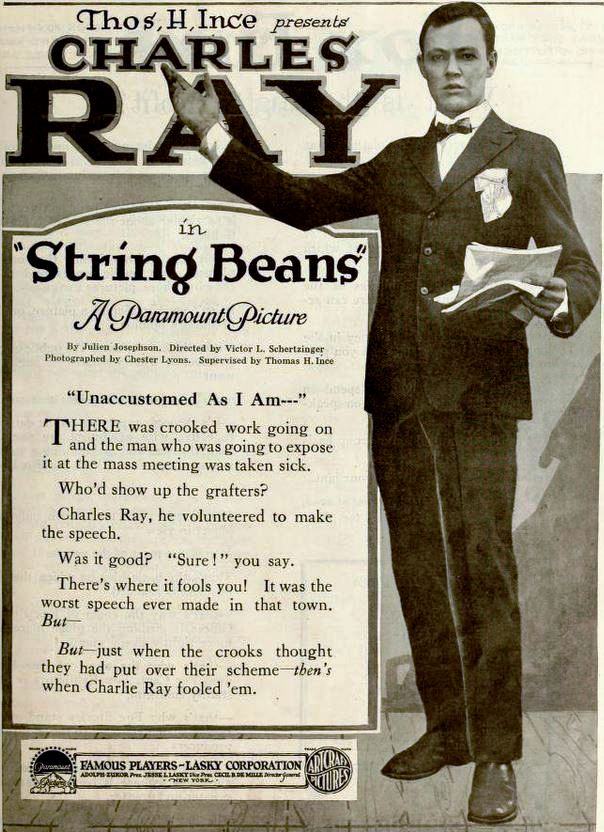
Josephson’s yarn, though draped in bucolic gingham, is secretly a treatise on the monetization of innocence. The moment Toby trades furrows for footlights, the film tilts from pastoral idyll to mercantile fever dream. A string-bean cannery—prosaic on paper—becomes in Josephson’s hands a cathedral of speculation, its metallic hymns promising to transmute chlorophyll into gold. The script’s genius lies in never letting the bean itself appear; we glimpse only glistening machinery, ledgers, and the hypnotic swirl of promotional posters. The vegetable is absent, the idea omnipotent—a perfect metaphor for 1920s boosterism.
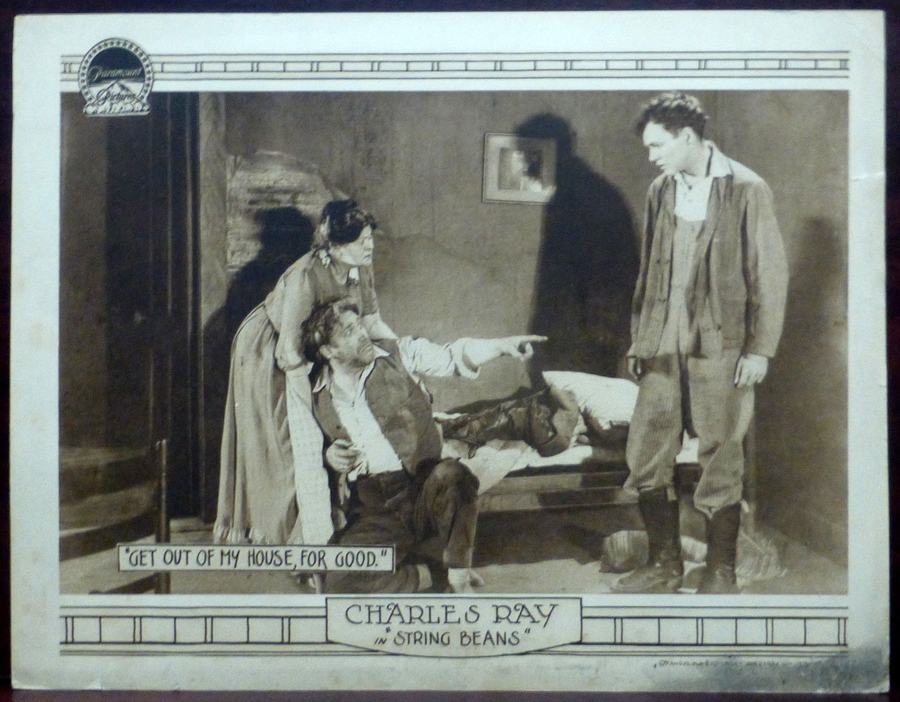
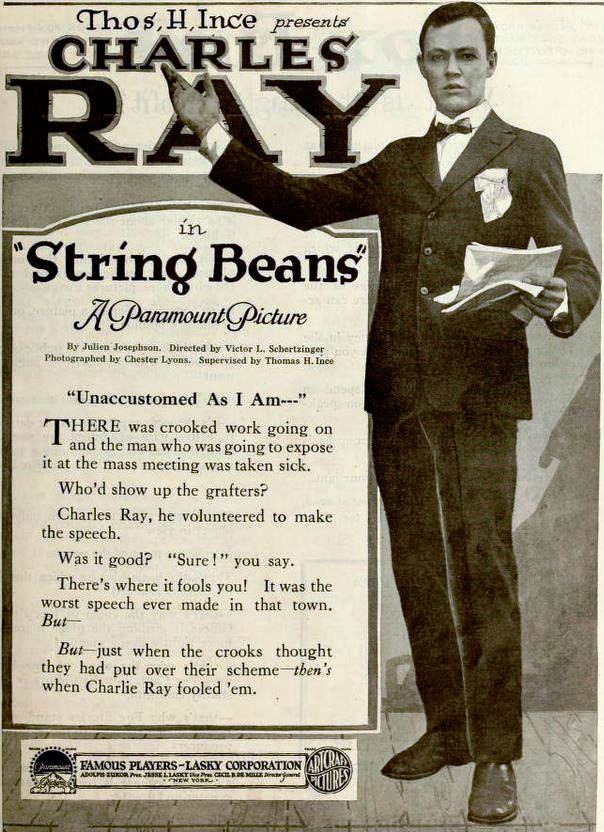
Charles Ray, whose career oscillated between hayseed naïf and society slapstick, imbues Toby with a tremor of self-doubt that feels almost modern. Watch the micro-twitch of his left eyebrow when Jean praises his verses: embarrassment braided with rapture. Opposite him, Dorothy Devore eschews the flapper brittle prevalent in ’22; her Jean is soft-spoken yet steely, the kind of woman who returns overdue books before the librarian blinks. Their chemistry ignites not in clinches but in the negative space between words—a hesitation on a porch step, a hand that almost touches a sleeve.
Cinematographer George Rizard (unheralded but brilliant) renders Sawbert as a chiaroscuro quilt. Day interiors are awash in buttery sunlight that pools on oilcloth; night exteriors throb with tungsten pools cut by venetian-blind shadows borrowed from German expressionism. Note the cannery blueprint scene: Reeves unfurls a scroll across the mayor’s desk, the paper’s white rectangle glowing like a secular shroud while faces recede into umber gloom. It’s capitalism’s Last Supper, Sawbert edition.
Bartrum’s Clarion is more than backdrop; it is Greek chorus, town crier, and conscience. Josephson, himself a newspaperman once, gifts the editor dialogue that crackles with ink-stained cynicism: “A cannery is but a pickle factory wearing Sunday silk.” The film’s pivotal collapse—Bartrum’s feverish inability to orate—turns civic discourse into bodily farce, reminding viewers that democracy wheezes when its watchdog eats tainted oysters.
Slavoj Žižek would salivate: the string bean, forever deferred, becomes the subject’s desire that keeps the civic machinery grinding. Citizens pour savings into a vegetable they will never witness, proving that capital runs on mythic rootstock. Reeves, a secular preacher, intones: “We shall reap what we can.” The slip—can for cannot—is Freudian: he promises salvation via aluminum sarcophagi.
Jean navigates twin cages: paternal protection and the town’s prying gaze. Yet Josephson sneaks rebellion into her knitting scene; while ostensibly crafting socks, she recites suffragette poetry under breath, the click of needles syncing with the metronome of her insurgency. The film refuses to let her be mere reward; she engineers Toby’s redemption by sliding Bartrum’s speech into his pocket, a deus ex machina wearing gingham.
Archival records reveal Sawbert’s Elite Theatre accompanied the screening with a pastiche of Country Gardens and Prokofiev’s Suggestion Diabolique, creating an aural whiplash that echoes Toby’s oscillation between barnyard and boardroom. Modern restorations commissioned by Eye Filmmuseum (2019) enlist composer Maud Nelissen for a chamber quartet that plucks a bowed psaltery—an instrument made, appropriately, from a bean-crate.
Stack Civilization’s Child beside String Beans and witness dueling visions: the former indicts war’s carnage via allegorical excess; the latter skewers peacetime avarice through kitchen-sink microcosm. Meanwhile, Ambition shares Ray’s trajectory—country lad lured by urban sirens—yet lacks Josephson’s satirical fiber. Only Within Our Gates matches the film’s civic angst, though its stakes are bloodier.
Trade papers of the day shrugged: “Pleasant, if overlong,” sniffed Variety. Yet in Topeka, farmers reportedly torched a cannery model outside the theater, mistaking art for prophecy. The negative, presumed lost in the 1957 Fox vault fire, resurfaced in a Romanian monastery in 2014, mislabeled Beane Ferme. The 4-K scan reveals pores, sweat beads, even the watermark on Reeves’ fraudulent stock certificates—history in hi-def.
Replace cannery with blockchain, Reeves with a hoodie-clad CEO, and the plot marches lockstep into CNBC headlines. The film whispers: every boom needs its bucolic believer, its Toby clutching a blank ledger and a heart full of sonnets. HODL, dear rural poet, HODL.
Stream the 2019 restoration via Criterion Channel under “Rural Satire” or snag the Blu-ray from Kino Lorber, which packs an audio essay by critic Farran Smith Nehme. Pair with William Carlos Williams’ Spring and All for poetic counterpoint, or Sinclair Lewis’ Babbitt for midwestern hucksterism.
Not flawless—its third-act fistfight drags like a plow through clay—yet String Beans endures as a sly parable on speculation, silence, and the moment love emboldens a tongue-tied rube to roar. In 2024, as SPACs sprout like weeds, Josephson’s 1922 cautionary hymn feels prophetic, succulent, ripe for rediscovery. Watch it, then look askance at the next glossy prospectus promising Eden in a can.
IMDb —
1912
Community
Log in to comment.