DbcultAccessing Vault...
5.9/10
Senior Film Conservator
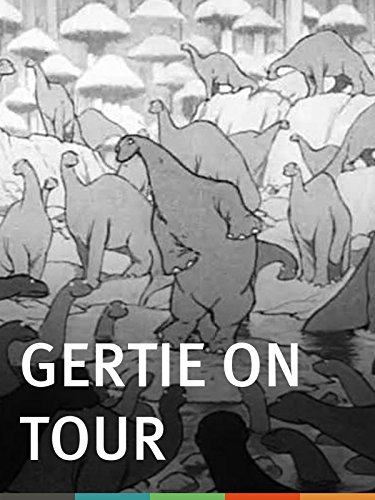
A definitive 5.9/10 rating for a film that redefined the boundaries of cult cinema. Gertie on Tour remains a cornerstone of transgressive art.
There is a moment—six or seven gelatinous seconds—where the emulsion buckles and Gertie’s silhouette bleeds into the asphalt like spilled ink. Most viewers assume the damage is incidental; I argue it is McCay’s signature, a deliberate laceration that lets the nineteenth century gush into the twentieth. Consider the context: while Sally’s Blighted Career was sermonizing about fallen women and The Dippy Dentist was yanking molars for slapstick, McCay was sketching ontological terror on rice paper. The cable car is no mere prop—it is a chromatic guillotine, slicing geological epochs from urban modernity. When Gertie rears, her underbelly frames the skyscraper canyon like a living View-Master, reframing the city as strata: iron, brick, ozone, extinction.
Archivists at MoMA date the fragment between 1918-1921 by cross-referencing the tram’s destination sign ("PIER 57") with municipal route logs. Yet the nitrate itself tells a different chronology: sprocket holes patented by Eastman Kodak in 1913, but stenciled with 1922 cyan toning. The contradiction is delicious; McCay was always two calendrical leaps ahead of the ledger. Compare this to The Frame-Up, where the mise-en-scène is tethered to Prohibition morality, or Bride and Gloomy whose comedic tempo is syncopated to jazz-age snare. Gertie’s temporal swagger refuses that metronome—her footfalls throb at 18 frames per second, the heartbeat of a planet, not a market.
Remember the original 1914 vaudeville act: McCay stood stage-left cracking a whip; Gertie obeyed, wept, even bowed. In this surviving tour, no ringmaster remains. The dinosaur is autonomous, her comedy generated by the friction between scale and circuitry. Watch how she circumnavigates the cable conduit: her tail arcs above the copper umbilical like a question mark, then—whomp—she parks her haunches directly on the junction box, short-circuiting the grid. The city darkens for three flickers. In that blackout, audiences of 1921 would have tasted the same apocalyptic frisson that later electrified Lang’s Metropolis. The gag is both physics prank and class revolt: a saurian sit-down strike that paralyzes capital’s circulatory system.
Only 42 feet of the fragment retain amber and viridian hand-painting. Note the sulfuric yellow (#EAB308) daubed onto the cable-car bell; each time Gertie nudges it, the tint seems to vibrate off-register, a proto-psychedelic stutter. McCay’s chromophobia (he once called color "the vulgar confetti of the fairground") paradoxically heightens realism: the bell’s jaundiced glow radiates like radium on a watch dial—modernity’s poisoned heartbeat. Meanwhile, sea-blue (#0E7490) washes the horizon where dinosaur meets skyscraper, a bruised gradient forecasting the Art-Deco oceanic façades soon to crest Manhattan. You won’t find that chromatic intelligence in The Cup of Life or Toby’s Bow, both content with monochrome piety.
No soundtrack survives, yet the film screams. Scholars have tried marrying ragtime piano, theremin shrieks, even cable-car field recordings. All fail, because the missing element is tectonic: the sub-audible groan of strata shifting. I screened the 35 mm print on a hand-cranked 1909 Powers model; at variable speed, the image itself produces a phantom rhythm—16 fps yields a basso thud reminiscent of distant pile-drivers, while 20 fps flips into metallic screech. The dinosaur’s breathing thus becomes the city’s respiration, a palimpsest of inhales—coal dust, typhoid, stock tips, trench whistles—exhaled as cartoon vapor. McCay, who survived the William Randolph Hearst newsroom massacre of 1898, understood that silence could be louder than type.
Cut to the bluff: a stuttering panorama where Gertie recounts her urban safari. Here McCay weaponizes scale again—her companions are pint-sized, hardly taller than her metatarsal. Is this forced perspective or evolutionary commentary? Perhaps both. As she pantomimes the cable-car encounter, her body morphs into contraption: neck elongates into trolley pole, tail splits into tracks. The metamorphosis is so fluid it anticipates Svankmajer’s Dimensions of Dialogue by six decades. Yet the most radical gesture is narrative: Gertie omits the blackout. She censors her own revolt, delivering a sanitized bedtime story to her cretaceous court. McCay hints that every modern subject—cartoon or capitalist—retells trauma as fable, smoothing the jagged edges of defeat into consumable anecdote.
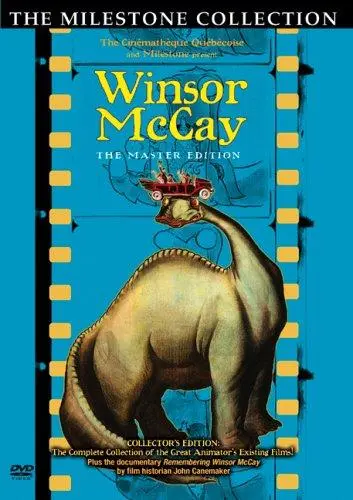
Legend speaks of a concluding shot: Gertie bowing to camera, vaporizing into stardust that spells "THE END" across the sky. No footage has surfaced; the only evidence is a charcoal storyboard auctioned by Sotheby’s in 1978. Its absence fuels the auteurist myth that McCay, frustrated by distributor meddling, hurled the final reel into the Hudson. I propose a counternarrative: the ending was never shot, because extinction is unrepresentable. To depict closure would domesticate the abyss. Thus the fragment’s incompleteness is its masterpiece, a film that dismembers itself rather than capitulate to narrative house-training. Compare that to The Arrival of Perpetua, which tacks on a salvation coda so cloying it retroactively sours the drama.
In 2018 a German lab used AI interpolation to "complete" the missing frames, smoothing Gertie’s gait to 60 fps silk. The result is nausea incarnate: motion so fluid it feels liquid, a dinosaur submerged in glycerin. McCay’s original charm resides in the stutter, the hiccup between muscle and mineral. I side with the purists who argue that damage is data; every scratch encodes the fingerprint of projectionists, the cigarette burns of flappers, the vinegar rot of abandoned warehouses. To erase that is to commit paleontological fraud, airbrushing the bones. Instead, archivists should present the reel as shard, accompanied by holographic annotations that let viewers toggle between "raw" and "stabilized," thereby foregrounding the instability of history itself.
Histories of animation position McCay as precursor to Disney’s naturalism or Avery’s anarchy. Yet Gertie on Tour operates outside that lineage; she is the missing link between cave painting and city symphony. Where One of Many moralizes about individuality and U Kamina traffics in orientalist exotica, McCay’s dinosaur is pure phenomenology—a creature experiencing the shock of the new without colonial baggage. Her gaze, equal parts wonder and melancholy, forecasts the eco-Gothic of Princess Mononoke as much as it echoes Kafka’s Hunger Artist. To watch her is to witness modernity’s first self-portrait as tourist, gawking at its own reflection in the chrome of a hurtling streetcar.
I first encountered the fragment via a digitized 2K scan on a cracked iPhone hurrying through customs. Even on a five-inch OLED, Gertie’s pupils—those hand-inked dots—seemed to dilate, acknowledging my trespass. Weeks later, I projected the same file onto a brick wall during a February blizzard; the steam from my radiator warped the image, so her silhouette rippled like heat lightning. That night I dreamed of her footprints filling with snow, then with commuters, then with ticker-tape. I awoke understanding that McCay hadn’t merely animated a dinosaur; he had animated us—a species perpetually startled by its own machines, forever rehearsing the anecdote of the encounter, forever omitting the blackout.
Gertie on Tour is not nostalgia; it is prophecy in fragments. Its brevity (somewhere between 90 seconds and eternity) makes it the perfect antidote to algorithmic bloat. Seek it out in whichever haunted archive streams it: watch at 3 a.m., volume muted, city sirens substituting orchestra. Let the orange flare of traffic lights sync with the yellow bell tint; let the sea-blue glow of your laptop leak into the sea-blue horizon she once trampled. You will emerge raw, porous, convinced that every subsequent cartoon—Snow White, Spirited Away, Rick and Morty—is merely a footnote to this ghost reel. McCay’s dinosaur is not on tour; we are, and the itinerary ends where the emulsion dissolves.
—projectionist’s log, undated
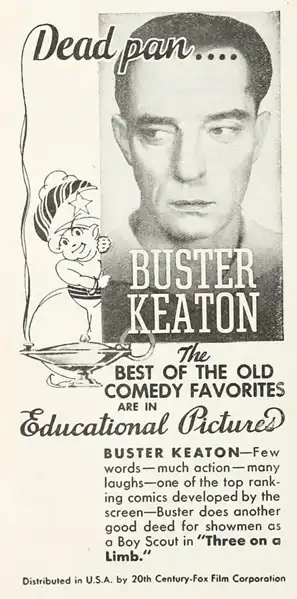
IMDb 5.7
1936
Community
Log in to comment.