DbcultAccessing Vault...
6.1/10
Senior Film Conservator
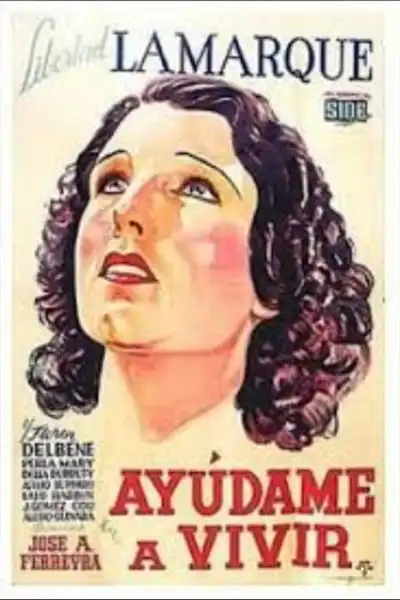
A definitive 6.1/10 rating for a film that redefined the boundaries of cult cinema. Help Me to Live remains a cornerstone of transgressive art.
Okay, so you stumbled upon Help Me to Live. Maybe you’re on a deep dive into old cinema, or perhaps you just appreciate the look of classic black and white films. If you’re into those *really* dramatic 1930s melodramas, the kind where every glance feels like a profound declaration and sadness just lingers, you might actually find something to enjoy here. But if you need sharp pacing, modern dialogue, or clear motivations for everyone, you’ll probably find yourself checking your watch. 🕰️
The story kicks off with Luisa (Fanny Dejouanne), a young woman in a Catholic boarding school. It’s all very proper and a bit stifling, which makes her quiet chats with Julio (Santiago Gómez Cou) through the fence feel like a huge deal. Their connection is really the heart of the early part of the film. You can almost feel the air buzzing between them, even through those heavy iron bars.
Then her brother shows up. And oh, her brother. He’s just… *the worst*. He pulls her out of school without much explanation beyond 'family duty,' and suddenly Luisa is stuck in the family mansion. This guy just stomps all over any happiness Luisa might have. It makes you wonder what his deal even is, beyond just being generally unpleasant.
The movie really leans into the idea of young love being tested. Julio doesn't just disappear, which is nice. He tries to keep their connection going, but the obstacles just keep piling up. The scenes where they try to sneak glances or share hushed words are the best. They carry a real weight, you know? Like, *this* is what matters.
But then, there’s the illness. Luisa starts getting sick, and it’s very vague, very cinematic sickness. She just looks paler and coughs a little. It adds this layer of impending doom, which is classic melodrama, but also feels a bit… convenient. You can almost feel the movie trying to convince you this moment matters, adding more drama to an already dramatic situation.
Libertad Lamarque, who also helped write this, plays Luisa's mother, I think? Or maybe a guardian. Her performance is quite powerful. There's a scene where she's just watching Luisa from a distance, and you can see all this worry and helplessness in her eyes. That one shot lingers so long it becomes *really* effective, making you feel her pain.
The pacing is definitely a product of its time. Things move slowly, giving you plenty of time to soak in the atmosphere. Sometimes it works, like when you’re watching Luisa stare out a window, longing for something more. Other times, it feels a little like everyone is just moving through molasses. 🐌
The mansion itself becomes almost a character. It feels grand but also isolating. All those big rooms and long hallways just emphasize how alone Luisa is once she’s taken away from the school. It’s a very visual way to show her confinement.
While the performances from Dejouanne and Gómez Cou are earnest, it’s the supporting cast that sometimes grounds the film. Juan Siches de Alarcón as the brother is just *so* good at being detestable. Every time he's on screen, you just want to shake him.
This isn't a film you put on for a casual watch with friends. It’s for a specific mood, when you want to dive into a world of big emotions and tragic circumstances, all wrapped up in beautiful black and white photography. It's a snapshot of a certain kind of filmmaking, and for that, it's worth seeing, even if some parts drag.
It’s a story about innocence lost, impossible love, and the suffocating grip of family expectations. It’s not perfect, but it certainly has its moments. If you’re up for a journey back to the 1930s, give it a shot. Just be ready for some serious feels. 💔
IMDb 7.2
1922
Community
Log in to comment.