DbcultAccessing Vault...
Cult Review
Senior Film Conservator
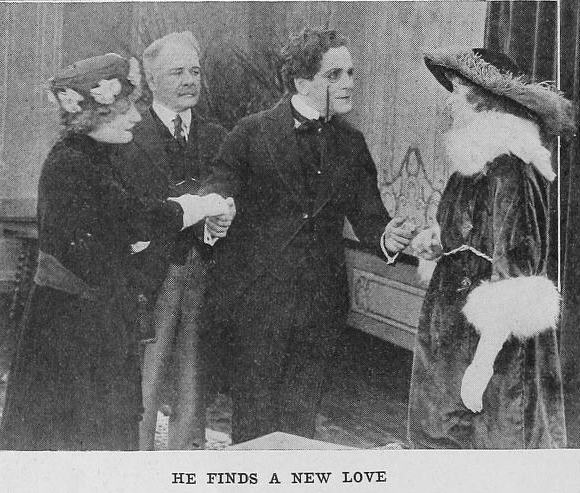
In the pantheon of early silent cinema, few figures command the screen with the same polarizing magnetism as David McCare in The Love Liar. This film is not merely a melodrama; it is a clinical dissection of the 'artist as predator,' a theme that resonates with uncomfortable relevance even in our modern discourse. Directed and written by the formidable Crane Wilbur, who also inhabits the lead role, the film presents a protagonist who is simultaneously an idol of the masses and a pariah of the intimate sphere. Unlike the more traditional heroics found in The Hazards of Helen, Wilbur’s McCare is a study in the erosion of the ego, a man who views human relationships as mere chords to be struck and then silenced.
The film opens with a sequence that establishes McCare’s social dominance. He is a musical genius, a man whose bow coaxes celestial melodies from a violin, yet his private life is a discordant mess of discarded loyalties. The casting off of Margie Gay (played with a haunting vulnerability by Ella Golden) is handled with a chilling lack of empathy. McCare doesn't even grant her the dignity of a direct confrontation, instead delegating the dirty work to his valet, Ludwig. This separation of the 'great man' from the consequences of his actions is a recurring motif. We see a similar exploration of domestic tension in The Other Side of the Door, but The Love Liar pushes the boundaries of the protagonist's likability to the breaking point.
When McCare marries the heiress Diana Strongwell (Lucy Payton), the audience is momentarily led to believe that the 'love liar' has been tamed by the comforts of wealth and status. However, the screenplay brilliantly subverts this expectation. McCare’s discontent is not born of a lack of comfort, but of a fundamental inability to exist in a state of stasis. His advances toward Edna Carewe represent a pathological need to conquer, a trait that makes him more of a tragic villain than a romantic lead. The narrative structure here mirrors the complex social hierarchies explored in The Sporting Duchess, where the veneer of high society hides a rot of moral bankruptcy.
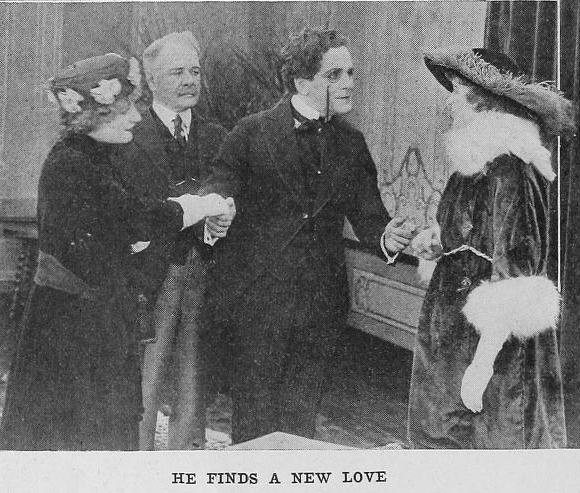
While McCare navigates the salons of the elite, Margie Gay’s trajectory offers a stark, naturalistic counterpoint. Her descent into the 'narrow path' of the streets is portrayed with a surprising lack of judgment for the era. The film acknowledges the economic reality of a woman abandoned by a powerful man. The moment she accosts Ludwig—the very man who helped facilitate her exile—is a masterclass in dramatic irony. Ludwig’s redemption through his marriage to Margie provides the emotional anchor of the film, contrasting his humble, steadfast love with McCare’s pyrotechnic, destructive passions. This subplot echoes the gritty realism often found in The Yellow Traffic, highlighting the vulnerability of women in a world governed by male caprice.
The second act of the film shifts from social satire into the realm of gothic tragedy. The advice Diana gives to Edna—that McCare is an 'overgrown child' who must be pampered—is perhaps the most insightful line in the script. It frames McCare’s behavior as a form of arrested development, a refusal to accept the responsibilities of adulthood. The birth of McCare’s child, which costs Edna her life, should be the moment of his reckoning. Yet, the film takes a darker turn. As Edna lies dying, McCare is found in a café, already mesmerized by the dancer Arlene Allaire (Mae Gaston).
Arlene is not merely a mistress; she is the physical manifestation of McCare’s impending doom. She is the 'Siren' of the silent era, drawing the artist away from the light of his family and into the murky depths of obsession. The visual storytelling here is superb. The café scenes are bathed in a different kind of shadow than the domestic scenes, suggesting a world where the rules of society no longer apply. This transition into a more atmospheric, almost expressionistic style reminds one of the tonal shifts in Odette or the haunting landscapes of The Trail of the Lonesome Pine.
The sequence involving the 'No Funds' checks serves as a pragmatic catalyst for the final collapse. In the world of The Love Liar, love is a currency, and McCare has overdrawn his account in every possible way. His physical altercation with Van Allen and his subsequent arrest strip him of the last vestiges of his dignity. When Arlene refuses to press charges and he is simply 'put out into the street,' it is a more profound humiliation than a prison sentence. He has become a non-entity, a ghost haunting his own life. The intervention of Ludwig and Margie at this stage is a poignant reminder of the lives he discarded, now serving as his only safety net. This theme of a fallen man finding grace in the most unlikely places is a staple of the period, also seen in works like The Penitentes.
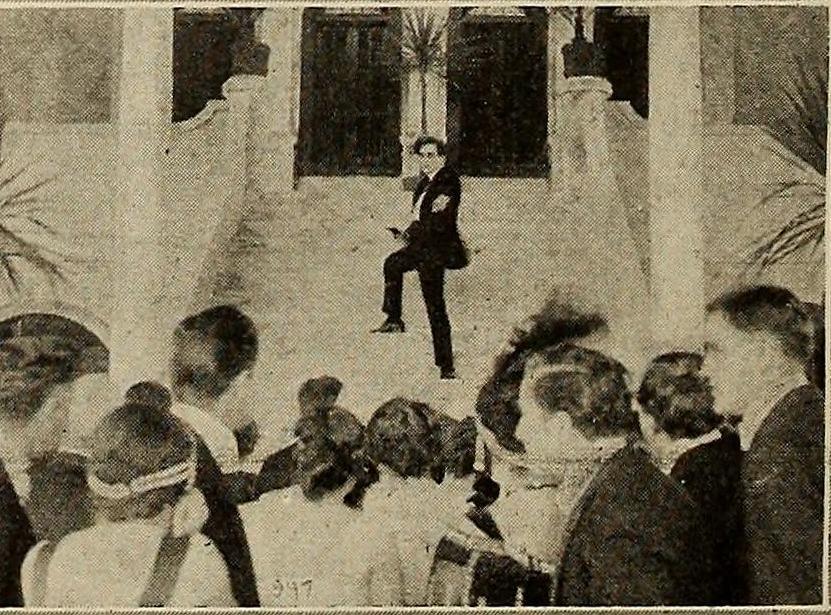
The climax of The Love Liar is one of the most striking images in early cinema. McCare’s return to the café, not as a patron but as a lowly musician, completes his journey from the stage to the pit. The 'madness' that overcomes him as Arlene dances is a culmination of years of repressed guilt and unbridled ego. When he dashes his violin to the floor, he is effectively destroying his soul. The imagery of him carrying Arlene up the grand stairway, revolver in hand, is pure operatic melodrama. His final speech—'At your feet I fling the dregs'—is a searing indictment of his own existence. He realizes, too late, that he has traded his honor and his manhood for a phantom.
The resolution of the film is curiously haunting. Diana, the woman he betrayed first, is the one who facilitates his final wish, bribing Arlene to attend his deathbed. This act of ultimate sacrifice on Diana’s part is almost masochistic, yet it grants her the one thing she always desired: sole possession of the man she loved. As she holds his lifeless body, the film leaves us with a chilling thought—that McCare, in death, has finally become the stationary, loyal object Diana wanted him to be. This dark ending separates the film from more optimistic fare like The Little Gypsy or the epic scope of The Eternal City.
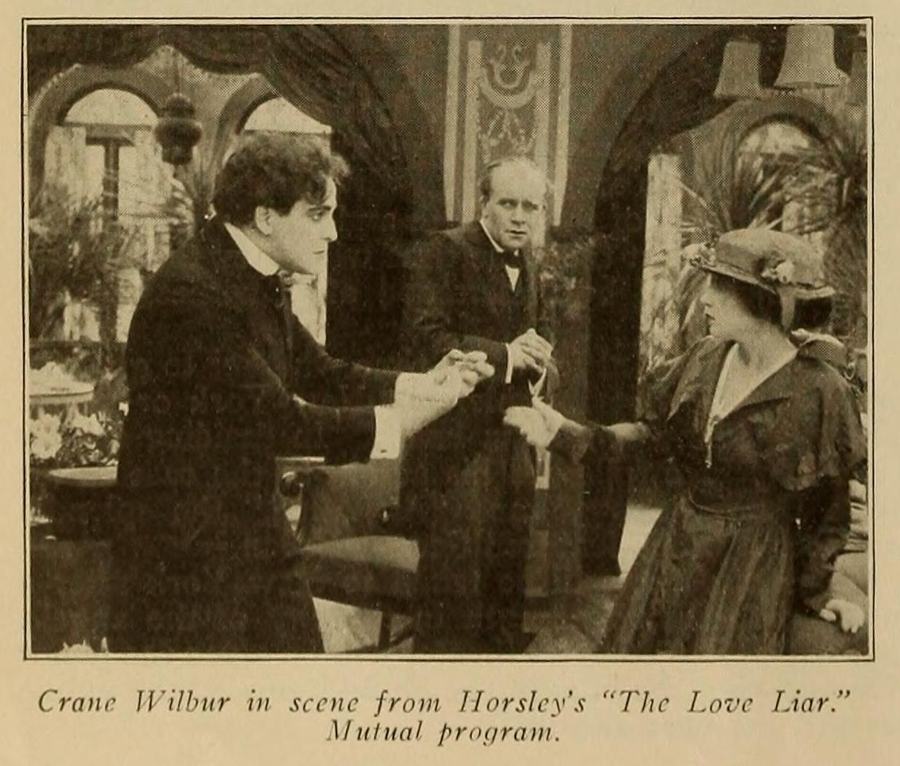
Crane Wilbur’s contribution to this film cannot be overstated. As a writer, he crafted a narrative that avoids the easy moralizing of his contemporaries. As an actor, he brings a frenetic, nervous energy to McCare that makes the character’s descent feel inevitable. The supporting cast, particularly Nan Christy and Fred Goodwins, provide the necessary friction to make McCare’s world feel inhabited and real. The cinematography, though limited by the technology of 1916, uses light and shadow to effectively delineate the two worlds McCare inhabits: the bright, cold reality of the Strongwell estate and the warm, dangerous glow of the café life.
In comparison to other works of the era, such as Joan the Woman or Children of the Feud, The Love Liar feels remarkably intimate. It doesn't rely on massive battle scenes or historical grandeur; instead, it finds its stakes in the micro-expressions of a man losing his grip on his own identity. It is a psychological thriller before the genre was even defined, a precursor to the noir sensibilities that would dominate decades later. Even when compared to international titles like Hans hustrus förflutna, Wilbur’s film stands out for its unflinching portrayal of male fragility and the toxicity of the 'genius' archetype.
Ultimately, The Love Liar is a difficult film to love, but an impossible one to ignore. It challenges the audience to find empathy for a man who systematically destroys everyone in his orbit. It asks whether genius excuses cruelty, and it answers with a resounding 'no.' The final image of Diana alone with the dead McCare is a powerful statement on the nature of obsession—not just McCare’s obsession with Arlene, but Diana’s obsession with McCare. It is a cycle of unrequited longing that only the grave can settle. For those interested in the evolution of the melodrama, this film is essential viewing, standing alongside classics like The Smugglers and The Night Riders of Petersham as a testament to the power of silent storytelling. It is a jagged, uncomfortable, and utterly brilliant piece of cinematic history.
IMDb —
1928
Community
Log in to comment.