DbcultAccessing Vault...
Cult Review
Senior Film Conservator
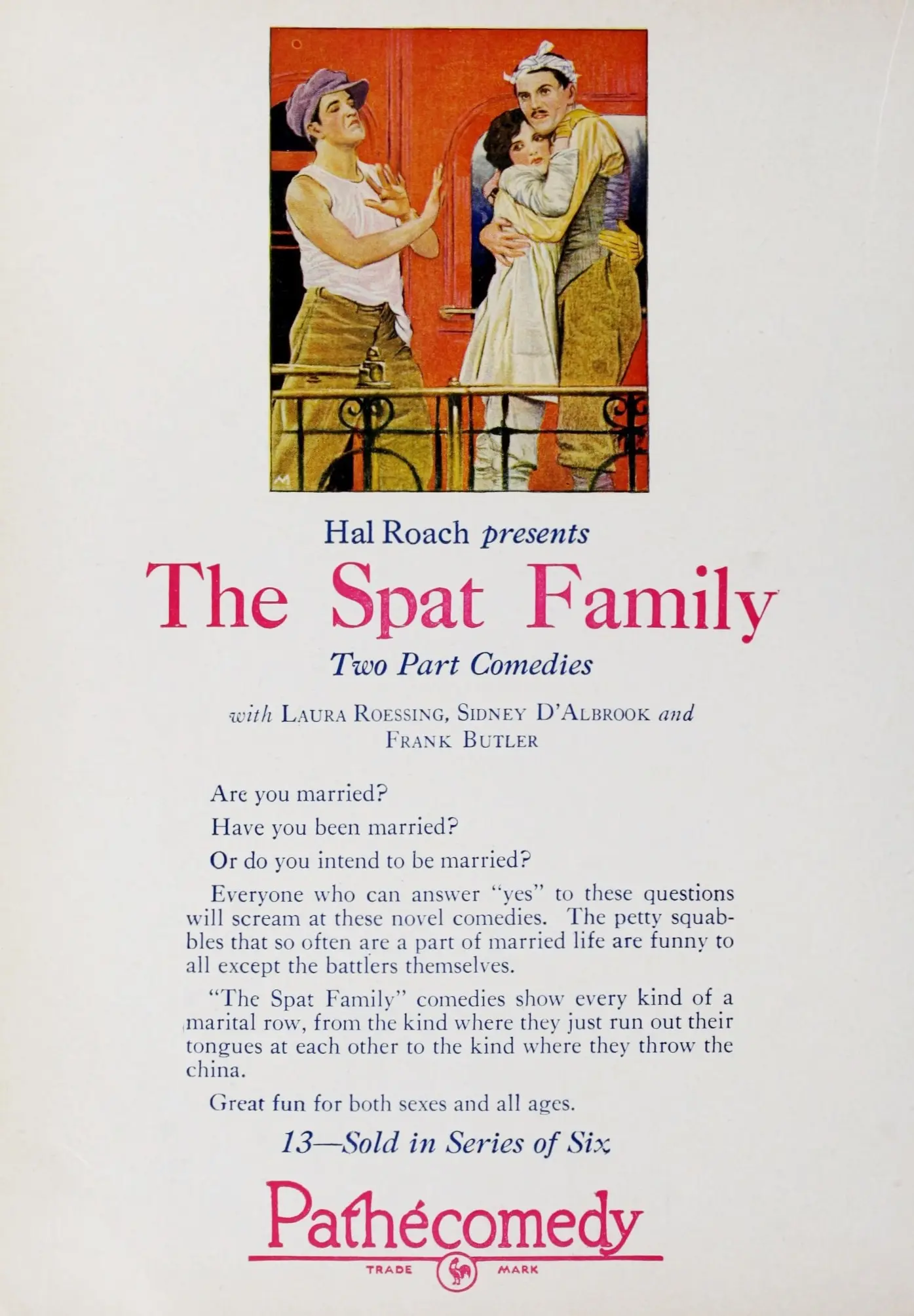
In the annals of cinematic history, certain films, by virtue of their unassuming premise, manage to etch themselves into the collective consciousness with surprising profundity. 'Help One Another' is precisely such a creation, a seemingly simple narrative that, upon closer inspection, reveals a remarkably astute observation of human nature, particularly the intricate, often exasperating, dynamics of domestic cohabitation and the elusive quest for genuine collaboration. This film, far from being a mere period piece, resonates with an enduring relevance, a testament to the timeless comedic potential found in the crucible of everyday disagreements.
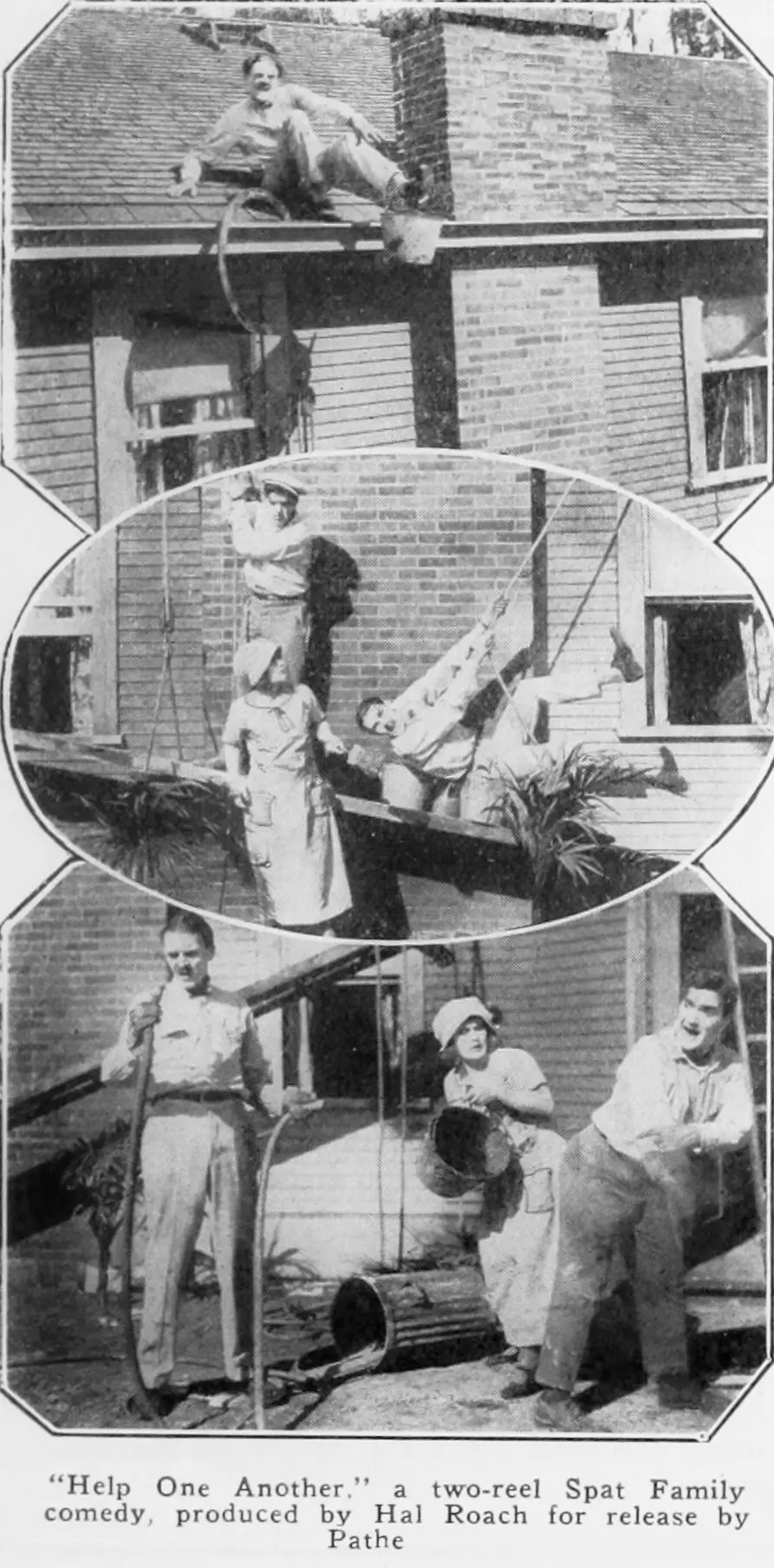
At its core, 'Help One Another' presents a deceptively straightforward scenario: Mr. and Mrs. Spat, alongside the enigmatic Brother Ambrose, embark upon the seemingly innocuous task of repainting their country house. The very title, a beacon of hopeful cooperation, immediately establishes an ironic counterpoint to the unfolding chaos. This initial agreement, we are informed, is the singular moment of harmony shared by the trio throughout the entire action. From this precipice of shared intent, the narrative plunges headlong into a delightful maelstrom of misunderstandings, stubbornness, and escalating mishaps, each setback a direct consequence of the characters' inability to truly 'help one another.'
The brilliance of the film lies in its meticulous portrayal of this domestic discord. It's not grand, sweeping conflicts that drive the plot, but rather the accumulation of minor irritations, differing opinions on technique, and outright acts of passive-aggressive sabotage. Each character contributes uniquely to the burgeoning pandemonium. Mr. Spat, perhaps a man of rigid principles or simply a creature of habit, likely clashes with Mrs. Spat, whose vision for the house or method of execution might be diametrically opposed. Brother Ambrose, an intriguing third wheel, could be either a well-meaning but clumsy presence, an unwitting catalyst for chaos, or an equally opinionated participant in the escalating war of wills. The film masterfully uses the physical act of painting – a task requiring precision, coordination, and patience – as a canvas upon which to project these individual failings and collective dysfunctions.
The comedic timing, a hallmark of this era's filmmaking, is undoubtedly precise, with visual gags and physical comedy likely playing a pivotal role in illustrating the mounting frustrations. One can easily envision paint splatters becoming symbols of marital strife, dropped brushes echoing frustrated sighs, and ladders collapsing under the weight of exasperated arguments. The house itself, initially a symbol of shared ambition, transforms into a silent witness to their unraveling civility, its walls becoming a palimpsest of half-finished strokes and mismatched hues, each blemish a narrative beat in their comedic struggle.
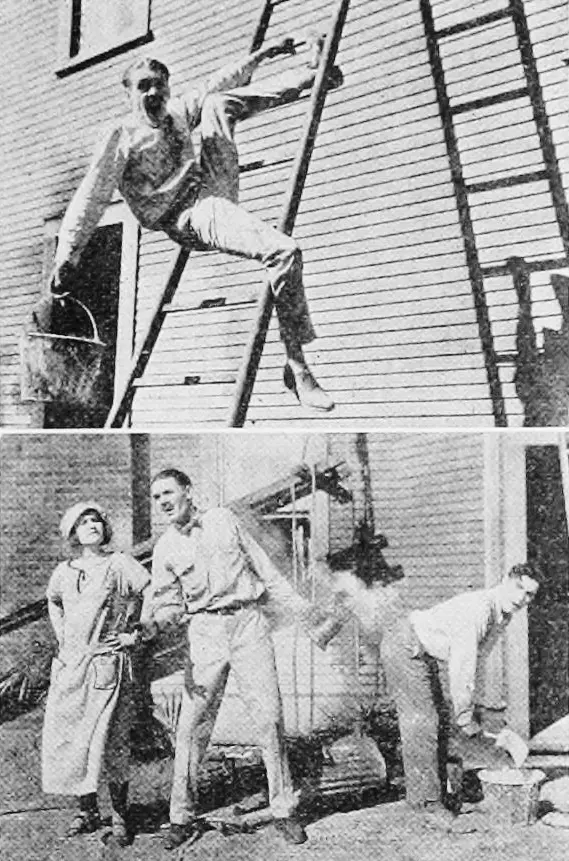
Frank Butler, Laura Roessing, and Sidney D'Albrook, as Mr. Spat, Mrs. Spat, and Brother Ambrose respectively, deliver performances that are both nuanced and boisterously funny. Butler, with his likely portrayal of a man increasingly beleaguered by circumstance and his spouse, grounds the absurdity in a relatable everyman frustration. Roessing, as Mrs. Spat, is undoubtedly his equal in stubbornness and comedic timing, her reactions and retaliations providing much of the film's spark. D'Albrook, as Brother Ambrose, has the challenging task of integrating into this established dynamic, either as a mediating force that fails spectacularly or as an additional source of friction, and his performance likely adds a crucial layer of unpredictable humor. Their chemistry, or rather their anti-chemistry, is the engine that drives this delightful farce.
The film’s enduring appeal lies not just in its humor, but in its subtle social commentary. It dissects the myth of effortless cooperation, particularly within the confines of intimate relationships. The title, 'Help One Another,' becomes a sardonic commentary on the chasm between intention and execution when individual egos and ingrained habits collide. It's a universal theme, one that transcends the specific era of its production, making it as relevant to modern audiences grappling with shared household chores or collaborative projects as it was to its original viewers. This exploration of domestic friction finds echoes in other cinematic works that delve into the intricacies of marital and familial dynamics. While 'Help One Another' focuses on a very specific, physical task, films like The Stimulating Mrs. Barton might also explore the comedic potential of clashing personalities within a marriage, albeit perhaps through more verbal or social means. The genius of 'Help One Another' is its ability to externalize these internal conflicts through the tangible, messy act of painting.
Visually, one can imagine the escalating chaos being depicted with an inventive use of mise-en-scène. The pristine white of a newly opened paint can giving way to splattered walls, stained clothes, and perhaps even paint-covered faces. The progression from orderly preparation to utter disarray would be a visual metaphor for the characters' disintegrating composure. The country house, initially a serene backdrop, would gradually bear the marks of this domestic war, each streak of paint, each unfinished patch, telling a story of frustrated ambition and comedic failure. This visual storytelling, characteristic of the silent era, allows for a universal understanding of the humor, transcending linguistic barriers.
The film's pacing would be crucial in building the comedic tension. It likely starts with a relatively calm, almost optimistic tone, slowly introducing the minor disagreements that then snowball into full-blown farcical confrontations. This gradual escalation ensures that the audience is fully invested in the characters' increasingly desperate attempts to complete the task, even as they actively hinder each other. The rhythm of the film, punctuated by physical gags and exasperated glances, would draw viewers deeper into the Spats' peculiar world.
Compared to more adventurous narratives like The Sea Wolf or grand historical epics such as The Queen of Sheba, 'Help One Another' finds its strength in its intimate scale. It proves that profound humor and insightful character studies don't require vast landscapes or dramatic stakes; they can be found in the confines of a single room, during the execution of a simple chore. This focus on the mundane elevated to the extraordinary is where its true genius lies. The film's ability to extract such rich comedic material from a common household task is a testament to the ingenuity of its writers and the performers.
The ending, one can surmise, would likely leave the house either spectacularly unfinished, a patchwork of conflicting colors and missed spots, or perhaps completed in a manner that reflects the chaotic journey, rather than a harmonious effort. The resolution, if any, would probably underscore the enduring nature of the characters' personalities, suggesting that while the painting project might eventually conclude, their propensity for discord remains. It’s a cynical yet endearing outlook on human relationships.
Moreover, the film's exploration of collaborative failure is almost philosophical. It asks: can individuals truly 'help one another' when their methods, personalities, and even their very definitions of 'help' are so divergent? The answer, delivered with a generous dose of humor, seems to be a resounding 'not easily.' This makes 'Help One Another' a fascinating companion piece to other comedies of escalating mishaps, such as Dodging a Million, which, while perhaps focusing on different stakes, shares a similar structural progression of one problem leading to another, each more absurd than the last. The beauty of 'Help One Another' is that these 'problems' are entirely self-inflicted, born from the very fabric of human interaction.
In conclusion, 'Help One Another' is more than just a period comedy; it is a vibrant, insightful, and thoroughly entertaining examination of the challenges inherent in cooperation. Through its vivid characters and escalating farcical situations, it reminds us that sometimes, the greatest obstacles to achieving a common goal are not external forces, but the very people we are trying to 'help.' It's a cinematic experience that will undoubtedly leave audiences chuckling, perhaps recognizing a touch of themselves in the Spats' hilariously futile attempts at domestic harmony, and pondering the true meaning of its ironically optimistic title. A truly enduring classic, it deserves its place among the finest character-driven comedies of its time, showcasing the timeless power of simple storytelling to illuminate complex truths about the human condition.
IMDb —
1928
Community
Log in to comment.