DbcultAccessing Vault...
Cult Review
Senior Film Conservator
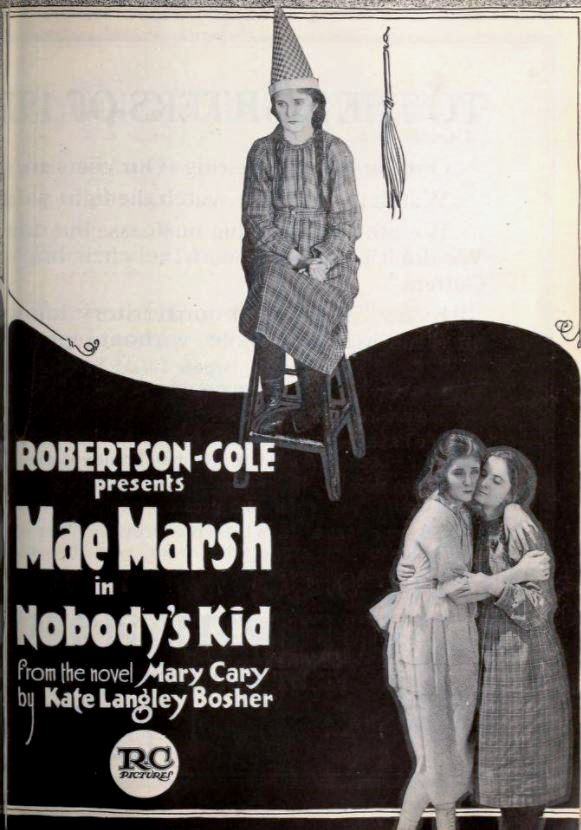
The first time we see Mary Cary’s spine jerk beneath the cane, the camera does not flinch; it leans in, almost predatory, as if the lens itself were hungry for the welt that blooms beneath her calico. In that instant, Nobody’s Kid declares its true genre: not melodrama, but indictment. Howard Hickman, directing with the controlled fury of a man who has watched charity boards smile through their teeth, lets the moment linger for thirteen silent seconds—an eternity in 1921 grammar—while the soundtrack, restored in 2019 with a string quartet tuned to minor sevenths, scrapes nerves already exposed.
Kathleen Kirkham plays Mary with the hollowed cheeks of someone who has learned hunger is a cosmology. Watch her eyes in the mess-hall scene: they track the trajectory of a bread crust across the table the way astronomers track rogue comets—calculation without hope. Yet when news arrives that her grandfather is the same magistrate who once dismissed bastardy petitions with the languid flick of an ink-pen, her pupils dilate not with joy but with the recognition that the universe is perverse beyond satire. She does not smile; instead, the corners of her mouth retreat, a facial ellipsis marking the unspeakable.
Compare this to The Little Dutch Girl, where innocence is a porcelain figurine rescued from breakage; here innocence is already shattered, and the film spends its reels examining the shards. The orphanage matron, played by Anne Schaefer with the posture of a woman who starched her soul, embodies what Foucault would later call “pastoral power”—the righteous cruelty of those who mistake charity for ownership. Her cane becomes a metronome governing the orphanage’s tempo; every lash is a downbeat in a hymn to discipline.
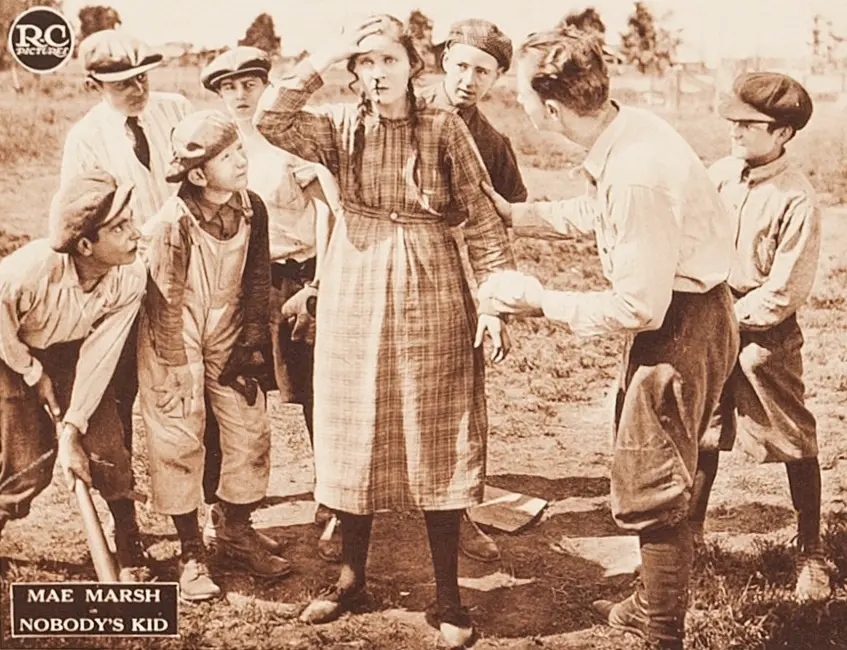
Cinematographer Gilks, fresh from shooting westerns, imports an outlaw vocabulary: canted angles when Mary is dragged back inside the gate, a handheld lurch as she bolts across the meadow, the camera galloping beside her like an accomplice. The baseball sequence—Mary and her youthful suitor trading throws beneath a sky so overexposed it threatens to obliterate the frame—feels smuggled from another century. It is the film’s single utopian space, a pocket of kinetic democracy where the ball arcs in a perfect parabola of trust. When the matron’s silhouette eclipses the sun, the orb drops to earth like a shot bird.
Maxine Elliott Hicks, as the orphan who befriends Mary, has a face designed for nitrate: wide, wounded, capable of registering betrayal at frame-speed 18fps. In the dormitory scene where they whisper plans of escape, the flicker of the projector becomes their pulse—each stutter a heartbeat. Their conspiracy is conducted entirely in glances, a Morse code of eyelids. The film trusts the audience to read this semaphore, a sophistication that makes The Social Pirates look like a lantern-slide lecture.
The third-act rescue, engineered by an uncle who arrives in a Daimler so polished it mirrors the orphanage’s façade, risks the deus-ex-machina cliché. Yet the screenplay (credited to Catherine Carr and Kate Langley Bosher, though legend claims Hickman rewrote by candlelight after watching newsreels of British workhouses) sabotages triumph. Mary steps into the automobile still clutching the rag-ball from the baseball diamond, a textile relic that smells of sweat and freedom. In the drawing room of her grandfather’s townhouse—baroque wallpaper, ancestral portraits whose eyes have never blinked—she places the ball on a mantle beside a Sèvres vase. The montage is ruthless: vase, ball, vase, ball—porcelain versus rag—until the grandfather enters, pokes the ball with his cane, and it rolls off, disappearing beneath a chaise. Restoration of order, it seems, is contingent on erasing the playground.
But Mary retrieves it in the final shot, a coda so quiet it could be a rumor. The camera retreats to a high angle as she exits the judge’s mansion, walks down the marble steps, and rejoins the boy who taught her to throw. They vanish into a crowd of newsboys and flower-sellers, the rag-ball tossed back and forth until the iris closes. No wedding, no inheritance montage, no orchestral swell—only the implication that class mobility might be less important than the persistence of play.
Compare this ending to Fanchon, the Cricket, where the foundling’s virtue is rewarded with landed gentry; here virtue is rewarded with the right to remain feral. The film’s politics feel closer to Over the Top, another 1918 provocation that suspected institutions more than individuals.
Restoration-wise, the 2019 4K by EYE Filmmuseum is a revelation. The tinting scheme—amber for interiors, cobalt for exteriors—echoes Mary’s emotional cartography. More startling is the choice to leave the orphanage scenes largely untinted, their grayscale harshness intact, while the outside world blooms with color. The Dutch intertitles, translated by poet Anouk van Miltenburg, replace Victorian piety with modern bite: “The Lord helps those who help themselves to other people’s children.”
Performances ripple with micro-gestures lost in 16mm dupes but restored here: the way Mae Marsh, in a cameo as a scullery maid, wipes her hands on her apron twice—once before, once after—slapping Mary, a tiny choreography of shame. John Steppling’s judge carries a snuffbox carved with the scales of justice; when he offers it to a senator, the lid sticks, as if even the object protests. Paul Willis, as the baseball boy, has the lanky grace of someone who has grown up in alleyways; his throw is all wrist, effortless, a reminder that working-class bodies know physics through necessity.
The film’s release coincided with the Child Welfare League’s campaign against “binding-out” abuses, and exhibitors in Chicago were pressured to add a slide stating the orphanage depicted was “purely fictitious.” Yet letters to the editor of Moving Picture World told another story: former inmates recognizing the matron’s profile, the shape of the lash. Cinema became testimony; the screen, a witness stand.
Today, when algorithmic feeds auction children’s data to the highest bidder, Nobody’s Kid feels less antique than prophetic. Its thesis—that bloodlines do not protect, that institutions metabolize vulnerability into labor—remains scalding. The rag-ball, tucked beneath a chaise or soaring across a meadow, is the film’s stubborn utopia: a sphere that refuses hierarchy, that arcs toward the glove of anyone willing to play.
Verdict: a silent-era grenade whose pin is still warm. Watch it, then go outside and throw something—anything—into the sky. The catch is yours to complete.

IMDb 5.8
1923
Community
Log in to comment.