DbcultAccessing Vault...
Cult Review
Senior Film Conservator
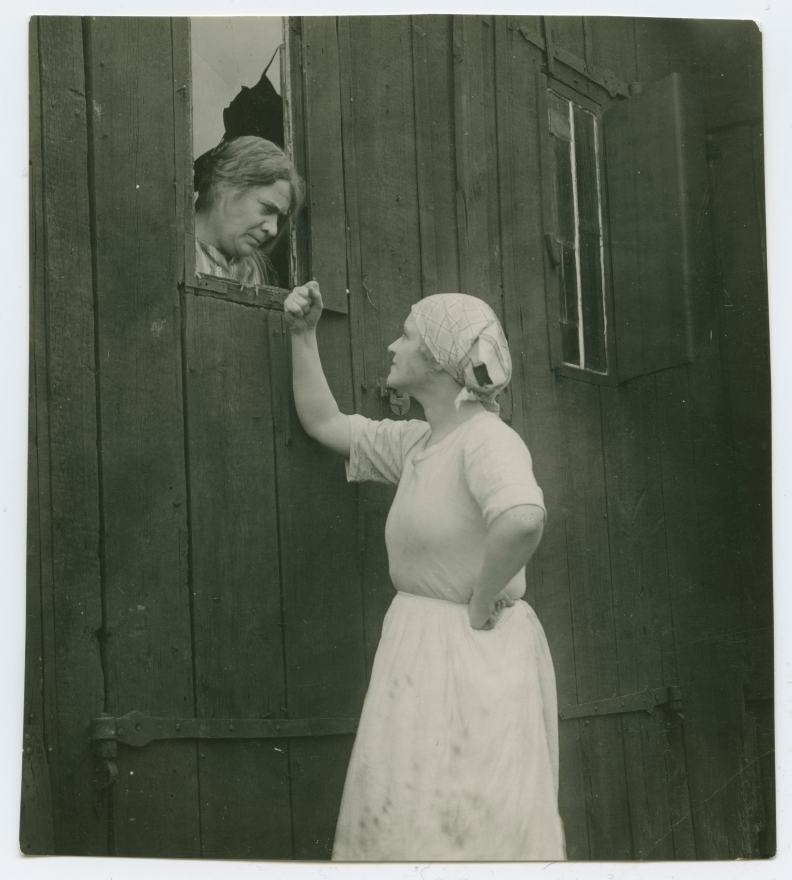
The opening tableau of Hemslavinnor establishes a visual dichotomy: the austere, snow‑laden fields of rural Sweden juxtaposed against the incandescent glow of Stockholm’s streetlamps. This contrast is not merely aesthetic; it foreshadows Grethe’s internal conflict between the comforting familiarity of home and the intoxicating allure of urban anonymity. The film’s deliberate pacing allows the audience to inhabit Grethe’s uncertainty, rendering her eventual decision to seek employment as a domestic servant both inevitable and poignant.
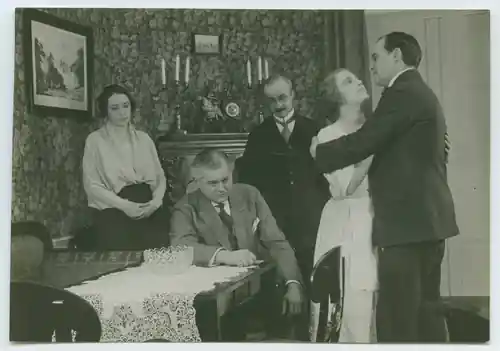
Erik Hoffman delivers a masterclass in restrained melancholy as the widowed master of the house. His subtle glances and measured gestures convey a man haunted by loss, yet yearning for redemption. Karin Swanström, embodying the matriarch, oscillates between imperious authority and fleeting vulnerability, a duality that enriches the household’s power dynamics. The supporting cast—August Tollquist’s footman, whose timid demeanor belies a hidden resolve; Olav Riégo’s cook, whose weary eyes reveal generations of servitude; and Elvin Ottoson’s gardener, a stoic presence grounding the narrative—collectively construct a microcosm of class stratification that feels both historically specific and universally resonant.
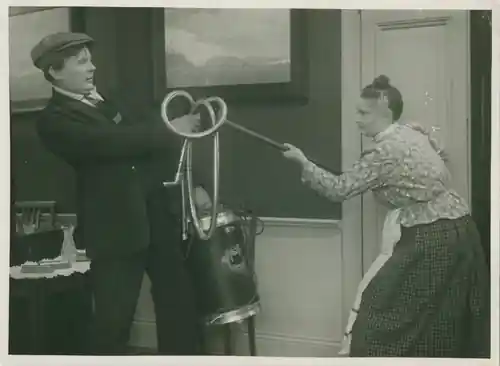
Cinematographer Ragnar Hyltén‑Cavallius employs chiaroscuro lighting to accentuate the tension between light and shadow within the manor’s opulent interiors. The camera often lingers on Grethe’s hands—clumsy at first, then deftly stitching intricate patterns—symbolizing her gradual mastery over both craft and circumstance. The use of deep focus during the climactic fire sequence, reminiscent of the visual language in The Street Called Straight, immerses viewers in the chaotic ballet of flames, smoke, and desperate humanity.
At its core, Hemslavinnor interrogates the paradox of servitude: the paradoxical empowerment that can emerge from subjugation. Grethe’s evolution from a naïve country girl to a decisive heroine mirrors the broader societal shifts of 1920s Sweden, where women increasingly asserted agency in public and private spheres. The film’s subplots—particularly the clandestine romance between the widower’s son and a mysterious newcomer—serve as allegorical reflections on the constraints of class and the yearning for authentic connection.
When juxtaposed with Black Orchids, which also explores the intersection of domestic labor and personal aspiration, Hemslavinnor distinguishes itself through its nuanced portrayal of internal household politics rather than external societal critique. Similarly, the thematic undercurrents of hidden desire and social masquerade find resonance in The Vanity Pool, yet the Swedish film maintains a distinct lyrical austerity that sets it apart.
In the absence of synchronized sound, the film leans heavily on intertitles rendered in a crisp, sans‑serif typeface, their brevity amplifying emotional weight. The actors’ facial micro‑expressions—Grethe’s widening eyes upon discovering the fire, the matriarch’s clenched jaw as she confronts financial ruin—communicate volumes without utterance. This reliance on visual storytelling aligns the film with the silent era’s golden standard, echoing the emotive potency found in Camille.
The climactic conflagration is orchestrated with a blend of practical effects and inventive editing. Rapid cuts interspersed with lingering shots of Grethe’s determined visage create a visceral sense of urgency. The flames, tinted with a subtle amber hue, reflect the film’s signature palette of dark orange (#C2410C) and yellow (#EAB308), while the surrounding night sky retains its deep sea blue (#0E7490), preserving visual continuity. This scene not only serves as a narrative turning point but also showcases the director’s audacious ambition within the technological limits of the era.
Grethe’s burgeoning skill in embroidery functions as a recurring motif, symbolizing the stitching together of disparate lives and the creation of identity from fragmented threads. The intricate patterns she crafts echo the film’s own structural complexity, where each subplot weaves into a cohesive tapestry. This artistic parallel invites viewers to consider the act of creation as an act of resistance against societal constraints.
While Hemslavinnor may not enjoy the same mainstream recognition as contemporaneous Hollywood epics, its influence reverberates through Scandinavian cinema. The film’s focus on female agency prefigures later works such as Women's Weapons, where domestic spaces become arenas of empowerment. Moreover, its visual language has been cited by modern auteurs exploring the interplay of light and shadow in confined settings.
Upon its 1925 release, critics lauded the film’s “poetic realism” and praised the cast’s “subtle virtuosity.” Contemporary scholars, however, highlight its “underexplored feminist subtext,” arguing that Grethe’s journey transcends personal ambition, embodying a collective yearning for gender equity. The film’s restoration in 2019, featuring a newly commissioned score that blends period‑appropriate instrumentation with ambient drones, has sparked renewed interest among cinephiles and archivists alike.
Hemslavinnor stands as a testament to the silent era’s capacity for narrative depth without reliance on dialogue. Its meticulous composition—balancing character study, social commentary, and visual spectacle—offers a rich field for analysis. Whether examined through the lens of gender studies, cinematic technique, or historical context, the film rewards repeated viewings, each revealing new layers of meaning.
Keywords: Hemslavinnor, Swedish silent film, Grethe, domestic servant, 1920s cinema, feminist film analysis, Ragnar Hyltén‑Cavallius, Erik Hoffman, Karin Swanström, cinematic fire sequence, embroidery motif, silent era craftsmanship
IMDb —
1924
Community
Log in to comment.