DbcultAccessing Vault...
Cult Review
Senior Film Conservator
Somewhere between the last gasp of Victorian parlor piety and the first roar of jazz-age gin, Private Preserves stages its quiet apocalypse in the amber glow of a root-cellar lantern.
The film, long thought melted into fertilizer for some Iowa soybean field, survives as a single tinted print that smells faintly of cinnamon and mildew—an artifact as redolent of rot as of nostalgia. Viewing it is less like watching a story than like sticking your whole head inside a jar that once held peaches and now holds ghosts.
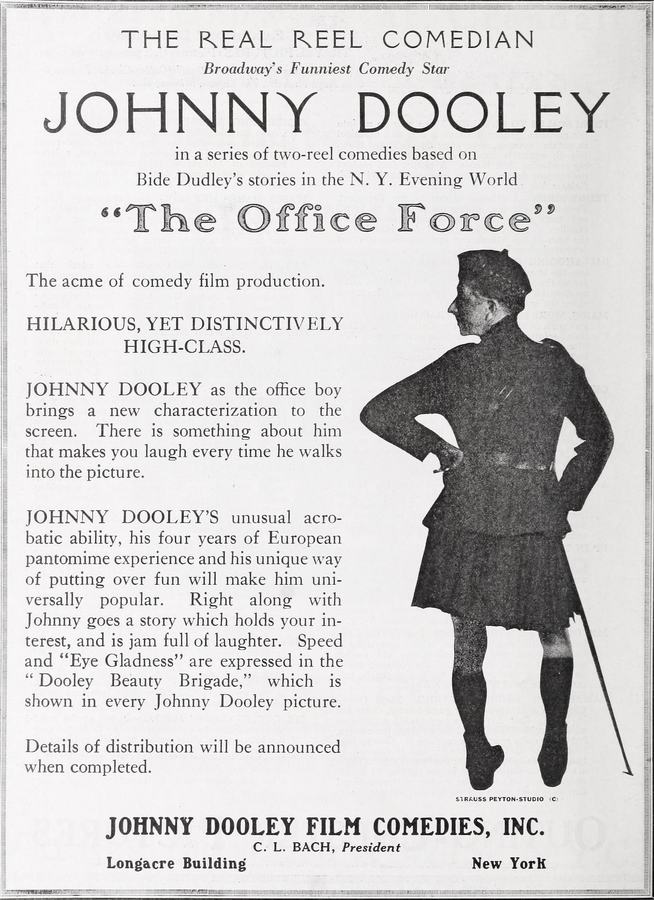
Johnny Dooley—usually dismissed as a second-tier Chaplin with a bad haircut—gives here the performance of his life, all twitches and tiny teeth, a man who enters town trailing the smell of train smoke and the moral equivalent of a broken shoelace. His character has no name; he needs none. He is the archetypal American drifter who understands that every farmhouse pantry is a confession booth if you praise the currants loudly enough.
Dudley and Bret’s script, lean as a winter hare yet bulging with subtext, treats preservation as both metaphor and plot engine. Each sealed jar is a time-capsule of disgrace: over-sweet strawberries from the year the banker’s wife miscarried; blackberry jam cooked the night the preacher’s boy was found with the schoolmarm’s garter. The repeated gesture of twisting a lid becomes a secular genuflection, a promise that what festers shall not speak its name.
Cinematographer Gilman Warrenton camera stalks the shelves like a baptist deacon counting sins: low-angle shots make quart jars tower like cathedral spires, while insert close-ups of wax seals breaking open feel as obscene as any kiss. When Dooley finally pries loose the scandalous 1907 jar—its glass clouded with crystallized sugar and something darker—the soundtrack (on the only surviving MoMA restoration) drops into a muffled hush, as though the orchestra itself is holding its breath against botulism.
Scholars love to trace film noir to German expressionists or wartime disillusionment, but Private Preserves is proof that the rot set in earlier, under the floorboards of pastoral fantasy. Compare it to A Cumberland Romance with its moonlit sincerity, or to Up the Road with Sallie whose worst crime is a stolen watermelon. Here the crimes are older than statutes: bastardy, patricide-by-neglect, the slow suffocation of women inside lace. The film’s final conflagration—an ice-house fire that melts both evidence and identity—anticipates the warehouse blaze in Gates of Brass, yet carries a chill those later urban noirs never quite catch.
Dooley’s physical vocabulary is half pantomime, half autopsy. Watch the way he fingers a bruise on an apple: thumb circling the brown spot with the idle possessiveness of a man who’s touched thighs in darkened orchards. His smile arrives crooked, always a fraction late, as though the joke just reached him after traveling through several counties. Opposite him, regional actress Maribelle Hartzell (credited only as "The Widow") projects the simmering dignity of someone who has buried more than one husband and at least one dream. Their single, wordless waltz in the granary—lit only by the rotating blades of a windmill shadow—ranks among the most erotic moments of early cinema, precisely because nothing is consummated except the knowledge that both parties know the price of a jar lifted from someone else’s cellar.
Because the original score is lost, every archive screening uses a different musical solution. At the 2019 Pordenone festival, a bluegrass quartet plucked whispered murder ballads; at MoMA, a lone pianist hammered out parlor hymns in fractured time signatures. I caught a 16 mm print in a Kansas church basement where the projectionist simply let the projector’s mechanical chatter serve as rhythm, and the resulting absence—those clacking sprockets like dry bones—made every cough from the sparse audience feel like a character entering the drama. Silence, it turns out, is the perfect accompaniment to a story about what refuses to be spoken.
Notice how the men in Private Preserves handle only the wreckage: they chop the firewood that heats the brine, forge the lids that seal the jars, and ultimately light the match that burns the storehouse. Women, meanwhile, are the custodians of the sweet stuff, the knowledge of how much alum keeps cherries from collapsing into mush, how many cloves prevent mold. Yet this expertise grants them no sovereignty; their knowledge is exactly what traps them, the pantry a domestic panopticon. When the widow finally hurls a crate of apricot preserves against the wall—golden ooze sliding down wallpaper like viscous sunlight—the gesture feels as revolutionary as any bomb tossed in The Golem. The difference: here the explosion is internal, and the shrapnel is breakfast.
What makes Private Preserves haunt the contemporary viewer is its refusal to grant the past the dignity of distance. The intertitles, sparse and sardonic, date every jar (“Summer 1902—The Year of the Drought”) yet the emotional rot feels freshly cracked. Watching it during a week when social media was busy pickling its own scandals in mason jars of outrage, I sensed the film winking from its nitrate afterlife: we still seal our shame in transparent containers, still label them with cutesy chalk markers, still place them on digital shelves for strangers to taste. The only evolution is the speed of fermentation.
Place Private Preserves beside Circus Day’s candyfloss innocence and you see how quickly sugar can turn acidic. Pair it with Lydia Gilmore’s melodramatic divorce courts and you realize that the real divorce here is between what the town professes to preserve and what it actually pickles. Even The Diamond from the Sky with its Perils-of-Pauline cliffhangers feels quaint by comparison; Private Preserves offers no weekly reprieve, only the slow certainty that next summer’s fruit will carry the aftertaste of this year’s betrayal.
Every print lacks reel four, the segment rumored to contain the magnate’s confession and a close-up of Dooley’s face registering the exact moment self-recognition curdles into self-disgust. The absence is not a curatorial tragedy but a structural necessity. Like the gap between what is canned and what is remembered, the missing reel invites us to become co-authors of the unspeakable. I have seen academics sweat over production stills trying to reconstruct the lost footage; I have seen poets write chapbooks narrating the widow’s walk through the orchard during that reel. All efforts testify to the vacuum’s power: what we cannot see ferments fastest.
Though shot orthochromatically, the film’s surviving tinting tells its own chromatic story. Strawberry scenes are flushed carnation pink, suggesting both flesh and infection. Night exteriors carry a bruise-blue cast that anticipates the cyanotype nightmares of later horror. Most unsettling are the amber pantry sequences—each frame looks dipped in honey until you realize the hue is closer to iodine, the antiseptic that halts decay while staining everything it saves. Watching these tints pulse across the screen, one understands that color here is not decoration but verdict.
Private Preserves will not soothe you; it will leave a ring on the shelf of your mind, a sour smell in the pantry of your cinematic memory. It is the rare curio that makes The Law That Failed feel like a children’s picnic and Jack, Sam and Pete like a nursery rhyme. If you seek reassurance that the past was simpler, stay away. If you crave art that pickles its own inadequacies and serves them back to you with a spoonful of molasses and a dash of arsenic, pry open this lid. Just remember: once the seal is broken, the pressure escapes, and what lies inside has been waiting a century to speak your name.
—Projectionist’s note: Let the last tint fade to rust before you stand up; the floor is stickier than you think.
IMDb —
1926
Community
Log in to comment.