DbcultAccessing Vault...
7.4/10
Senior Film Conservator
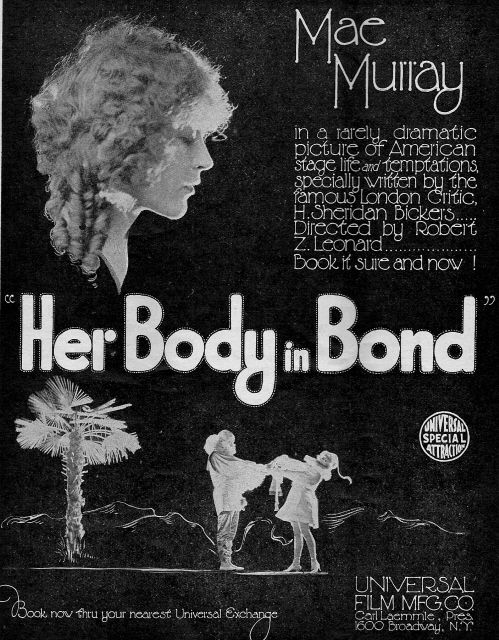
A definitive 7.4/10 rating for a film that redefined the boundaries of cult cinema. Her Body in Bond remains a cornerstone of transgressive art.
In the grand tapestry of silent cinema, where exaggerated gestures and poignant intertitles wove narratives of profound human experience, few films capture the raw emotional intensity and societal anxieties of their era quite like Her Body in Bond. Released in the tumultuous year of 1918, this gripping melodrama, directed with a keen eye for dramatic tension and starring the luminous Mae Murray, plunges viewers into a world where love is tested by illness, and virtue is threatened by the insidious machinations of the wealthy and unscrupulous. It’s a film that resonates with the melodramatic sensibilities of its time, yet its core themes of sacrifice, resilience, and the relentless pursuit of happiness against overwhelming odds remain remarkably potent even today.
The narrative, penned by H. Sheridan Bickers, begins with an idyllic portrayal of marital harmony and professional success. Peggy and Joe Blondin, played with charming exuberance by Mae Murray and Paul Weigel respectively, are a vibrant husband-and-wife dancing team, their cabaret act a testament to their shared talent and undeniable chemistry. Their world, seemingly impervious to hardship, is abruptly shattered by the cruel hand of fate: Joe succumbs to consumption, a devastating malady of the era, necessitating his immediate relocation to the restorative climes of the American West. This separation, though intended for healing, becomes the catalyst for a cascade of misfortunes that threaten to engulf Peggy entirely. Murray’s portrayal of Peggy’s initial despair and subsequent resolve is nothing short of captivating. Her eyes, even without the benefit of spoken dialogue, convey a profound depth of emotion, shifting from the lighthearted joy of performance to the heavy burden of impending solitude and financial strain.
Peggy, with an admirable tenacity, resolves to remain in New York, diligently working to maintain their precarious income. However, her anxieties are systematically inflamed by a series of increasingly urgent and desperate letters, ostensibly from her ailing husband, each pleading for more and more money. These missives, steeped in fabricated despair, slowly erode her hope and push her to the brink of destitution. The true architect of her torment is the avaricious millionaire Harlan Quinn, brought to life with chilling effectiveness by Kenneth Harlan. Quinn, a man whose wealth grants him an alarming sense of entitlement, harbors illicit designs on Peggy. His diabolical scheme involves intercepting Joe’s genuine, hopeful correspondence and replacing them with his own despair-inducing forgeries. This calculated act of emotional terrorism is designed to paint Joe’s situation as utterly hopeless, thereby rendering Peggy emotionally vulnerable and ripe for his predatory advances. Harlan’s performance as Quinn is a masterclass in silent film villainy, his expressions ranging from feigned concern to smirking self-satisfaction, making him a truly loathsome antagonist.
The film masterfully builds tension through this insidious deception. The audience, privy to Quinn’s machinations, watches with a growing sense of dread as Peggy’s world crumbles around her, her belief in her husband’s love and recovery slowly being poisoned by a master manipulator. This narrative device, while a staple of melodrama, is executed with a particular finesse here, highlighting the vulnerability of individuals to unseen forces and the power of misinformation. One can draw parallels to the psychological manipulation seen in films like The Invisible Power, where unseen forces dictate the fates of the innocent, though Her Body in Bond roots its power in the very human, very tangible evil of a wealthy predator.
Driven to the precipice of ruin by a particularly harrowing, falsified letter, Peggy, in a profound and heart-wrenching act of self-sacrifice, finally acquiesces to Quinn's dishonorable proposition. This moment, depicted with immense emotional weight by Mae Murray, encapsulates the societal pressures faced by women in that era, often forced into impossible choices to ensure their survival or that of their loved ones. The idea of a woman’s “honor” being a commodity, a last resort against destitution, is a stark reminder of the limited agency many women possessed. This narrative thread connects Her Body in Bond directly to the thematic concerns explored in films such as Bondwomen, where characters are similarly constrained by circumstances or societal expectations, and even to Should a Mother Tell, which explores the moral quandaries faced by women making impossible choices for family.
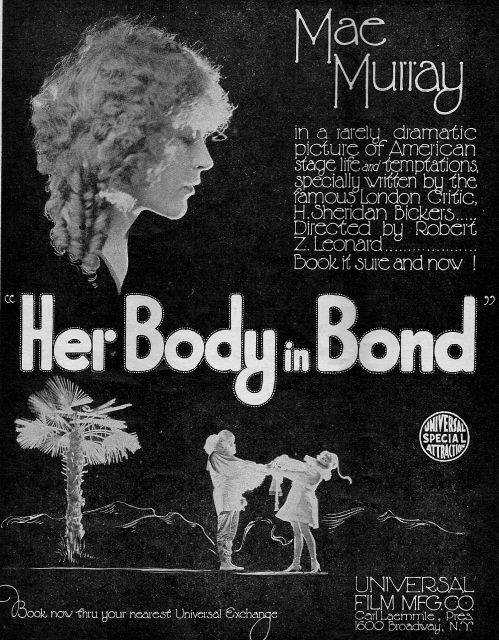
However, just as Peggy is about to make this devastating concession, destiny intervenes with a dramatic flourish. Joe, now miraculously restored to robust health and blissfully unaware of the machinations that have tormented his wife, arrives back in New York. His triumphant return is timed with exquisite melodrama, occurring precisely as the villain Quinn knocks on Peggy’s door, ready to claim his prize. This sudden appearance injects a surge of adrenaline into the narrative, shifting the tone from despair to righteous fury. The silent film's ability to create such powerful, wordless moments of tension and relief is truly showcased here, relying on the actors' physicality and the audience's emotional investment.
The confrontation that ensues is a visceral explosion of pent-up emotion and long-simmering resentment. The two men, Joe and Quinn, engage in a violent struggle, a physical manifestation of the battle for Peggy’s soul and their shared future. The intensity of this scene is amplified by the sheer stakes involved, with Peggy caught in the middle, her fate hanging in the balance. The conflict escalates further with the intervention of Peggy’s stepfather, a tragic figure portrayed by Joseph W. Girard. A drug addict, he has unwittingly been acting as Quinn’s dupe, a pawn in the millionaire’s elaborate scheme. In a moment of chaotic desperation, the old man shoots Quinn, bringing a sudden, shocking end to the villain’s reign of terror.
The arrival of the police, a common trope in melodramas to restore order, leads to another tragic twist: the old man is shot, dying in the ensuing confusion. This final, brutal act serves as a grim punctuation mark to the violence and deception that have plagued Peggy and Joe. It’s a stark reminder of the often-harsh realities depicted in silent films, where resolutions, even happy ones, sometimes come at a great cost. With the forces of evil and their unwitting accomplices neutralized, Peggy and Joe are finally free to begin a new life together, their bond tested by fire and forged anew in the crucible of adversity. The ending, while providing a sense of closure, leaves a lingering impression of the struggles endured and the sacrifices made, making their eventual happiness feel hard-won and deeply deserved.
At the heart of Her Body in Bond lies the magnetic performance of Mae Murray. Known for her distinctive "bee-stung" lips and captivating screen presence, Murray was a true star of the silent era. Her portrayal of Peggy is a masterclass in non-verbal communication. She conveys Peggy’s journey from joyous dancer to desperate woman with an incredible range of expression, from subtle shifts in her eyes to broader, more theatrical gestures. Her ability to elicit profound empathy from the audience, without uttering a single word, speaks volumes about her talent. She embodies the archetype of the virtuous woman pushed to her limits, a figure that resonated deeply with audiences of the time. Her performance elevates the film beyond a mere melodrama, imbuing Peggy with a palpable sense of internal struggle and an unwavering spirit.
The supporting cast, including Kenneth Harlan as the despicable Quinn and Paul Weigel as the earnest Joe, provides strong foundations for Murray's central performance. Harlan, in particular, manages to convey a chilling sense of entitled malevolence, making his eventual downfall all the more satisfying. The dynamic between these three central figures drives the film’s emotional core, creating a compelling triangle of love, betrayal, and sacrifice. Even minor characters, like Alan Roscoe and Maie B. Havey, contribute to the tapestry of the narrative, providing context and texture to the world Peggy inhabits.
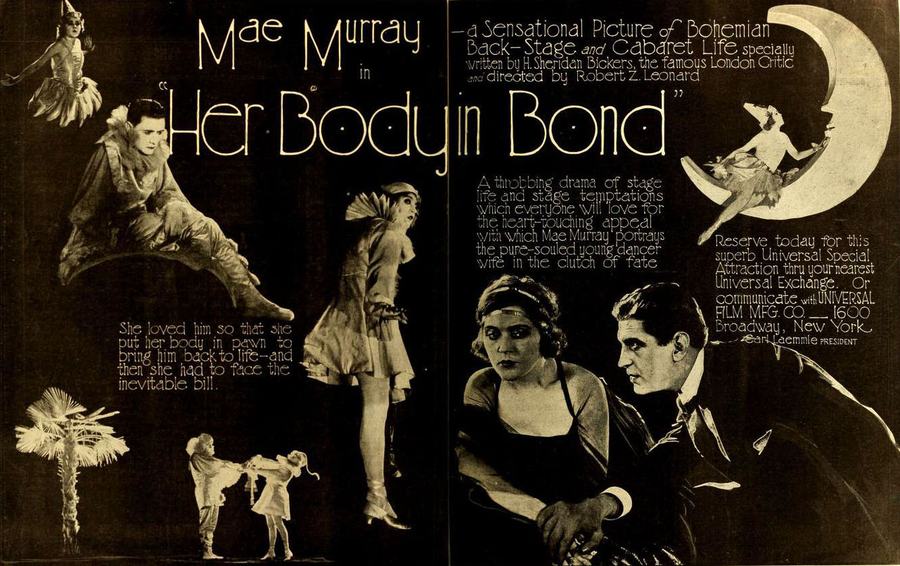
Her Body in Bond is more than just a thrilling melodrama; it’s a fascinating reflection of the societal anxieties and moral codes of its time. The film starkly illustrates the precarious position of women in early 20th-century society, particularly those without male protection or independent wealth. Peggy's desperate consideration of "selling her honor" underscores the limited options available to women facing financial ruin. This theme of female vulnerability and ultimate resilience is a recurring motif in silent era cinema, often serving as both entertainment and a subtle commentary on social issues.
Furthermore, the film delves into themes of class struggle, pitting the working-class couple against the predatory millionaire. Quinn's exploitation of Peggy's vulnerability is rooted in his privileged position, highlighting the power imbalances inherent in society. His belief that money can buy anything, even a woman's virtue, is a chilling indictment of unchecked wealth and moral corruption. The narrative's resolution, where good ultimately triumphs over evil, albeit with significant collateral damage, offers a cathartic release for audiences, affirming a sense of moral justice. This aligns with many films of the period, like The Aryan, which often explored clear moral lines and the triumph of the virtuous, though often through different cultural lenses.
Beyond its powerful narrative and compelling performances, Her Body in Bond offers a valuable glimpse into the craftsmanship of silent film. The direction, while not attributed in the provided details, effectively utilizes the tools available to maximize dramatic impact. The use of intertitles is particularly effective, conveying not just dialogue but also internal thoughts and narrative exposition, guiding the audience through the emotional labyrinth. The cinematography, though perhaps not groundbreaking by modern standards, skillfully employs lighting and framing to enhance the mood – from the bright, hopeful scenes of the cabaret to the shadowed, claustrophobic moments of Peggy's despair. The pacing, a crucial element in silent film, is expertly managed, allowing moments of quiet reflection to breathe before propelling the narrative forward with sudden bursts of action and revelation.
The film’s production values, typical for a feature film of its time, are solid, creating believable settings that ground the melodramatic events in a tangible reality. The costumes, particularly Mae Murray’s, reflect both the fashion of the era and the character’s changing circumstances, from her glamorous stage attire to her more somber, desperate wardrobe. These details, though seemingly minor, contribute significantly to the film's immersive quality, drawing the audience deeper into Peggy's plight.
While not as widely remembered as some of the colossal epics or comedic masterpieces of the silent era, Her Body in Bond stands as a compelling example of the melodramatic genre and a testament to Mae Murray's enduring star power. It's a film that speaks to the timeless human experience of love, betrayal, and the fight for survival. For enthusiasts of early cinema, it offers a rich tapestry of emotional storytelling, intricate plotting, and powerful performances that transcend the absence of spoken dialogue.
Its historical significance lies not only in its entertainment value but also in its reflection of early 20th-century social dynamics. It serves as a reminder of how films, even those designed primarily for dramatic effect, can inadvertently capture the zeitgeist of their period, offering insights into the prevailing moral codes, gender roles, and class distinctions. Watching Her Body in Bond today is an opportunity to connect with a bygone era of filmmaking, to appreciate the artistry of silent storytelling, and to witness the enduring power of a well-crafted melodrama that continues to resonate with themes of human struggle and ultimate triumph. It's a film that, despite its age, still has much to say about the resilience of the human spirit when faced with the gravest of challenges, leaving a lasting impression long after the final intertitle fades to black.
IMDb 9.2
1932
Community
Log in to comment.