DbcultAccessing Vault...
Cult Review
Senior Film Conservator
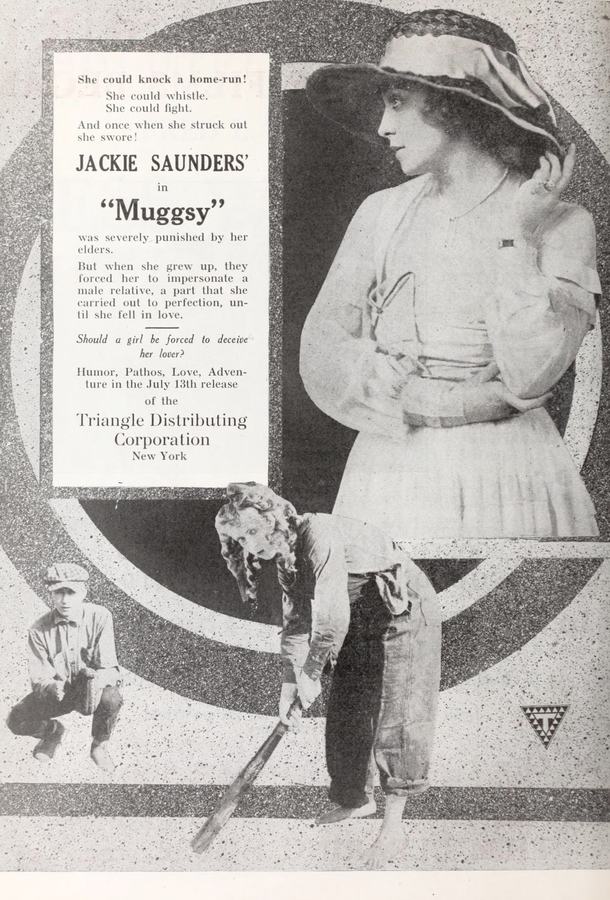
Stepping back into the cinematic annals of 1918, one encounters a fascinating artifact: a film titled Muggsy. Far from a mere curiosity, this silent-era narrative, with its seemingly straightforward plot, unfurls a tapestry of themes that resonate with surprising clarity even a century later. It's a testament to the enduring power of storytelling that a film of this vintage can still provoke thought and discussion on subjects as complex as gender identity, societal expectations, and the transformative power of acceptance. Muggsy, in its essence, is a daring exploration of what it means to be seen, to be understood, and ultimately, to be loved for one's authentic self, even when that self defies the prevailing norms.
At the heart of this compelling drama is Joyce Tolliver, a character whose very existence is a delightful, albeit challenging, affront to the early 20th-century sensibilities surrounding female decorum. Nicknamed 'Muggsy,' she is a whirlwind of tomboyish energy, preferring the rough-and-tumble world of baseball, fisticuffs, and spirited language to the refined pursuits typically expected of young ladies. Her childhood, as hinted by the plot, is marked by a series of 'severe punishments' from her elders, desperate to mold her into an acceptable feminine archetype. This early conflict establishes Muggsy not as a defiant delinquent, but as an individual whose innate spirit simply cannot be contained by societal strictures. She embodies a proto-feminist fire, an unconscious rebellion against the constraints that sought to define and diminish her. Her early life is a poignant prelude to the larger struggle for self-definition that awaits her.
The decision to send her, disguised as a boy, to live with her misogynistic Uncle Leslie Bolton is a narrative stroke of genius. It's a classic comedic and dramatic setup, reminiscent of Shakespearean gender-bending plays, but here imbued with a very specific purpose: to force a confrontation between an unyielding prejudice and an undeniable humanity. Bolton, a man whose animosity towards women is so profound it shapes his entire existence, represents the entrenched patriarchal views of the era. His character is not merely a plot device; he is a symbol of the societal barriers Muggsy must navigate. The success of her ruse, at least initially, highlights the superficiality of gender presentation and the ease with which appearances can deceive, even the most resolute of bigots.
The core of Muggsy's dramatic tension lies in the precarious balance of her deception. Living as a boy, she gains access to a world, and indeed a relationship with her uncle, that would be utterly denied to her as a girl. This offers a potent commentary on the restrictive nature of gender roles, illustrating how societal perception, rather than inherent capability, often dictated opportunity and acceptance. The bond that forms between 'nephew' and uncle is particularly fascinating. It's a relationship built on a lie, yet it allows Bolton to experience affection and companionship he had previously rejected. This subtly suggests that his misogyny might be a learned behavior or a defense mechanism, rather than an intrinsic hatred, capable of being disarmed by genuine human connection, regardless of the perceived gender of the source.
The narrative takes a pivotal turn, as it inevitably must, when Muggsy falls in love. This romantic awakening introduces a new layer of vulnerability and complication. The thrill of newfound affection clashes directly with the necessity of maintaining her elaborate charade. Love, in this context, becomes both a catalyst for her eventual unmasking and a powerful force for self-realization. It forces Muggsy to confront not only the risks of exposure but also her own desires and identity beyond the performance she has been enacting. The film cleverly uses this romantic entanglement to amplify the stakes, transforming a mere disguise into a profound personal dilemma. This narrative technique, where a character's true identity is threatened by the burgeoning of genuine emotion, is a timeless trope, expertly deployed here to heighten the emotional resonance.
The moment of discovery is, predictably, explosive. Bolton's reaction—ordering her out—is a visceral manifestation of his deeply ingrained prejudice and perhaps a feeling of profound betrayal. His world, which had begun to soften and expand under the influence of his spirited 'nephew,' shatters. This scene, even in a silent film, must have conveyed immense emotional weight, capturing the raw pain of rejection and the stubbornness of prejudice. However, the film doesn't linger in this despair. Instead, it pivots to Bolton's subsequent realization: he cannot get along without her. This is the true heart of the film's message. It's not about Muggsy conforming to his expectations, but about Bolton evolving beyond his own. His dependence on her, his recognition of the void left by her absence, forces him to confront the hollowness of his misogynistic worldview.
The act of sending for her to return signifies a profound shift. It's an admission of error, a capitulation to the undeniable truth that human connection transcends superficial categories. It suggests that true acceptance comes not from changing the other person, but from changing oneself. This resolution, while perhaps appearing simplistic on the surface, carries significant weight for its time. It champions the idea that even the most entrenched biases can be overcome by the power of genuine affection and the sheer force of an individual's personality. The ending, therefore, is not merely a happy reunion; it's a quiet victory for individuality and a hopeful commentary on the potential for personal growth.
Considering Muggsy as a silent film from 1918, the success of its narrative would have heavily relied on the expressive capabilities of its cast and the ingenuity of its direction. Jackie Saunders, portraying Joyce Tolliver/Muggsy, would have faced the formidable challenge of conveying both her tomboyish energy and her underlying femininity, alongside the emotional turmoil of her deception and burgeoning love, all without spoken dialogue. Silent film acting often leaned towards exaggerated gestures and facial expressions, yet the most effective performers, like Saunders presumably was, managed to imbue these with nuance and genuine emotion. Her ability to convincingly embody a young man, while subtly hinting at the woman beneath, would have been crucial to the film's believability and charm. Gordon Sackville, as Leslie Bolton, would have needed to portray a convincing arc from hardened misogynist to a man humbled by his own need for companionship. The transformation of such a character, without the benefit of extensive dialogue, demands a performance rich in subtle shifts and emotional transparency.
The visual language of silent cinema, encompassing everything from intertitles to set design and camera angles, would have been instrumental in conveying the story's depth. One can imagine intertitles articulating Muggsy's defiant spirit or Bolton's initial prejudices, only to be contrasted later with intertitles revealing his change of heart. The contrast between Muggsy's initial rough-and-tumble environment and the stately, perhaps sterile, grandeur of Bolton's home could have visually underscored the thematic clash between freedom and constraint, tradition and individuality. The film's direction would have been tasked with balancing the comedic potential of the gender swap with the earnestness of its underlying emotional journey. The pacing, crucial for maintaining audience engagement in silent films, would have dictated how quickly the tension built and how effectively the emotional beats landed.
Beyond its historical context, Muggsy offers a surprising wealth of contemporary relevance. The exploration of gender identity, while framed within the social conventions of its era, touches upon universal questions of self-acceptance and societal pressure. Muggsy's journey to live authentically, even if initially through deception, mirrors modern discussions about gender fluidity and the right to self-expression. Her struggle against predefined roles resonates with anyone who has felt pigeonholed or misunderstood. The film, in its quiet way, challenges the notion that gender dictates character or capability, suggesting instead that individual spirit is paramount.
The transformation of Leslie Bolton is equally significant. His journey from rigid prejudice to reluctant acceptance serves as a powerful reminder that empathy and understanding can triumph over ingrained biases. In an age where societal divisions often seem intractable, a narrative illustrating such a profound shift in perspective offers a glimmer of hope. It suggests that even the most hardened hearts can be softened by genuine human connection, and that the courage to acknowledge one's own needs and vulnerabilities can lead to greater compassion.
When examining Muggsy, it's difficult not to draw parallels with other films that explore themes of disguise and challenging societal norms. One particularly apt comparison is The Fair Pretender, another film from the silent era whose very title speaks to the narrative device of an assumed identity. While the specifics of their plots may differ, both films likely delve into the complexities and perils of living under a false guise, exploring the psychological toll of maintaining a secret and the dramatic potential of its inevitable revelation. These narratives often serve as a vehicle to critique societal expectations, highlighting the arbitrary nature of the rules that govern human interaction and the courage required to defy them.
Furthermore, Muggsy's initial rebellion against traditional feminine roles also brings to mind films like When a Woman Strikes. While the latter title suggests a more overt form of social protest, Muggsy's actions, even in her childhood, constitute a personal 'strike' against the confines placed upon her. Her refusal to conform, her embrace of 'masculine' pursuits, is a subtle yet potent form of resistance. Her journey is not about overthrowing a system, but about carving out a space for her authentic self within it, a struggle that often requires immense 'strength of the weak,' as another contemporary film title might suggest. These comparisons underscore Muggsy's place within a broader cinematic conversation about female agency and the subversion of patriarchal structures, even in the nascent years of filmmaking.
Ultimately, Muggsy stands as a remarkable, if perhaps lesser-known, example of silent cinema's capacity for nuanced storytelling. It's a film that, through its engaging plot and compelling characters, manages to transcend its era and speak to universal human experiences. The journey of Joyce Tolliver, from a spirited tomboy punished for her individuality to a woman whose authentic self ultimately transforms a prejudiced heart, is a powerful narrative of self-discovery and the enduring value of unconditional acceptance. It reminds us that empathy often begins with understanding, and that sometimes, the most profound changes occur not through grand pronouncements, but through the quiet, persistent influence of a genuine human connection. The film's conclusion, with Bolton's summons for Muggsy's return, is not just a happy ending; it's a profound statement on the indispensability of those who dare to live outside the lines, and the richness they bring to lives that might otherwise remain confined and impoverished by narrow-mindedness. It is a resonant whisper from the past, urging us to look beyond superficialities and embrace the full spectrum of human identity.
IMDb 7.5
1929
Community
Log in to comment.