DbcultAccessing Vault...
5.7/10
Senior Film Conservator
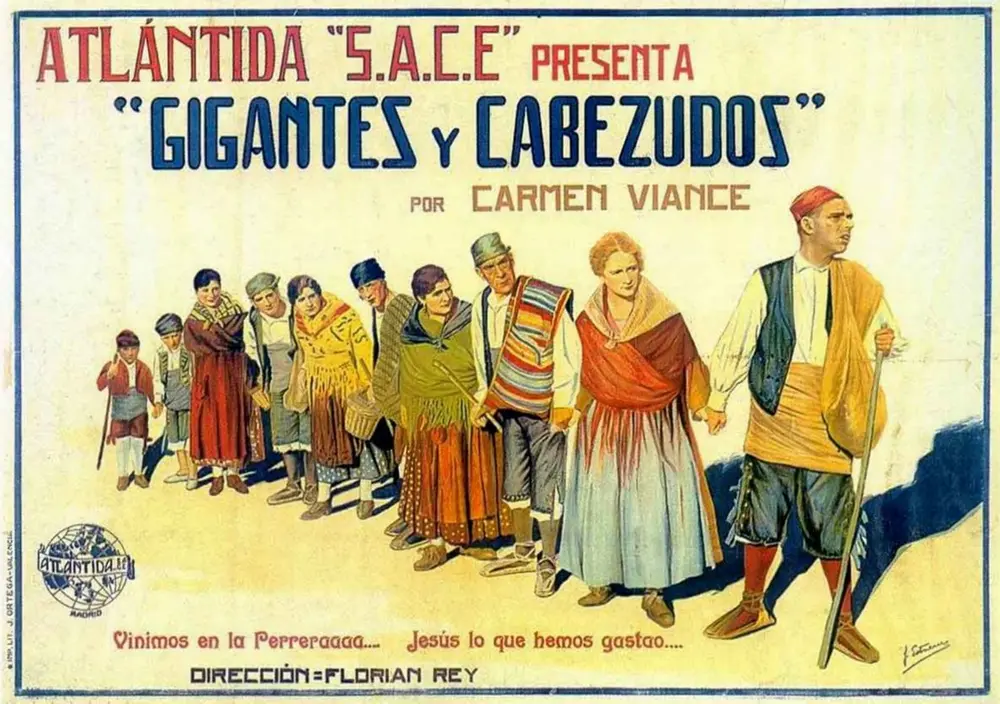
A definitive 5.7/10 rating for a film that redefined the boundaries of cult cinema. Gigantes y cabezudos remains a cornerstone of transgressive art.
Is this film a hidden gem worth your time today? Short answer: only if you possess a high tolerance for the slow-burning rhythms of 1920s European regionalism. This film is for the dedicated film historian and the lover of Spanish folklore; it is decidedly not for anyone seeking the kinetic energy of modern drama or even the polished slapstick of contemporary American silents like You're Pinched.
Gigantes y cabezudos (1926) occupies a strange space in cinema history. It attempts to adapt a musical genre—the zarzuela—into a medium that, at the time, was entirely devoid of sound. It is a bit like trying to describe a painting through a flute solo. Yet, director Florián Rey manages to capture a visual lyricism that compensates for the missing orchestra, even if the result feels occasionally hollow to a modern ear.
Florián Rey was not a man of subtle gestures. In Gigantes y cabezudos, he leans heavily into the 'costumbrismo' movement—a style focused on the depiction of local customs and everyday life. Unlike the high-society drama found in Confessions of a Queen, Rey’s camera is interested in the dirt, the cobblestones, and the sweat of the working class.
The cinematography by Enrique Blanco is surprisingly sophisticated for the period. Take, for example, the sequence involving the giants' parade. The camera doesn't just sit back; it weaves through the crowd, creating a sense of claustrophobia and celebration. The 'cabezudos' (the big-heads) are filmed with a touch of the uncanny, their frozen, smiling expressions contrasting sharply with the weary eyes of the returning soldiers. It works. But it’s flawed.
The flaw lies in the translation. The original zarzuela is defined by its music. Without the iconic songs, Rey is forced to rely on exaggerated pantomime. While Carmen Viance delivers a performance of quiet dignity, some of the male leads fall into the trap of over-acting to fill the silence. It’s a common issue in 1920s cinema, but here it feels more pronounced because the source material is so inherently auditory.
One cannot discuss this film without mentioning the 'Desastre del 98.' The return of the soldiers from Cuba is the emotional spine of the story. While films like Spartak deal with grand-scale rebellion, Gigantes y cabezudos deals with the quiet, domestic fallout of a lost empire. There is a specific scene where Timoteo gazes at the Pilar Basilica, and in that moment, Rey captures a sense of national identity that is both fragile and stubborn.
The film takes a hard stance on the resilience of the Spanish spirit. It is not a cynical work. However, it avoids being purely propagandistic by showing the economic hardships and the social friction within the town. The conflict isn't just about love; it's about a community trying to reconcile its glorious past with its gritty present. It is far more grounded than the escapism of Harem Scarem.
The inclusion of the world-famous tenor Miguel Fleta is perhaps the film’s biggest 'meta' moment. Fleta was a superstar of the era, and his presence on screen—despite the film being silent—was a massive draw for audiences. It is an unconventional choice. Seeing a man known for his voice in a medium where he cannot be heard creates a strange tension. It’s like watching a silent version of The Cabaret; you know the talent is there, but you are denied its primary expression.
Fleta’s performance is surprisingly restrained. He doesn't try to 'sing' with his face. Instead, he carries himself with a gravity that anchors the more melodramatic elements of the plot. His appearance serves as a bridge between the high art of the opera house and the populist appeal of the cinema. It was a brilliant marketing move, even if it feels like a missed opportunity for modern viewers who can't hear the 'Aragonese Caruso.'
Gigantes y cabezudos is worth watching if you are looking for a historical document rather than a Friday night entertainment. It is a slow, methodical exploration of 1920s Spain. If you enjoy the technical mastery of silent epics like Yehuda Hameshukhreret, you will find much to admire here. However, if you require snappy dialogue and fast-paced editing, you will likely find yourself checking the clock. It is a film that demands patience and a context-heavy perspective.
Gigantes y cabezudos is a noble failure that remains essential viewing for a very specific niche. It lacks the universal appeal of The Man from Glengarry or the sheer visual audacity of La banda del automóvil o la dama enlutada. However, it possesses a soul that is uniquely Spanish. Florián Rey proved that he could take the most traditional of forms and translate them to the screen, even if some of the magic was lost in the process. It is a quiet, dusty, and deeply earnest piece of work. It’s not a masterpiece, but it is a vital piece of the puzzle that is early European cinema.
IMDb 6.4
1935
Community
Log in to comment.