DbcultAccessing Vault...
5.8/10
Senior Film Conservator
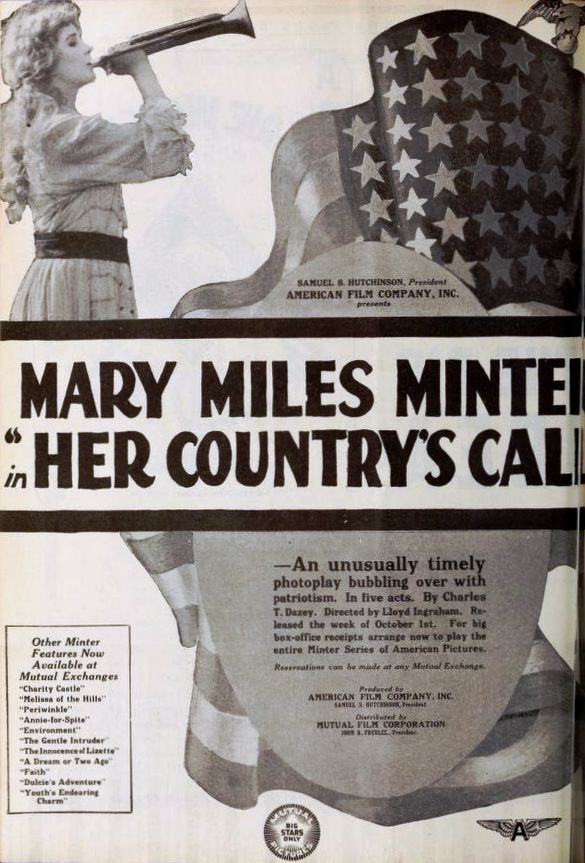
A definitive 5.8/10 rating for a film that redefined the boundaries of cult cinema. Her Country's Call remains a cornerstone of transgressive art.
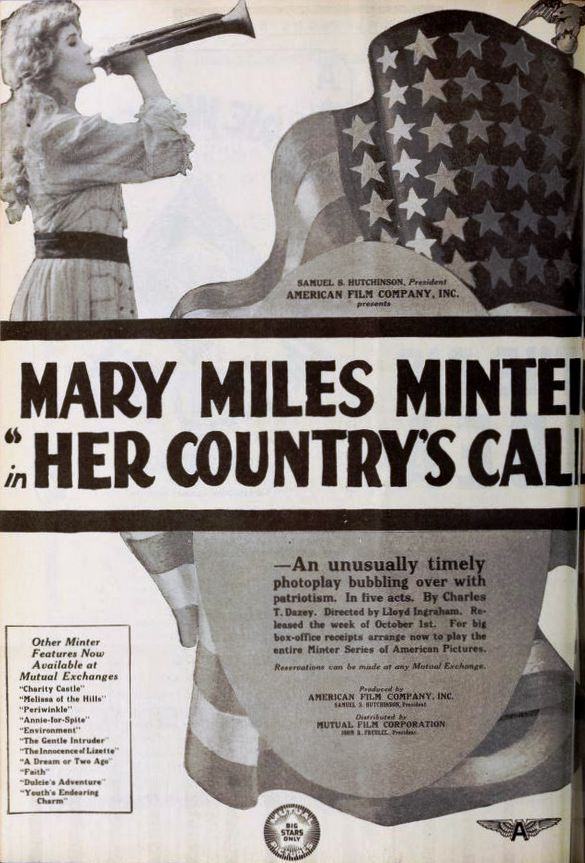
Stepping back into the annals of early cinema, one encounters films that, while perhaps less technically polished by today's standards, pulse with a raw, earnest energy reflecting the socio-political currents of their time. Her Country's Call, a 1917 production, is precisely such a film. It’s not merely a narrative; it’s a cultural artifact, a didactic piece wrapped in the guise of a romantic drama, designed to stir the hearts and minds of an America on the precipice of global conflict. This isn't just a story of love found in the wilderness; it's a carefully constructed argument for national unity, for the very concept of patriotism itself, presented through the lens of individual awakening.
The film introduces us to a world far removed from urban sophistication, nestled deep within the rugged beauty of the mountains. Here, a young woman, portrayed with an endearing blend of innocence and burgeoning spirit by Margaret Shelby, lives a life circumscribed by the formidable presence and fiercely held convictions of her father. This patriarch is no ordinary recluse; he is a man whose experiences have imbued him with a profound, almost visceral, hatred for the army and, by extension, for the very apparatus of national defense. His antipathy, a shield against external influences, effectively insulates his daughter from any notion of civic duty or national pride, fostering instead a quiet, almost isolationist existence.
The narrative truly ignites with the fortuitous arrival of a handsome army captain, played by Ashton Dearholt. He is everything the father despises: disciplined, uniformed, and representative of the organized force the old man has come to resent. Yet, to the young mountain girl, he is a revelation. His presence introduces a world of ideas and emotions previously unknown, a stark contrast to the insular philosophy she has always known. This encounter is not merely a romantic spark; it is the ignition of a profound ideological conflict, a battleground established not on a field of war, but within the tender heart and impressionable mind of the protagonist. The captain, through his character and his gentle teachings, begins to unravel the tightly woven fabric of her inherited prejudices.
It’s a fascinating dynamic, reminiscent in its core tension of the clash between personal desire and external societal or familial pressures seen in narratives like Anna Karenina, though here the stakes are national rather than purely social. The girl's journey is one of intellectual and emotional liberation. The captain doesn't just woo her; he educates her. He paints a picture of a nation worthy of love, of a duty that transcends individual grievances. The film deftly portrays this gradual shift, showing how deeply ingrained beliefs, even those passed down through generations, can be re-evaluated and ultimately transformed through genuine human connection and enlightened understanding.
In the silent era, acting was a language of exaggerated gesture, expressive eyes, and nuanced body language, designed to convey complex emotions without the aid of dialogue. Margaret Shelby, in particular, excels in this demanding art form. Her transformation from a wide-eyed, slightly bewildered recluse to a woman imbued with purpose and conviction is compelling. Her performance, free from the constraints of spoken words, relies entirely on her ability to project internal states, making her journey of discovery feel authentic and deeply personal. Ashton Dearholt, as the captain, carries the weight of a principled, honorable man, his demeanor a calming counterpoint to the father's fiery antipathy. Henry A. Barrows, as the embittered father, delivers a performance that, while perhaps leaning into the melodramatic tendencies of the era, effectively communicates his deep-seated resentment and the eventual poignant struggle as his daughter's loyalties begin to shift.
The direction, likely by Benjamin Chapin and Charles T. Dazey (who are credited as writers, but often had significant directorial influence in early cinema), prioritizes clarity of message. The pacing is deliberate, allowing the audience to absorb the emotional beats and ideological arguments. While the film may not boast the grand spectacle or intricate camera work of later silent epics, its strength lies in its directness. The use of intertitles is crucial here, not just to convey dialogue but to articulate the film's thematic core, often serving as moral pronouncements that reinforce the pro-patriotism message. Comparisons to films like The Despoiler, which often explored moral decay or the corruption of innocence, might be drawn in how the father's views could be seen as 'despoiling' his daughter's natural connection to her country, before the captain's intervention.
At its heart, Her Country's Call is a powerful exploration of national identity, particularly pertinent given its release during a period of intense American introspection regarding its role on the global stage. The film doesn't shy away from presenting patriotism as a noble, essential virtue. This contrasts sharply with the anti-war sentiment that gained traction in other cinematic works, such as Down with Weapons, which explored the devastating human cost of conflict. Instead, 'Her Country's Call' positions military service and national loyalty as fundamental components of a virtuous citizenry, a sentiment that resonated deeply with the prevailing mood of the time.
The familial conflict is another compelling thread. The father's hardened stance against the army isn't presented as purely villainous, but as born from past hurts or perceived injustices. This lends a tragic dimension to his character, as he watches his daughter embrace the very ideals he despises. The film skillfully navigates this emotional landscape, culminating in a reconciliation that is both personal and symbolic. It suggests that even the most entrenched opposition can be overcome by love, understanding, and the greater call of national unity. This delicate balance of personal drama and overarching nationalistic message is a hallmark of many silent era films attempting to shape public opinion.
The mountainous setting is more than just a backdrop; it functions as a character itself. The rugged, untamed environment mirrors the protagonist's initial isolation and her father's fiercely independent, almost wild, spirit. It suggests a purity, a disconnect from the complexities of modern society and political machinations. As the narrative progresses, and the girl's understanding of her country expands beyond her immediate surroundings, the mountains become a symbol of the barriers that must be overcome, both literally and figuratively. This use of natural landscape to reflect internal states or societal themes can be seen in other films that explore journeys of self-discovery or survival in harsh environments, perhaps echoing the spirit of An Odyssey of the North, where the vastness of nature plays a crucial role in shaping character destinies.
The visual storytelling, through scenic shots of the mountains, reinforces the contrast between the girl's isolated upbringing and the wider world represented by the captain. It's a classic cinematic trope, leveraging the natural world to amplify thematic resonance. The shift from the intimate, confined world of the mountain cabin to the broader implications of national service is visually underscored by these environmental details.
While Her Country's Call is undeniably a product of its time, its core themes of love, duty, and the formation of national identity remain surprisingly potent. In an era where discussions around patriotism, dissent, and civic responsibility continue to evolve, the film offers a fascinating historical perspective on how these concepts were presented to the public over a century ago. It's a reminder that cinema has always been a powerful tool not just for entertainment, but for shaping public discourse and influencing cultural narratives.
The film's didactic nature, while perhaps jarring to a contemporary audience accustomed to more nuanced portrayals of political themes, is precisely what makes it valuable as a historical document. It doesn't merely tell a story; it advocates for a particular worldview, a call to arms for the heart and mind. The journey of Margaret Shelby’s character, from isolation to enlightened patriotism, serves as a microcosm for the nation’s own journey into a global conflict. It’s a testament to the power of a single individual’s choices and the profound impact of love in reshaping one’s understanding of the world, and indeed, of one's own country.
For those interested in the evolution of American cinema and its interaction with national identity, Her Country's Call offers a compelling case study. It stands alongside other films of its era, like The Land of the Rising Sun (though from a different cultural context), in its exploration of how national narratives are constructed and disseminated through popular media. It’s a film that, despite its age and silent format, speaks volumes about the enduring human desire for belonging, purpose, and the often complex relationship between individual conscience and collective duty.
Watching it today, one can appreciate not just the performances and the simple yet effective storytelling, but also the historical weight it carries. It's a window into a bygone era, reminding us that the fundamental questions of loyalty, love, and what it means to belong to something larger than oneself are timeless. The emotional climax, where the father's stubborn resistance finally gives way to understanding and pride in his daughter's choices, is genuinely moving, transcending the specific political context to touch upon universal themes of parental love and acceptance. This film, then, is not just a call to arms, but a call to the heart, urging viewers to consider what truly constitutes their 'country's call.'
IMDb 4.5
1928
Community
Log in to comment.