DbcultAccessing Vault...
Cult Review
Senior Film Conservator
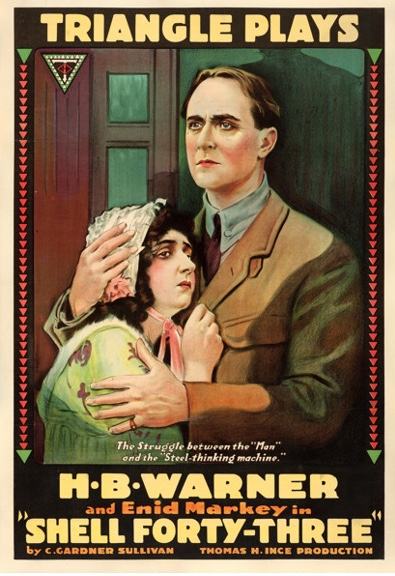
In the annals of early cinema, few films capture the intricate dance between duty and humanity with the quiet ferocity of Shell 43. This 1917 silent masterpiece, penned by the masterful C. Gardner Sullivan, plunges viewers into the treacherous world of wartime espionage, forcing a profound contemplation of loyalty, sacrifice, and the blurred lines of morality. It’s a narrative that transcends its era, offering a timeless exploration of the human spirit under immense duress. Far from a simplistic tale of good versus evil, Shell 43 presents a protagonist whose internal landscape is as complex and volatile as the battlefield itself, making it a truly compelling cinematic experience that reverberates with emotional resonance.
At the heart of Shell 43 lies the enigmatic figure of William Berner, portrayed with captivating intensity, likely by the distinguished H.B. Warner, whose nuanced performance elevates the character beyond a mere spy archetype. Berner is introduced as an American war correspondent, a seemingly innocuous observer in the German military's inner sanctum. Yet, this identity is a meticulously crafted charlatanry, a sophisticated veneer designed to conceal his true allegiance to the British crown. Warner, through subtle gestures and expressive eyes, conveys the immense psychological burden of this double life. We witness a man constantly treading a razor's edge, his every interaction a calculated performance, his every word a potential betrayal. He navigates the treacherous corridors of power, charming his way into the confidence of German brass, all while harboring the deadly secret of his true mission. This portrayal is a masterclass in silent film acting, where the absence of dialogue necessitates a heightened reliance on physical expression and emotional depth. Berner's internal struggle is palpable; the tension of maintaining his disguise, the constant fear of exposure, and the moral compromises inherent in his work are etched onto his very being. It’s a performance that invites empathy, even as it maintains an intriguing distance, reflecting the very nature of espionage itself. The film doesn't just show us a spy; it allows us to glimpse the profound human cost of such a perilous existence.
C. Gardner Sullivan's screenplay for Shell 43 is a marvel of intricate plotting, weaving a taut narrative that keeps the audience perpetually on edge. The film masterfully builds suspense, not through explosive action, but through the insidious creep of suspicion and the ever-present threat of discovery. Berner's mission isn't just about gathering intelligence; it's about maintaining a delicate balance of trust and deception in a hostile environment. The scenes where he interacts with German officers are particularly gripping, showcasing the subtle power dynamics at play. Each exchange is a miniature chess match, with Berner carefully choosing his moves, his words, and even his expressions to avoid detection. The silent medium, paradoxically, enhances this tension. Without the distraction of dialogue, the audience is compelled to scrutinize every glance, every gesture, every flicker of emotion on the actors' faces. This creates an immersive experience, drawing us into Berner's perilous world. Unlike the more bombastic wartime narratives of its time, such as some sequences in The Birth of a Nation, Shell 43 finds its dramatic power in the quiet intensity of psychological warfare. The film demonstrates a sophisticated understanding of spycraft, portraying it not as a series of heroic feats, but as a grueling test of nerves and intellect. The meticulous attention to detail in Berner's cover story and his operational procedures lends a remarkable verisimilitude to the proceedings, making the stakes feel incredibly real. The narrative progresses with an almost unrelenting pace, each revelation building upon the last, culminating in a series of choices that will irrevocably define Berner's fate.
The true genius of Shell 43 emerges when Berner is confronted with a profound ethical dilemma. He discovers that the very house providing him sanctuary, and more significantly, housing three innocent German women, is slated for Allied bombardment. This moment is the film's beating heart, transforming it from a mere spy thriller into a poignant meditation on humanity. Here, Berner's carefully constructed world of allegiance and duty crumbles under the weight of a fundamental moral imperative. His enemies, according to the war's brutal logic, are the women he now shares a roof with. Yet, their vulnerability transcends nationalistic animosity. In a stunning act of defiance against his mission's dictates, Berner chooses to save them. This decision is not presented as a simple heroic act, but as a deeply conflicted one, highlighting the agonizing choices faced by individuals caught in the machinery of war. It's a powerful statement on the universality of human connection, suggesting that empathy can, and sometimes must, supersede the rigid demands of military strategy. This particular narrative beat resonates with the emotional depth found in dramas like The Weavers of Life, which also explored the complexities of human relationships against a backdrop of societal forces. The film dares to ask: what is the true cost of victory if it demands the sacrifice of one's own humanity? Berner's decision is a testament to the enduring power of compassion, a stark contrast to the dehumanizing nature of conflict. It sets him on a path of ultimate self-sacrifice, but one rooted in a profound sense of personal honor rather than purely nationalistic fervor. This pivotal sequence elevates the film into a philosophical inquiry, challenging viewers to consider where true loyalty truly lies.
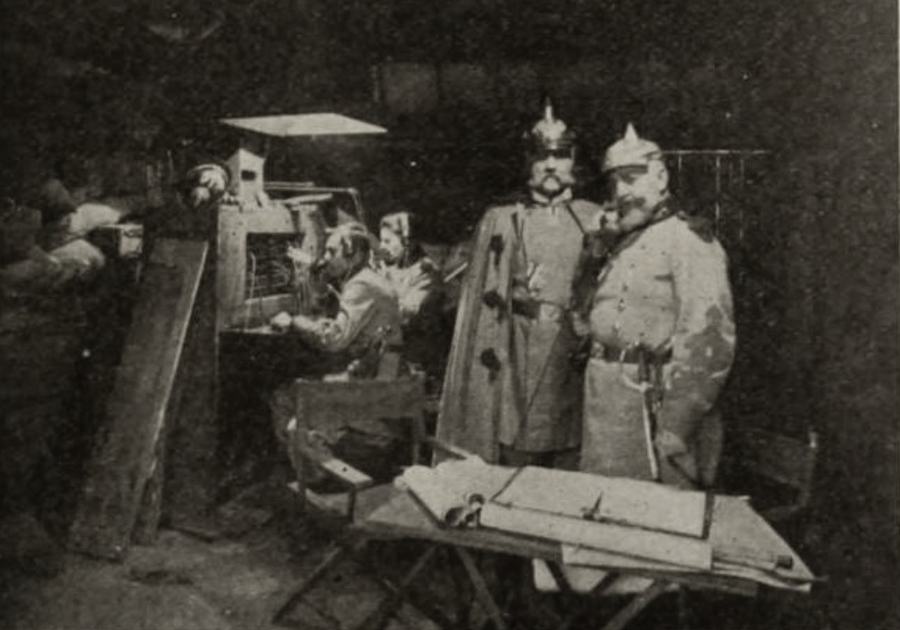
Berner's subsequent actions are a desperate race against time and a testament to his unwavering commitment, not just to England, but to a personal code of honor. Knowing that his act of saving the women would inevitably be perceived as a betrayal by his British high command, he chooses to preempt any questioning of his loyalty with an ultimate, self-immolating gesture. His infiltration of Pit Forty-Three, a heavily fortified German stronghold, is depicted with a raw intensity that belies the film's silent nature. The tension here is almost unbearable, a visceral experience as Berner navigates enemy territory, his life hanging by a thread. The film doesn't glorify the violence but focuses on the sheer determination of a man driven by a complex mix of guilt, duty, and a desire for redemption. Wiring the stronghold for bombardment, he deliberately leaves himself no means of escape, sealing his own fate to ensure the success of the mission. This final act is not merely a strategic victory for the Allies; it is Berner's personal apotheosis, a tragic but profound validation of his moral compass. His sacrifice is a poignant counterpoint to the more straightforward heroics often depicted in war films, presenting a figure whose ultimate loyalty is to a higher, more abstract ideal of justice and honor. This conclusion mirrors the somber, yet impactful, dramatic resolutions sometimes found in films like A Wall Street Tragedy, where characters face dire consequences stemming from their choices, albeit in a different context. The final moments of Shell 43 are imbued with a sense of tragic grandeur, leaving an indelible mark on the viewer, forcing us to confront the true meaning of heroism in a world consumed by conflict.
The brilliance of Shell 43 lies not only in its compelling narrative but also in its masterful execution within the constraints and opportunities of the silent film medium. Without spoken dialogue, the filmmakers – including writer C. Gardner Sullivan – relied heavily on visual storytelling, expressive performances, and intertitles to convey plot, character motivations, and emotional depth. The cinematography, though perhaps rudimentary by modern standards, effectively uses light and shadow to create mood and emphasize the clandestine nature of Berner’s mission. Close-ups on actors’ faces, particularly H.B. Warner’s, become critical windows into their internal states, allowing the audience to decipher complex emotions without a single uttered word. The pacing, too, is meticulously controlled, building tension through sustained glances, slow reveals, and rapid cuts during moments of heightened action, such as Berner’s infiltration of Pit Forty-Three. This visual language is remarkably sophisticated for its time, demonstrating an acute understanding of how to engage an audience purely through images and gestures. It stands in stark contrast to the grand, sweeping panoramas often seen in epics like Quo Vadis? or The Napoleonic Epics, which relied on sheer scale. Instead, Shell 43 achieves its impact through an intimate focus on individual psychology and immediate peril. The film’s ability to communicate such nuanced moral quandaries and intense suspense without the aid of sound is a testament to the enduring power of pure cinematic artistry. It reminds us that storytelling in film is fundamentally a visual art, and Shell 43 is a shining example of its early mastery. The use of symbolism, subtle props, and careful mise-en-scène further enriches the narrative, ensuring that every frame contributes to the overarching dramatic tension and thematic exploration. The film truly leverages the strengths of its medium, transforming potential limitations into powerful artistic choices.
The ensemble cast of Shell 43 delivers performances that are both compelling and remarkably restrained, a hallmark of effective silent film acting. While H.B. Warner undoubtedly anchors the film with his portrayal of William Berner, the contributions of actors like George Fisher, Charles K. French, John Gilbert, Margaret Thompson, Enid Markey, J.P. Lockney, and Louise Brownell cannot be overstated. Each actor, through their subtle expressions and carefully choreographed movements, contributes to the rich tapestry of the narrative. Margaret Thompson and Enid Markey, likely portraying two of the German women Berner saves, must convey fear, vulnerability, and eventual gratitude without uttering a single word, relying solely on their emotive capabilities. Their silent pleas and reactions are crucial in establishing the moral weight of Berner's choice. Similarly, the German military brass, perhaps played by Fisher or French, must exude authority and, at times, unsuspecting geniality, making Berner’s deception all the more precarious and impressive. C. Gardner Sullivan's writing is truly the backbone, providing a script that is not only rich in dramatic potential but also meticulously structured to facilitate such visual storytelling. His ability to craft a narrative that builds tension and explores complex themes without relying on dialogue is a testament to his skill. The film's overall direction, even if uncredited, demonstrates a keen understanding of cinematic rhythm and visual composition. The use of lighting to enhance suspense, the framing of shots to emphasize isolation or danger, and the judicious deployment of intertitles all combine to create a coherent and deeply immersive experience. The emotional beats are hit with precision, ensuring that the audience is fully invested in Berner's predicament and the unfolding drama. This level of craft distinguishes Shell 43 as a significant achievement in early cinematic art, proving that profound storytelling does not always require the most advanced technological means, but rather a deep understanding of human nature and visual communication. The subtle interplay between characters, even in silence, speaks volumes, painting a vivid picture of wartime existence and personal sacrifice.
Released in 1917, Shell 43 arrived amidst the throes of World War I, a period of immense global upheaval and nationalistic fervor. This historical backdrop imbues the film with an immediate and potent relevance, reflecting the contemporary anxieties and moral quandaries of a world at war. The film’s exploration of espionage, loyalty, and the human cost of conflict would have resonated deeply with audiences of the time, many of whom were directly impacted by the ongoing hostilities. Yet, its themes are far from confined to that specific historical moment. The questions it poses about the nature of heroism, the ethics of war, and the universal impulse towards compassion remain strikingly pertinent today. In an era where conflicts continue to shape geopolitical landscapes, Berner's struggle to reconcile duty with humanity offers a powerful, timeless commentary. It challenges us to look beyond nationalistic divides and recognize the shared vulnerability of all individuals caught in the crossfire. The film serves as a poignant reminder that even in the most brutal of circumstances, acts of individual kindness and moral courage can emerge, offering glimmers of hope amidst the devastation. Its portrayal of the spy as a morally complex figure, rather than a one-dimensional villain or hero, was arguably ahead of its time, paving the way for more nuanced characterizations in later espionage thrillers. This enduring thematic depth ensures that Shell 43 remains a valuable cultural artifact, not just as a historical document of early cinema, but as a perpetual mirror reflecting humanity’s ongoing struggles with war and morality. The film's ability to transcend its immediate context and speak to universal truths is a testament to its profound artistic merit and the foresight of its creators. It invites introspection, urging viewers to consider their own moral compass when faced with impossible choices, making it an experience that stays with you long after the credits roll.
Shell 43, though perhaps not as widely known as some of its more epic contemporaries, holds a significant place in the history of cinema. It stands as a powerful example of how early filmmakers could craft sophisticated, emotionally resonant narratives with limited technological means. Its tight script, compelling performances, and profound thematic explorations make it a film that deserves to be rediscovered and appreciated by modern audiences. The film’s exploration of espionage and moral ambiguity set a precedent for countless thrillers that would follow, influencing the genre’s evolution. It’s a testament to the fact that compelling storytelling, rich character development, and a willingness to tackle complex moral questions are the true ingredients of cinematic greatness, regardless of the era or budget. The tragic heroism of William Berner, a man who sacrifices his life not just for his country but for a higher ideal of humanity, leaves an indelible mark. His story is a powerful reminder of the individual choices that shape the larger narrative of conflict, and the quiet acts of courage that often go unsung. This film, with its potent blend of suspense, drama, and philosophical depth, solidifies its position as a compelling and unforgettable piece of cinematic history. It’s a film that resonates deeply, prompting reflection on the cost of war and the enduring strength of the human spirit. The enduring impact of Shell 43 lies in its refusal to offer easy answers, instead inviting viewers into a world of moral complexity and profound human drama. It is a film that continues to speak volumes, even in its silence, about the universal struggles of loyalty, conscience, and sacrifice.
IMDb 4.6
1920
Community
Log in to comment.