DbcultAccessing Vault...
Cult Review
Senior Film Conservator
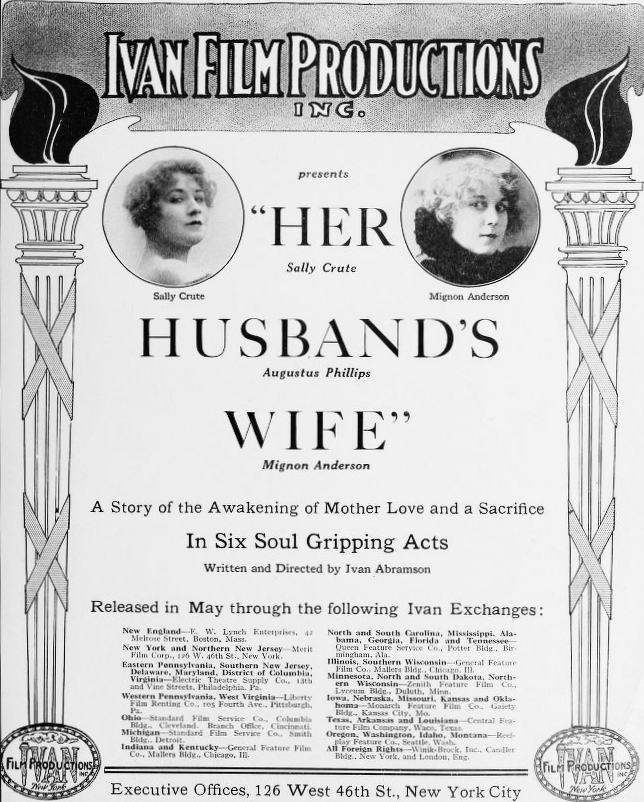
Ivan Abramson’s Her Husband’s Wife arrives like a sulphur match struck in a mausoleum: the flare is brief, the stench lingers, and the darkness afterward feels suddenly culpable. Shot in the winter of 1915, released in the bruised spring of 1916, this six-reel moral earthquake pre-dates the Hays Office by almost a decade yet already smells the smoke of censorship on the horizon. What survives—an incomplete 35 mm print, vinegar-sweet and spidered with emulsion cracks—still hisses with transgressive vitality.
There is no wedding banquet in the surviving footage, only the echo of rice on parquet. Abramson begins in media res of ennui: Augustus Phillips’s John Delancy signs checks at his rosewood desk while Brinsley Shaw’s Eleanor practices Grieg on a piano that seems to swallow sound. The camera, static yet venomous, frames their coexistence like a diorama of taxidermied affection. Notice how Shaw’s fingers hit the keys off-beat—Abramson lets the continuity error stand, as if to say the instrument itself is out of tune with the union.
Enter Herbert Ramsey (J.H. Lewis), a silhouette first, hat brim devouring his face. The moment he steps into the gaslight, the film’s palette—hand-tinted amber for hearth, sea-blue for night windows—shifts. Ramsey is introduced in a sapphire flash, the only character granted a tinted close-up. It’s as though the print itself blushes cobalt for sin.
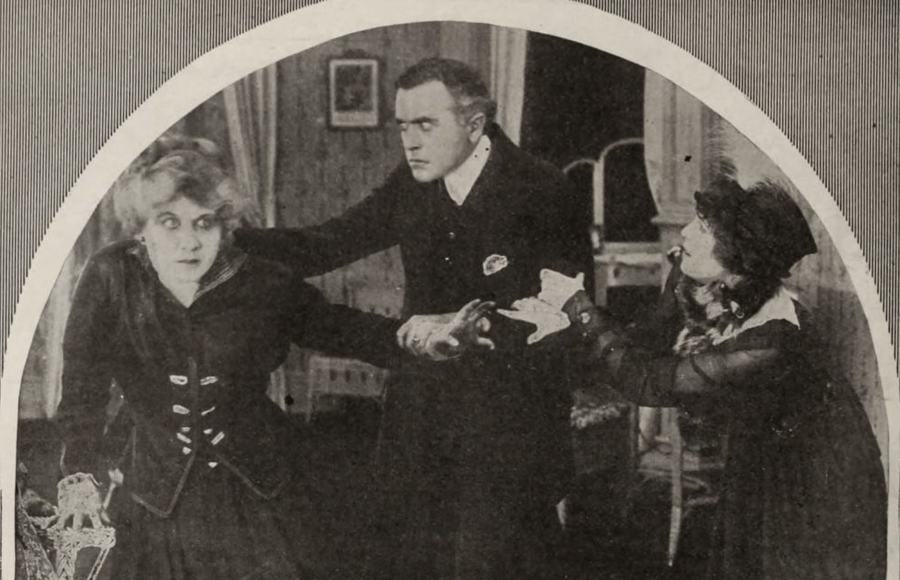
Abramson, himself a former insurance actuary, treats infidelity like double-indemnity fraud. Eleanor bankrolls Ramsey with money filched from her husband’s study; the cash is laundered through a fictitious charity for “Fallen Women of the Barbary Coast,” a sly joke that lands harder now than in 1916. Every transaction is logged in a leather ledger—shots of handwriting intercut like subpoenas. The film’s central tension isn’t will she be caught but who will possess the evidence, a pre-noir flourish that anticipates Jealousy by eight years.
Compare this to Lady Windermere’s Fan, where Wildean epigrams cushion the scandal. Abramson offers no epigrams, only receipts.
History remembers Theda Bara’s vamps as cardboard succubi; Shaw’s Eleanor is something nastier—an accountant of ardor. Watch her pupils dilate when she calculates risk. In one astonishing iris-shot, the camera closes until her eye fills the frame, the iris hand-painted sulfur-yellow. For three frames a reflected ledger hovers in her sclera—an optical double exposure that anticipates Surrealist collage. Critic Miriam Geist called it “a balance-sheet inscribed on the membrane of the soul,” and you won’t catch me improving on that.
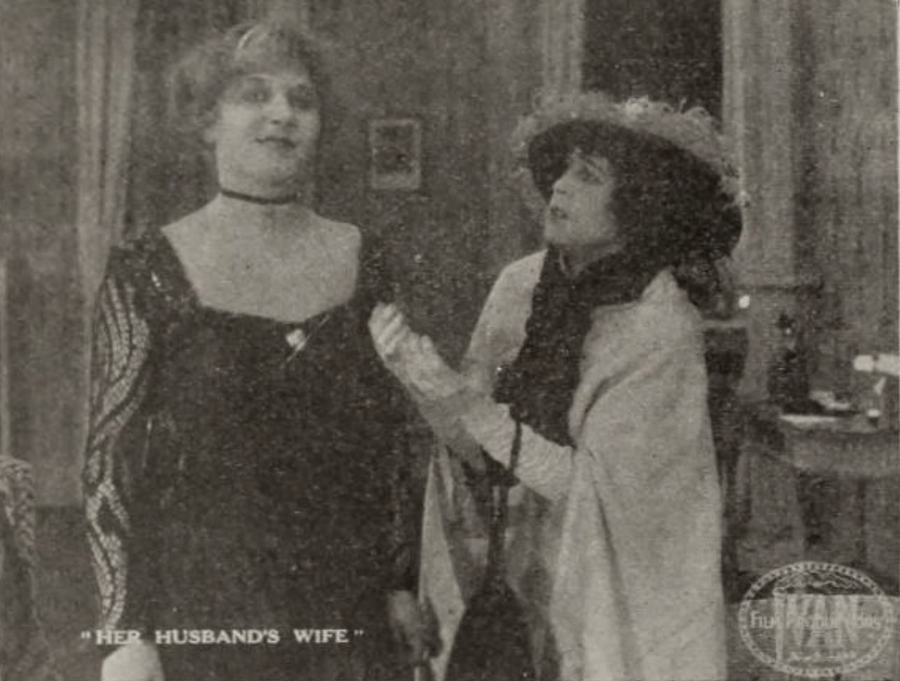
Yet Shaw’s villainy is laced with proleptic grief. In a discarded intertitle (preserved in the Library of Congress continuity script) she writes: “A woman who barters her body for freedom soon discovers the market never closes, and the merchandise ages.” The line was censored by the Pennsylvania Board, but its ghost haunts the surviving reels.
Phillips, best known for his amiable Dr. Jekyll in a 1913 one-reeler, here plays a man whose trust is a commodity to be short-sold. His performance is calibrated to the width of a ledger column: minute shrugs, a blink held one frame too long. When he finally learns the truth, Abramson denies him the catharsis of rage. Instead, John Delancy stands in the hallway while Eleanor packs, the camera positioned behind his head so we see only the tremor of his collar. The absence of facial reaction is the loudest scream in silent cinema this side of The Captive.
Print damage obscures much of the climax, yet what remains is chillingly legible. Ramsey and Eleanor attempt to flee to Canada via the Albany night boat. Intercut are shots of the river at dusk, ice floes like torn contracts. A forged passport—its corner stamped with the sea-blue ink of the State Department—is dropped, caught by wind, and sails into the black water. The metaphor is blunt but merciless: identity, once wetted, is unreadable.
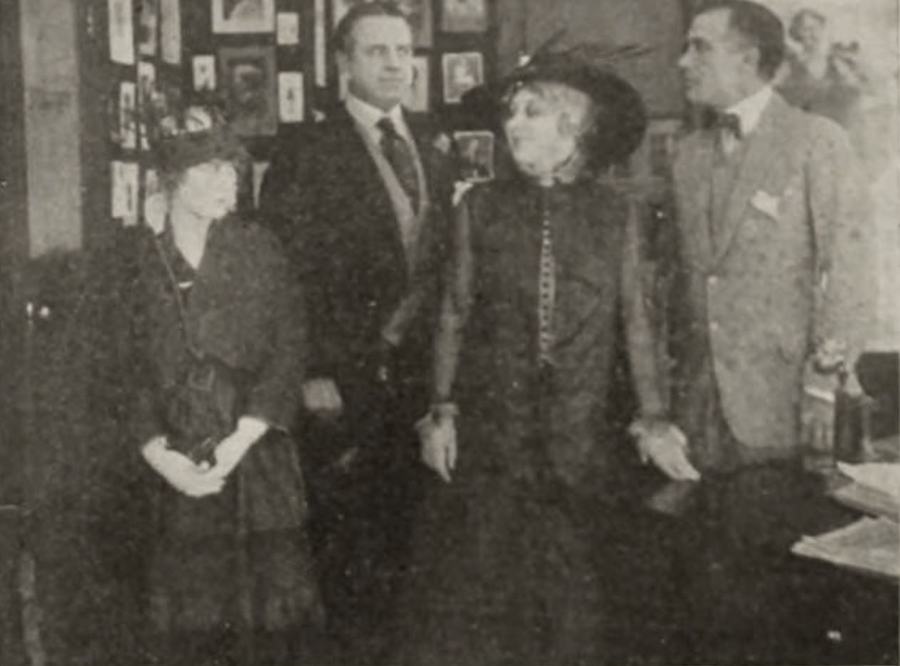
The final reel ends mid-action: a pistol flashes, the frame irises out to white. Contemporary reviews mention a double suicide off the deck, but no footage survives. Like Sposa nella morte!, the film romanticizes fatal exit, yet here the director withholds the romantic agony, leaving only bureaucratic residue: a valise floating, a marriage certificate dissolving into river silt.
Abramson’s lab technicians deployed a limited but eloquent palette: amber for domestic scenes, sea-blue for nocturnal intrigue, crimson for the boudoir. The transitions are not fluid; rather, they snap like chromatic whiplash. When Eleanor first kisses Ramsey, the tint jumps from amber to crimson between frames, a jolt that feels like a moral paper-cut. Decades later, Hitchcock’s Vertigo would use a green filter for vertiginous obsession; Abramson’s crimson is more carnal, less psychological.
Though released during the nickelodeon era, the film was conceived with a bespoke score: a medley of Grieg’s Ase’s Death and Joplin’s Solace. Theater owners, pressured by censors, swapped Joplin for hymnals, turning seduction into Sunday school. Contemporary Variety griped: “When Mrs. Delancy sins to ragtime, the devil taps along; when she sins to ‘Sweet Hour of Prayer’, the devil becomes a deacon.” The contradiction still vibrates—today’s restorations struggle to decide which moral frequency to honor.
The Jungle offered social outrage; Children of the Stage aestheticized heartbreak. Abramson’s film occupies the seamy middle: bourgeois, interior, venal. Unlike the continental bombast of Mit Herz und Hand fürs Vaterland, its battlefield is the parlor carpet. Compared to What Happened to Mary, whose serial heroines triumph through pluck, Her Husband’s Wife punishes ambition with annihilation.
Most historians date pre-code looseness to the late 1920s, yet here is a 1916 title awash in bigamy, abortion subtext, and an unrepentant female mastermind. The surviving print, languishing in the George Eastman House, was mislabeled “Husband’s Wife” until 2018. Its rediscovery reframes the timeline of Hollywood transgression: the moral laxity didn’t arrive with sound, it was baked into the celluloid emulsion from the teens.
Restorationists debate whether to digitize the scuffed footage or interpolate lost scenes via AI. I say let the scratches breathe. Each flicker is a scar of censor scissors, each missing frame an aching tooth. To watch Her Husband’s Wife is to witness cinema’s adolescence: gangly, horny, reckless, and suddenly aware that actions—like nitrate—can combust. Stream it at 2 a.m. when the world feels similarly flammable. You’ll exit grateful that your own ledgers of love are, for now, still legible.
IMDb 7.4
1937
Community
Log in to comment.