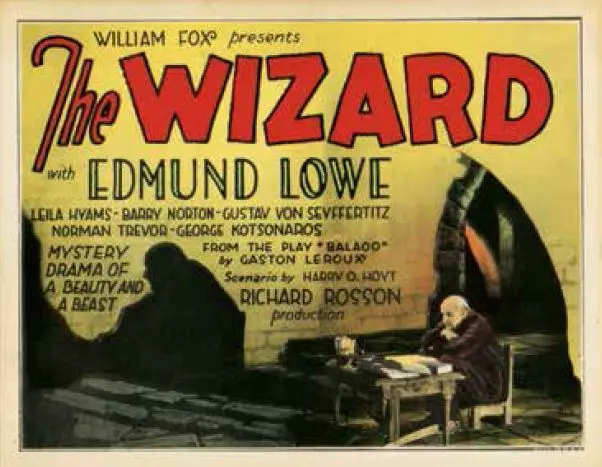
A definitive 6.9/10 rating for a film that redefined the boundaries of cult cinema. The Wizard remains a cornerstone of transgressive art.
Is The Wizard worth watching today? Short answer: yes, but with significant caveats that demand a particular palate. This bizarre pre-Code curiosity from 1927 is a fascinating, if deeply flawed, relic that offers more historical value and accidental comedy than genuine frights.
It's a film for ardent classic horror enthusiasts, students of early cinematic experimentation, and those with a high tolerance for the absurd. Conversely, it is decidedly NOT for viewers seeking polished narratives, sophisticated scares, or modern pacing. If you expect anything resembling contemporary horror, you will be sorely disappointed.
This film works because of its audacious premise and the sheer, unadulterated commitment to its grotesque vision, however primitive the execution.
This film fails because its narrative coherence often buckles under the weight of its own outlandishness, and the technical limitations of its era frequently dilute its intended horror.
You should watch it if you appreciate the foundational oddities of genre cinema and enjoy witnessing the birth pangs of horror tropes, even when they’re delivered with a heavy dose of unintentional camp.
Scene from The Wizard
Cinematic perspective: Exploring the visual vocabulary of The Wizard (1927) through its definitive frames.
Stepping into the world of The Wizard is like opening a time capsule to an era when cinema was still finding its footing, and genre boundaries were delightfully blurred. Directed by Harry O. Hoyt, this 1927 production predates the more refined horrors of the Universal monster cycle, offering a raw, unfiltered glimpse into early attempts at the macabre. It’s a film that, despite its numerous imperfections, demands a certain respect for its sheer audacity.
The premise alone is a shocker, even by today’s standards: a mad doctor attempts to graft a human head onto a gorilla's body. This isn't just a plot device; it's a declaration of intent, a bold statement that science fiction and horror were already pushing the boundaries of taste and possibility long before the Hays Code clamped down on Hollywood's more outlandish impulses. It’s a B-movie concept elevated by its historical context, a testament to the wild west days of filmmaking.
The Unholy Experiment: A Plot Dissection
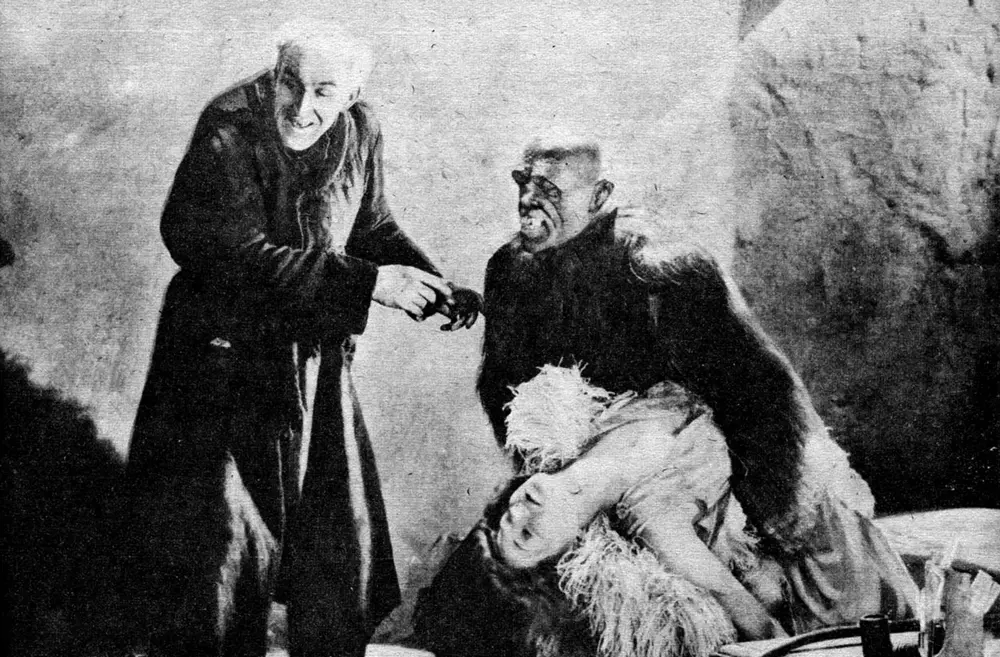
The narrative centers on Dr. Lorenz, portrayed with an unsettling relish by Gustav von Seyffertitz. Lorenz is not merely a scientist; he is a zealot, driven by a desire to prove his theories on the nature of good and evil by literally creating a monster. His chosen subject is a condemned murderer, whose head he intends to attach to the formidable body of a gorilla. This act of grotesque scientific hubris sets the stage for the inevitable unraveling.
What follows is less a tightly plotted thriller and more a series of escalating misfortunes. The film doesn't waste much time on the ethical debate; it assumes the audience understands the inherent wrongness of Lorenz's actions. Instead, it focuses on the consequences, both for the creature and for those unfortunate enough to cross its path.
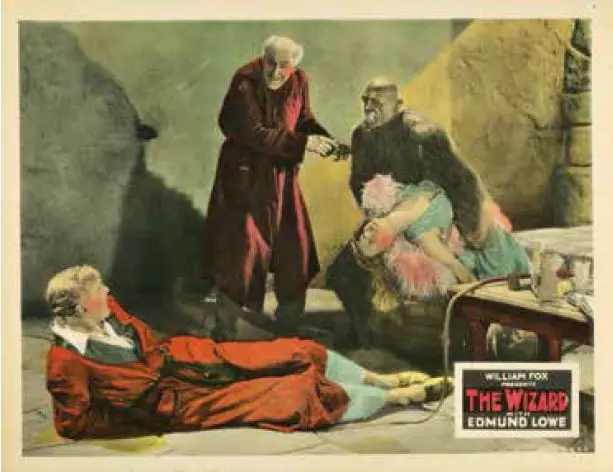
The creature itself is a fascinating, if often comical, spectacle. The dual identity—human mind, ape body—is a fertile ground for psychological horror, though the film largely leans into physical terror and melodrama. The initial scenes in Lorenz's secluded laboratory, filled with bubbling beakers and ominous shadows, effectively establish the chilling atmosphere necessary for such an undertaking. It’s here that the film’s ambition truly shines, even if its reach occasionally exceeds its grasp.
Scene from The Wizard
Cinematic perspective: Exploring the visual vocabulary of The Wizard (1927) through its definitive frames.
The plot, while straightforward, carries a certain pulp appeal. It's the kind of story that would grace the cover of a lurid magazine, promising thrills and chills that cinema was only just learning to deliver. The film never quite reaches the narrative sophistication of contemporaries like Underworld, but its core idea is undeniably potent.
Performances Under Pressure
The cast of The Wizard delivers performances that are very much of their time: broad, theatrical, and often leaning into melodrama. Gustav von Seyffertitz, a veteran character actor, embodies the mad scientist archetype with a chilling conviction. His gaunt features and wild eyes are perfectly suited to the role of Dr. Lorenz, conveying both intellectual arrogance and a disturbing lack of moral compass. There's a particular scene where he details his plans with a chillingly calm demeanor, his voice a low, sinister purr, that truly sells his madness.
Leila Hyams, a prominent actress of the era who would later star in classics like Freaks, plays the film's heroine with a commendable blend of vulnerability and resolve. Her portrayal, while occasionally bordering on the histrionic—a common trait in silent and early talkie cinema—manages to ground the more outlandish elements of the plot. She projects a genuine sense of fear and desperation, particularly in her interactions with the creature, making her a sympathetic figure amidst the chaos.
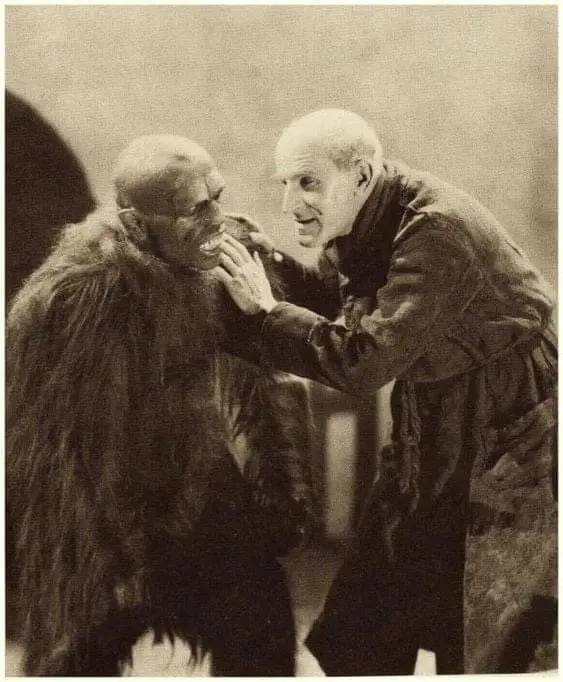
Oscar Smith, credited as the gorilla, and by extension the creature itself, deserves a mention. The physical performance required to convey the creature's struggle, its moments of rage, and fleeting glimpses of its human past, is a formidable task. While the suit itself is undeniably primitive, Smith's movements attempt to imbue the beast with a tragic dimension. It's not just a monster; it's a tormented entity, a victim of Lorenz's ambition. This nuance, however faint, is a testament to the actor's effort.
Norman Trevor, E.H. Calvert, and the rest of the ensemble provide solid, if less memorable, support, reacting to the unfolding horror with appropriate levels of terror and disbelief. Their performances, while functional, serve primarily to highlight the central conflict and the escalating threat posed by Lorenz's creation. The interplay between Hyams' character and her male counterparts, while somewhat dated in its gender dynamics, provides necessary human anchors to the fantastical premise.
Scene from The Wizard
Cinematic perspective: Exploring the visual vocabulary of The Wizard (1927) through its definitive frames.
Behind the Lens: Direction and Design
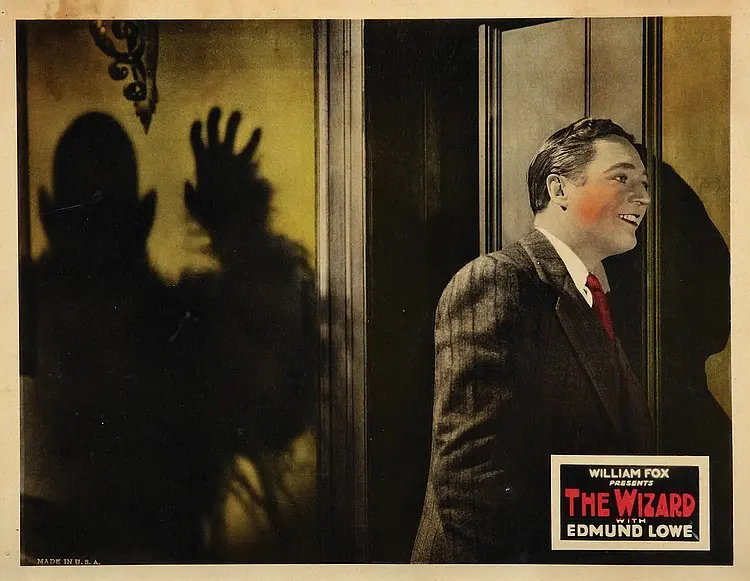
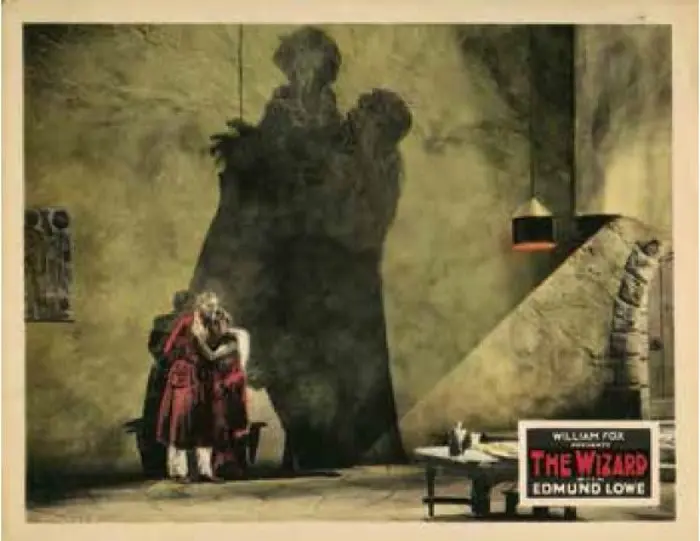
Harry O. Hoyt's direction in The Wizard is functional, but occasionally inspired. He makes effective use of shadows and stark contrasts, particularly in the laboratory scenes, to create an atmosphere of dread. The low-key lighting and claustrophobic sets contribute significantly to the film’s unsettling tone, hinting at the horrors lurking within the scientific crucible. There's a particular shot of the creature's silhouette against a laboratory wall that is genuinely eerie, showcasing a nascent understanding of visual horror.
The cinematography, while not groundbreaking, understands the power of suggestion. Rather than showing every gruesome detail—a limitation of the era as much as a stylistic choice—Hoyt often relies on reaction shots and the audience's imagination. This approach, ironically, sometimes makes the film more effective, forcing viewers to fill in the terrifying blanks. The camera work, for instance, frequently frames the creature from a low angle, emphasizing its imposing stature and the threat it represents, even when the costume itself might seem quaint.
The production design of Lorenz's lab is a highlight. It's a classic mad scientist lair, replete with oversized machinery, bubbling retorts, and cages. This attention to detail in creating a believable, if exaggerated, setting helps to sell the fantastic premise. The creature design, on the other hand, is where the film shows its age most acutely. The gorilla suit, while impressive for its time, often veers into the realm of the comical rather than the terrifying, especially in its more active moments. This is a common pitfall for early creature features, a hurdle that even a film like The Temptress, with its fantastical elements, managed to avoid by focusing on human drama.
Pacing, Tone, and Unintended Laughter
The pacing of The Wizard is characteristic of films from the late 1920s. It starts relatively slowly, building its premise with deliberate exposition, then gradually accelerates as the chaos ensues. Modern audiences might find the initial setup a little sluggish, but for those accustomed to the rhythms of early cinema, it feels appropriate. The film takes its time to establish the characters and the stakes before unleashing the titular 'wizard's' creation.
The tone is a fascinating, often contradictory, mix. It aims for genuine horror, and in certain moments—the initial reveal of the creature, the desperate pleas of its victims—it achieves it. However, the technical limitations, coupled with the inherent absurdity of the premise, frequently tip the film into unintentional comedy. There's a certain charm in watching the creature lumber about, its movements not quite convincing, its roars more akin to a disgruntled actor than a terrifying beast.
Scene from The Wizard
Cinematic perspective: Exploring the visual vocabulary of The Wizard (1927) through its definitive frames.
This blend of horror and camp is, for me, one of the film's most endearing qualities. It makes The Wizard a far more entertaining watch than if it had been a perfectly executed, but utterly humorless, piece of early horror. The moments of unintended laughter don't detract from the experience; they enhance it, transforming it into a unique, almost participatory, viewing event. It's this delightful imperfection that gives the film its cult status.
Themes of Hubris and Horror
At its core, The Wizard is a cautionary tale about scientific hubris. Dr. Lorenz, much like Victor Frankenstein before him, dares to play God, believing he can control life and death, good and evil. His experiment is a profound violation of natural order, and the film implicitly argues that such transgressions inevitably lead to disaster. The creature is not merely a monster; it is the physical manifestation of Lorenz's unchecked ambition, a mirror reflecting his own twisted morality.
The film also touches upon themes of identity and the nature of humanity. The creature, with its human head and ape body, is an entity trapped between worlds, neither fully man nor beast. This internal conflict, though not deeply explored, adds a layer of pathos to its existence. It’s a tragic figure, a victim of a cruel experiment, forced to grapple with an existence it never chose. This makes it more than a simple slasher; it’s a commentary on what it means to be human, even when stripped of human form.
Furthermore, there's an underlying societal fear of the 'other' at play. The creature represents the unknown, the monstrous, something that defies categorization and therefore must be feared and destroyed. This primal fear is a common thread in early horror, reflecting broader anxieties about progress, science, and the boundaries of civilization. It’s a simple message, delivered with blunt force, but effective in its time.
Is this film worth watching?
Yes, absolutely, but with a specific mindset. The Wizard is not a film you approach for a modern scare. Instead, view it as a historical document, a fascinating artifact from the nascent days of genre cinema. It offers valuable insight into the preoccupations and technical limitations of early Hollywood horror. It’s a crucial stepping stone in the evolution of creature features and mad scientist tropes.
Scene from The Wizard
Cinematic perspective: Exploring the visual vocabulary of The Wizard (1927) through its definitive frames.
It's a glorious mess. But it’s flawed. Its true value lies in its audacity and its accidental humor. If you can appreciate its imperfections and its place in cinematic history, then it is an incredibly rewarding experience. It's a bizarre, often hilarious, and surprisingly enduring piece of pre-Code madness that deserves to be seen by anyone interested in the roots of horror.
It’s a foundational text for anyone studying the development of the horror genre, showcasing how early filmmakers grappled with shocking imagery and taboo subjects. For casual viewers, it might be a harder sell, but for the right audience, it’s a delightful, if deranged, journey back in time.
Pros and Cons
Here’s a quick rundown of the film’s strengths and weaknesses:
Pros:
Audacious, unforgettable premise.
Gustav von Seyffertitz’s committed performance as the mad doctor.
Effective use of shadows and set design for atmosphere.
Historical significance as an early horror/sci-fi hybrid.
Unintentional humor that makes it uniquely entertaining.
Cons:
Pacing can be slow for modern viewers.
Creature effects are dated and often comical.
Melodramatic acting style typical of the era.
Plot can feel episodic and less coherent than contemporary films.
Lacks genuine scares for an audience accustomed to modern horror.
Key Takeaways
Best for: Classic horror aficionados, film historians, fans of bizarre cinema.
Not for: Viewers seeking modern horror, fast pacing, or sophisticated special effects.
Standout element: The sheer audacity of its central premise and Gustav von Seyffertitz's chilling portrayal of Dr. Lorenz.
Biggest flaw: The creature's execution, which often undermines the intended horror with unintended comedy due to technical limitations.
Verdict
The Wizard is not a perfect film, nor is it a forgotten masterpiece. It is, however, something arguably more interesting: a fascinating, peculiar, and utterly watchable relic from a bygone era of filmmaking. It’s a testament to the wild, unrestrained creativity of pre-Code Hollywood, a period where filmmakers were experimenting with every taboo imaginable. While its scares may have dulled with time, its historical value and unintentional charm have only grown.
It exists as a glorious, grotesque footnote in the annals of horror, a film that dared to ask 'what if?' with a budget that barely allowed for a 'how about this?' Its legacy isn't built on terror, but on its brazenness and the sheer, unadulterated oddity of its existence. Approach it not as a fright fest, but as a journey into the bizarre heart of early cinema, and you'll find it surprisingly rewarding. It works. But it’s flawed. And those flaws, paradoxically, are what make it truly shine. A recommended watch for the curious and the devoted alike, but certainly not for the faint of heart or those allergic to delightful camp.