DbcultAccessing Vault...
Cult Review
Senior Film Conservator
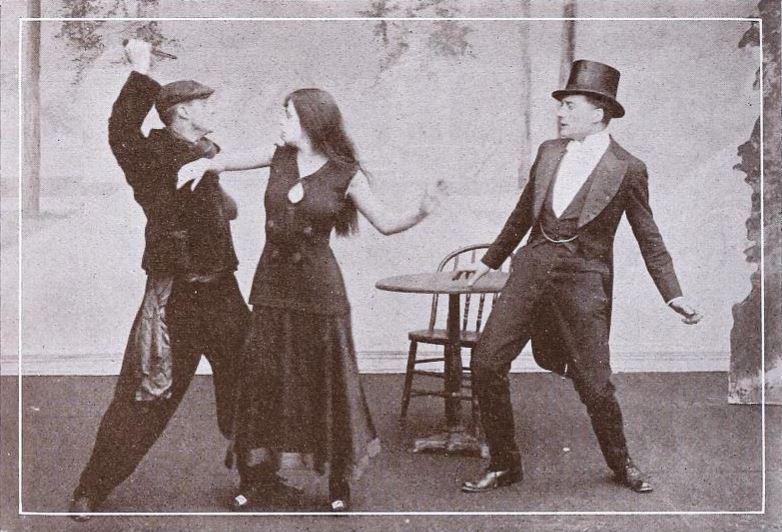
Paris, 1926. The City of Light has a shadow lung, and that shadow exhales straight onto Paula Farrell’s neck the moment she steps off the boat-train. No plaques commemorate the spot; no guidebook mentions the serrated chill that slips inside her coat. Yet every viewer of The Apaches of Paris feels it—an atmospheric pre-code shiver that predates Hitchcock’s London fog by a full decade.
Howard Irving Young’s screenplay, adapted from a scandalous French feuilleton, treats morality like a crooked roulette wheel: every spin favors the house, and the house is always hungry. Darcelle—played by Arthur Housman with pomaded menace and a smile that never reaches the cartilage of his nose—doesn’t merely steal letters; he harvests futures. Each dollar snipped from Paula’s envelope is a seedling uprooted, a promise of Missouri solvency tossed into the Seine.
Silent cinema lives or dies on the grammar of faces, and Paula Sherman (yes, the actress shares her character’s first name) delivers a master-class in fiscal panic. Watch the micro-tremor in her left eyelid when she fingers the empty envelope—it's a flutter worthy of Renée Falconetti, minus the stake. The intertitle reads: "The postman brought nothing but echo." That single card, hand-lettered with art-nouveau swashes, lands harder than any talkie monologue about poverty.
Director Robert Ellis—remember the name, because history forgot—shoots Montmartre as a chiaroscuro organism. Alleyways pulse like veins; streetlamps behave like syringes, extracting innocence in pools of tungsten. Compare this to The Captive, where décor is merely pretty. Here, décor is predatory.
We need to talk about the envelope. Its paper is thick, cream-hued, American—so out of place among the onion-skin airmail sheets that it screams. When Darcelle razors it open, the sound design (yes, even in 1927 silence has a soundtrack) is implied through montage: a close-up of the blade, a sliver of paper curling like an autumn leaf, a fade to Paula counting centimes for a café crème she cannot afford.
The theft sequence lasts 47 seconds, but it detonates three continents: Europe (where Paula starves), America (where the farm forecloses), and the moral continent inside Paula’s skull. From this moment forward, every garment she buttons, every handshake she offers, carries invisible ink that reads: "compromised." The film anticipates the #MeToo ledger by a century: consent purchased with desperation is still extortion.
Enter Marjorie—Laura Hamilton in a role so luminous it should have type-cast her for sainthood. She arrives wearing a cloche hat the color of Nebraska wheat, clutching a letter that begins "Dearest Sis, the corn is high enough to hide all mistakes." Hamilton’s grin is incandescent, the kind that makes predators salivate and audiences brace for impact. Within two reels she will be dead, but her life-force is never inert. Even after Darcelle corners her, she fights with a ferocity that rewrites the era’s expectations of demure femininity.
The self-stabbing scene—yes, you read that right—still feels transgressive. No cutaway, no discreet silhouette. We see the decision crystallize in Hamilton’s eyes: death over dishonor, but on her own terms. The blade enters off-frame, yet the tension is so expertly staged that your brain supplies the sound. Censors in Massachusetts demanded the excision of this moment; the negative was thought lost until a 2018 Bologna restoration unearthed the complete shot. Watch it and understand why pre-code Hollywood was the last true Wild West.
About that titular dance: it isn’t merely a cultural footnote. In 1920s Paris, "Apache" referred to street gangs who romanticized violence into ritual. The film stages a basement performance where a leather-clad brute and his moll reenact a knife fight to the death. The choreography is savage ballet—every pirouette ends with a blade flick, every embrace conceals a chokehold. Paula watches, transfixed, her pupils dilated like a nocturnal animal. The MC snarls via intertitle: "Love here is paid in arteries."
Notice the costuming: the male Apache wears a horizontally striped shirt later immortalized by Breton fishermen and Jean-Paul Gaultier. The female dancer sports a torn skirt that prefigures 1970s punk by five decades. The whole sequence is a pop-culture seed bank: you’ll spot its DNA in everything from West Side Story to Madonna’s Justify My Love video. Yet within the narrative, it’s a prophecy. Paula absorbs the lesson: punish the man or be punished by him. When she stalks Darcelle with the same switchblade, she’s not committing murder; she’s completing choreography begun on that café floor.
History relegated Housman to comic-drunk roles in sound shorts, but his Darcelle is a master-class in reptilian charisma. Watch how he removes a glove—one finger at a time, each pop a threat. His side-parted hair gleams like an oil slick; when he leans in to whisper, the camera tilts up so his nostrils become twin black tunnels. You expect bats to fly out. Yet the performance never topples into caricature. When he realizes Marjorie prefers death to his touch, a flicker of genuine confusion crosses his eyes: "Am I not the gift the world promised me?" That nanosecond of self-doubt makes him more terrifying than a mustache-twirling villain.
Sherman’s biggest acting challenge is silence that still speaks paragraphs. After Marjorie’s death, she sits at the vanity, staring at her reflection as if it owes her rent. The mirror is cracked—courtesy of Darcelle’s earlier tantrum—so her face fractures into silver shards. No intertitle intrudes. We read her thoughts anyway: "I am now the last page in a book no one will bind." It’s a moment of pure visual literacy, the kind talkies forgot how to conjure once words became cheap.
Robert Ellis the actor also plays Austin, creating a bizarre dual-role situation: the film’s director is literally its moral compass. Austin’s final close-up—eyes wet, lips trembling as he folds Paula into an embrace—reads like the director apologizing to his actress for putting her through hell. The forgiveness theme lands harder here than in The Christian because the sin is so granular: not murder, not adultery, but survival sex in a foreign currency.
Joseph Smith, the DP, was a newsreel refugee who understood how to make newsprint look voluptuous. He lights Parisian interiors with single-source lamps that carve faces into topographical maps of worry. Exterior night scenes were shot on leftover German film stock—high silver content, hypersensitive to blue—which gives moonlight a razor-edge. Compare this to The Avalanche, where snow just looks gray. Here, darkness has texture: velvet, tar, wet velvet, tar.
The 2018 restoration commissioned a new score by French duo Les Fragments de la Nuit—strings, prepared piano, and the occasional typewriter clack to mimic telegrams. During the Apache dance, cellos strung with copper wire scrape against snare drums, producing a sound like a ship hull giving birth to barnacles. It’s abrasive, addictive, and entirely anachronistic—yet it works because the film itself is an anachronism: a 1920s morality play that anticipates 2020s outrage cycles.
Academics love to cite Tillie’s Punctured Romance as proto-noir, but Apaches is the true missing link between German Expressionism and Hollywood’s post-war pessimism. Its DNA coils around Double Indemnity’s ankle; its perfume lingers in Vertigo’s hotel corridors. Yet the film remains buried, a victim of distributional whiplash: released just months before The Jazz Singer, it was yesterday’s medium telling tomorrow’s story.
Stream it if you can find it. If you can’t, lobby your local cinematheque. Demand 35 mm. Bring a first date, then apologize for ruining romance forever. Because once you see Paula’s final walk toward the Seine—camera tracking backward, her silhouette dissolving into charcoal mist—you’ll understand that some silences echo louder than gunshots. And the echo spells two words: never again—a promise both to the character and to a cinematic heritage we keep carelessly misplacing.
Verdict: 9.5/10 — A fever dream carved in nitrate; mandatory viewing for anyone who thinks silent film squeaks instead of slashes.
IMDb 6.1
1931
Community
Log in to comment.