
DbcultAccessing Vault...
Cult Review
Senior Film Conservator
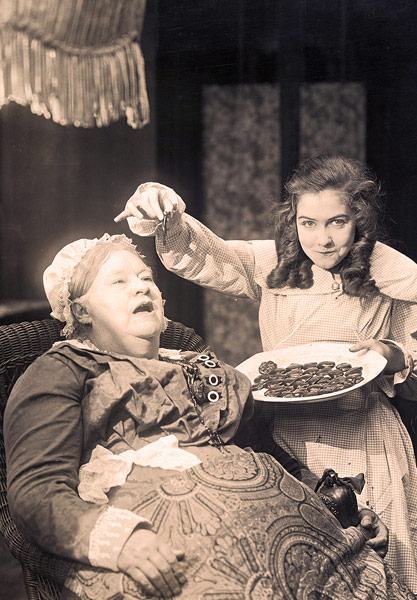
Custodial farce has rarely crackled with such ozone. In the monochrome twilight of 1917, while Europe swallowed cordite, American screens flirted with fiduciary revolt, and Her Official Fathers lands like a champagne bottle hurled across a boardroom.
Dorothy Gish—often eclipsed by sister Lillian’s monumental suffering—here weaponizes her sprite frame: every shrug of the shoulder is a mutiny, every sideways glance a writ of habeas corpus for her own whimsy. She is trust-fund Ophelia armed with a parasol instead of wildflowers, and the camera adores the tremor of disbelief in her saucer eyes when the law hands her personhood to two ledger-bound pontiffs.
Sam De Grasse’s Ethan Dexter moves like a column of mercury: cold, reflective, impossible to grasp without poisoning oneself. Milton Schumann’s Henry Jarvis provides the velvet counterweight—smiles first, contracts later. Together they embody a bifurcated Moloch devouring wardship with a napkin tucked under its double chin.
The screenplay, stitched by Hugh S. Miller and Roy Somerville, treats betrothal like a corporate merger; thus the comedy serrates. Dexter’s proposal is delivered beside a vault timer: if Janice refuses, the steel door will clang shut on her allowance. Hyperbole? Yes—but 1917 audiences, fresh from newspaper exposés on insurance conglomerates, laughed the anxious laugh of recognition.
Visually, director William C. deMille (yes, Cecil’s elder, less flamboyant brother) borrows the diagonal shadows that German Expressionism will soon trademark. When Steven Peabody—Richard Cummings playing a love-struck clerk with ink-stained cuticles—scurries through corridors, the lights tilt 30 degrees, turning the bank into an iron lung wheezing gold. One shot frames Janice’s reflection inside a polished teller cage; the reflection splits, ghosting her two fiancés on either side while Steven’s real body stands off-center, out of focus—a prophecy in silver nitrate.
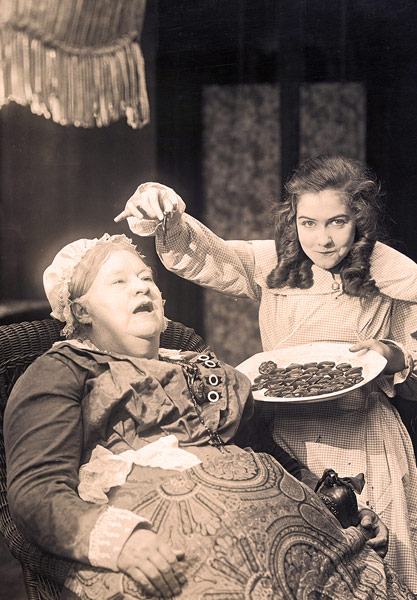
Comparative glances are inevitable: the guardianship nightmare of Sealed Orders shares a similar fiduciary claustrophobia, yet lacks Gish’s slapstick sabotage; The Lifted Veil offers spiritualist solutions where Her Official Fathers trusts paperwork to devour itself.
Sound, though absent, is implied through synesthetic devices: typewriter hammers crash in intertitle cadence; cash drawers slam in irised close-ups. The cumulative effect is a silent film that somehow clacks. When Dexter boasts of his upcoming “controlling interest” in Janice, the intertitle letters jitter, enlarge, then snap back—an early visual shout.
Gender politics here are both progressive and period-handcuffed. Janice’s final coup—reading paternal excoriation, choosing love-plus-poverty—feels radical until one notices the chosen groom still works inside the same banking ecosystem. She swaps one signatory for another, yet the film wants us to read this as total emancipation. Modern cynics may smirk; 1917 suffragists reportedly cheered.
Performances orbit around Gish’s kinetic tremor. Charles Lee as Winfield Jarvis supplies matinee-idle handsomeness—his proposal scene occurs in a greenhouse where he offers orchids the color of bruises, a botanical promise of exquisite captivity. Hal Wilson’s bank president cameos as a wheeze of protocol, the institutional idling engine.
The restored Kino edition tints courtroom scenes in bruise-violet, evening exteriors in sodium-amber, and the finale—Janice and Steven disappearing into a throng of ticker-tape—blooms into hand-tinted rose, as if the world itself blushes at its own mercantile farce.
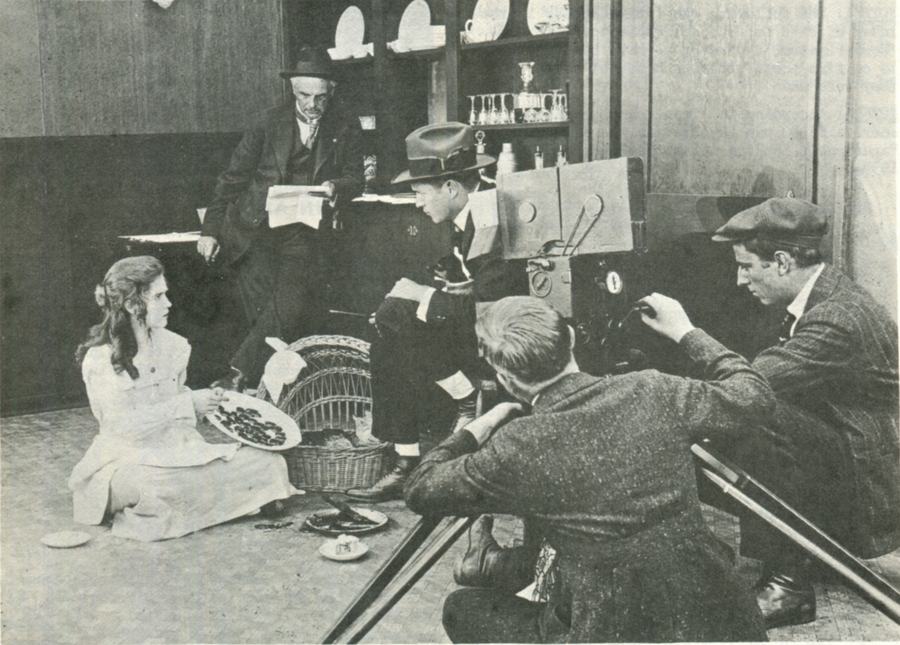
Yet flaws fester. The climactic closet imprisonment hinges on a single Yale key left ostentatiously in the lock—lazy plotting even for farce. Secondary characters (Bessie Buskirk’s maid, Fred Warren’s tipsy notary) evaporate without residue. And the film’s racial imaginary is lily-white even by contemporary standards; the only hint of labor is a Black porter tipping his cap in the background, uncredited, uncollected.
Still, the aftertaste is effervescent. Miller and Somerville’s script anticipates screwball’s velocity: proposal, counter-proposal, closet kidnapping, paternal epistle, dual groom abandonment—all under 65 minutes. The compression feels modern, binge-worthy.
Scholars tracing the evolution of corporate satire on screen must reckon with this celluloid missing link. Without Her Official Fathers, the acerbic trusts of Law of the Land or the matrimonial balance sheets of The School for Scandal lack a proto-bourgeois ur-text.
Viewers seeking only Lillian-level melodrama may balk, for Dorothy’s instrument here is piccolo, not organ. Yet listen closely: the notes still pierce, still agitate the air of any century where money buys guardianship and womanhood remains collateral.
In the final iris shot, Janice’s veil flutters toward the camera, obscuring the lens with tulle, turning the audience into co-conspirators under a bridal shroud. The screen goes black, but the flutter continues in your retina—a reminder that every transaction of the heart carries hidden fees.
Seek it out, cherish its asymmetries, and let its silvery laughter echo inside the vault of your own convictions. The combination lock is 1917; the treasure is a century-old dare still asking who truly holds the keys to our fortunes.