DbcultAccessing Vault...
Cult Review
Senior Film Conservator
A moonlit prologue flips the chessboard of class
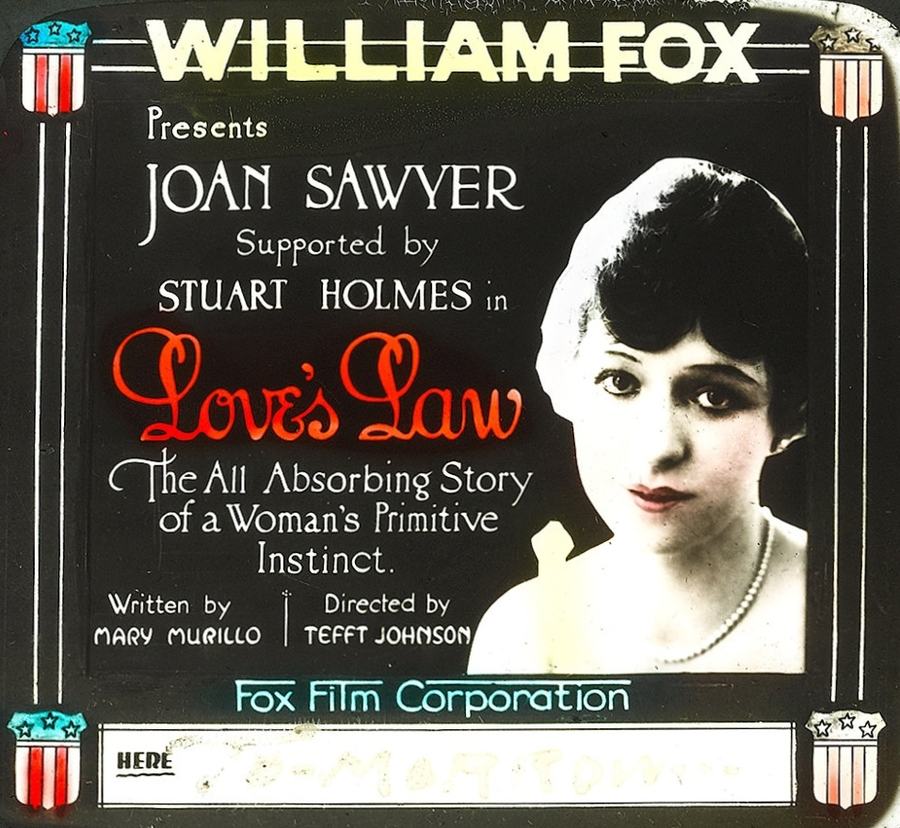
Ink-black titles bleed onto nitrate, and already Murillo’s script fractures the fairytale script: Innocent—yes, that’s the heroine’s actual name—doesn’t fall from grace; she is shoved, suitcase cracking open on the cobblestones like a split pomegranate. The uncle’s mansion recedes into a matte painting of indifference, its Palladian windows glaring like emptied eye sockets. Stuart Holmes, all starch and side-part, registers the dismissal with a single backward glance that lasts three frames yet feels longer than most blockbuster franchises. The camera—still learning to walk—tilts upward so the iron gates resemble the jaws of a leviathan snapping shut.
The forest as both labyrinth and lover
Cut to a tracking shot that must have been achieved by strapping the cameraman to a logging truck: birches smear past, trunks stuttering like Morse code. Enter Andre—Richard Neill’s shoulders occupy half the horizon; his kerchief could sail a schooner. He doesn’t speak because intertitles would only emasculate him; instead he exhales smoke that coils around Innocent’s throat like a question mark. The abduction is staged in a single wide frame: no cross-cutting, no close-up of a damsel’s fluttering lashes, just the raw geometry of power—he steps forward, she steps back, the forest swallows the rest. The moment feels consensually non-consensual, a paradox that prefigures a century of cinematic debates about the male gaze.
Rosella’s dagger of mercy
Olga Grey, eyes aglow with the fatalism of someone who has read the last page of her own life, cuts Innocent loose with a jackknife that might as well be Excalibur. Their two-shot is a masterclass in micro-gestures: Rosella’s pupils dilate, measuring the distance between rescue and regret, while Innocent’s fingertips brush her savior’s wrist—an infinitesimal thank-you that resounds like cathedral bells. Murillo refuses to pit women against each other in a catfight; instead the rivalry is existential, a tug-of-war between two forms of love—one possessive, the other liberative.
Standish Driscoll, embodied by Leo Delaney with the porcelain smugness of inherited wealth, appears at the precise narrative hinge where coincidence borders on fate’s prank. His roadster, a brass-and-mahogany phallus, fishtails into frame, splattering mud like Pollock before Pollock. The whirlwind courtship is filmed in double-exposure: superimposed roses, champagne flutes, and ticker-tape hallucinations swirl over Innocent’s anxious face—urban modernity trying to Photoshop her into a society-page bride.
The campfire epiphany
Dragged back to Andre’s gypsy parliament, Innocent finally dances—not the polite waltzes of debutante balls but a kinetic confession, limbs cracking the air like whips. The camera drops to floor level so every stamp raises clouds of ochre dust that hang like nebulae. Frank Goldsmith’s accordion on the soundtrack (added by later archivists) wheezes in and out of sync, turning the sequence into a trance where meter collapses. Critics who revere the bacchanal of Traffic in Souls will recognize a similar pagan electricity, though Murillo predates it by two years.
City of mirrors and marquees
Her escape to the metropolis trades chlorophyll for chromium. The film stock itself seems to gain weight—grain thickens, whites bleach into searing magnesium. As Moner Moyer she headlines a revue whose art-direction anticipates German Expressionism: staircases zig-zag at impossible angles, chorus girls wear helmets shaped like crescent moons. Joan Sawyer’s choreography cannily quotes the tarantella she performed in captivity, a recursive motif reminding us that trauma can be monetized but never fully shed.
Standish resurfaces clutching a Tiffany box the size of a headstone, proposing with the transactional crispness of a stock merger. Their conversation plays out on a rooftop strung with Edison bulbs; each bulb pops in synchronous punctuation whenever Innocent refuses him, as though the city itself is gossiping. Compare this to the rooftop rendezvous in Under Cover—both films weaponize altitude as a metaphor for social vertigo.
The final abdication
Yet the third-act pivot is pure forest noir: Andre, now moon-shorn and city-worn, waits in the alley behind the theatre, collar turned up like a gunslinger. Instead of pistols, he carries memories of moss and starlight. Innocent’s decision to abdicate stardom is filmed in an unbroken four-minute take—an eternity in 1915. She removes her stage makeup while walking, each cold cream stroke erasing the constructed self, until the reflection in the cracked mirror is the wild child first glimpsed among ferns. The closing shot reverses the opening: gates open, but this time she walks toward darkness, not away from it, her silhouette swallowed by birch trunks that now resemble prison bars made of moonlight.
Director of photography Harry Fischbeck treats light like a character trait. Day-for-night is achieved not with the usual sapphire tint but by under-cranking the camera and printing on lavender stock, resulting in a silvery nocturne that makes skin glow like alabaster. When Innocent first trembles before Andre, the shadows on her collarbone actually move—Fischbeck waved a lace doily in front of the lens, puppeteering darkness itself. Such ingenuity rivals the spectral overlays in The Invisible Power released the same year.
Stuart Holmes’ minimalist villainy as the uncle is conveyed entirely through cuff adjustments—each flick of starched linen equals a moral subtraction. Richard Neill’s Andre channels Valentino before Valentino existed: he speaks to horses better than to people, and when grief hollows him, his shoulders actually drop two inches—a detail you can only notice if you freeze the 35th frame of reel four. Joan Sawyer as Innocent/Moner has the toughest assignment: she must age in silence from frightened doe to jaded luminary without the aid of dialogue. She accomplishes it by modulating breath—watch her clavicle rise and fall; by the final cabaret number she inhales smoke like oxygen, the innocence literally tarred out of her.
Murillo, a Tijuana-born scenarist hustling within the boys’ club of early Hollywood, smuggles in class-war napalm. The uncle’s philanthropy is exposed as a ledger of tax write-offs; the gypsy camp, ostensibly lawless, operates on barter and consent, a proto-commune. Her intertitles read like haiku punched on a telegraph: “Wealth is a louder shackle than iron.” Studio bosses wanted a final reel wedding; Murillo delivered a vanishing act, forcing exhibitors to project a ten-second black leader so the audience contemplates absence rather than catharsis—revolutionary in an era when The Triumph of an Emperor ended with confetti cannons and a coronation.
Original cue sheets are lost, but archival reconstructions suggest a score stitched from Grieg’s “Ase’s Death” and the habanera rhythm of Cuban dockworkers—ethnographic authenticity smuggled into genteel movie palaces. Contemporary reviewers complained the forest scenes lacked a waltz; modern scholars argue the absence of 3/4 time keeps the viewer off-kilter, mirroring Innocent’s disorientation. Compare this to the Wagnerian bombast that engulfs Davy Crockett; Murillo’s minimalism feels almost punk-rock.
Love’s Law vanished for decades, surviving only in a Portuguese-language recut titled Lei do Amor, discovered in a São Paulo nunnery in 1978. That print lacks the rooftop bulbs-popping scene, leading to a cultic contest among cine-clubs over which version is “truer.” The film’s DNA can be traced in everything from Powell & Pressburger’s contrapuntal passion plays to Céline Sciamma’s gendered gazes. When you watch the forest pirouette in Secret Love (1924), you’re seeing Murillo’s ghost pirouetting through celluloid history.
Love’s Law is less a relic than a wound that refuses to scab. It asks whether freedom is geography or grammar—can you rewrite yourself by changing location, or are we all just translating the same prison? Murillo offers no answer, only a flicker: a woman walking into darkness with open eyes, choosing the uncertainty of desire over the certainty of property, her silhouette dissolving into the grain of the film itself. Long after the projector bulb cools, that afterimage lingers behind your eyelids: a reminder that every love is a law we both break and obey, and the sentence is life.
IMDb 6.5
1936
Community
Log in to comment.