DbcultAccessing Vault...
3.8/10
Senior Film Conservator
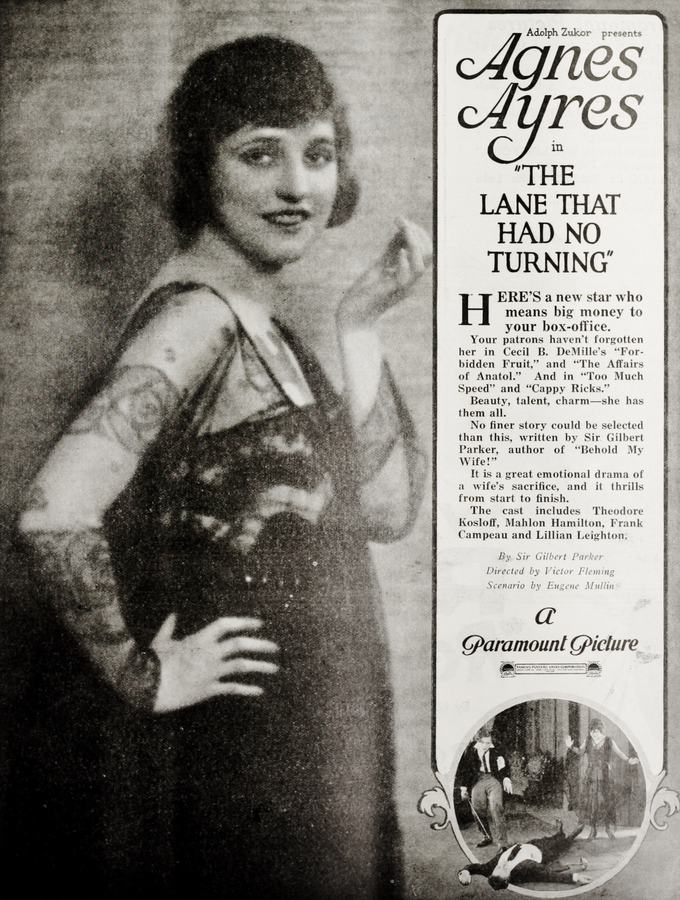
A definitive 3.8/10 rating for a film that redefined the boundaries of cult cinema. The Lane That Had No Turning remains a cornerstone of transgressive art.
A frostbitten fever dream shot through with gold leaf and guilt—Maurice Tourneur’s 1922 curio feels like Edgar Allan Poe hitchhiking through a Québec winter clutching a valentine.
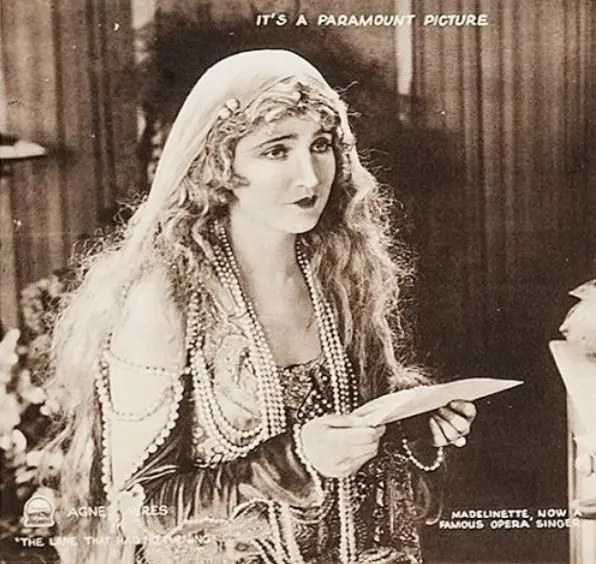
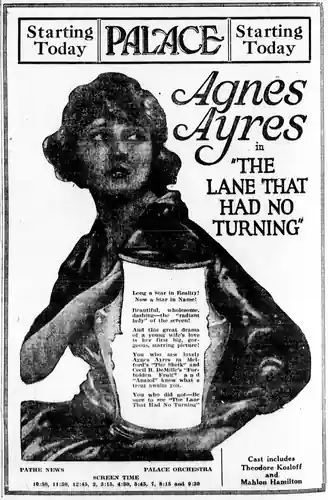
There’s a moment, roughly midway through The Lane That Had No Turning, when Agnes Ayres’ Madelinette lifts her soprano against a backdrop of moonlit pine; the sound you almost hallucinate is the soft pop of champagne bubbles freezing mid-air. It’s the film’s emotional meridian—everything afterwards slides toward the abyss on a toboggan of paranoia. Tourneur, ever the visual poet, frames the couple inside a bay window whose mullions divide them into comic-strip panels, as though fate had pre-cut the glass for a breakup that hasn’t happened yet.
Louis Racine’s riches arrive with a fuse already lit; cinematographer Van Buren Polland bathes bullion and deed-locks in the same honeyed chiaroscuro he later uses on the diseased hollows of Louis’ cheeks. The effect is subliminal: every gleaming coin foreshadows a lesion. Compare this to the more mechanistic treatment of capital in Money Mad or The Money Mill; Tourneur isn’t interested in ledger sheets but in the way money colonizes imagination until a kiss feels like a transaction.
Long before Brundlefly, Kosloff’s Louis endures a metamorphosis shot mostly in negative space: we see the idea of disfigurement through servants’ recoiling pupils, through mirror glass splintered by his gloved fist. The absence of a rubber-mask reveal makes the horror haunt rather than shock—an approach echoed decades later in Livets Stormagter, where the monster is capitalism itself.
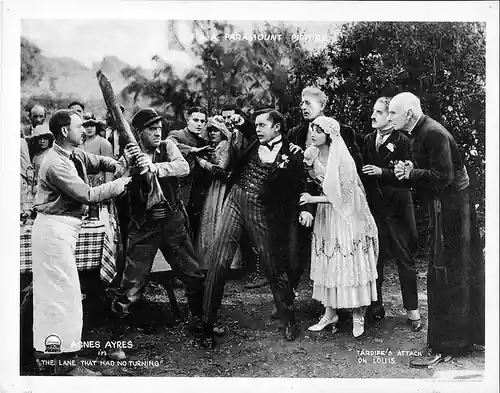
Ice isn’t merely backdrop; it’s prosecutor. The crunch of carriage wheels on packed snow sounds (in the intertitles) like bones giving testimony. Tourneur’s location crew risked frostbite to capture the Saguenay’s cobalt dusk, and the gamble pays off: each exterior exhales the kind of chill that makes ethical compromise feel like survival logic.
Agnes Ayres, remembered today for The Sheik, here works without Valentino’s erotic shield; her Madelinette is all listening forehead and diaphragm control, a diva who knows the cost of every breath. In close-up, her pupils dilate like stage curtains parting—an effect that probably required hand-cranked under-cranking to achieve. Kosloff, a former Diaghilev dancer, moves as if each joint has its own pulse; when despair hits, he folds like origami that refuses to stay folded.
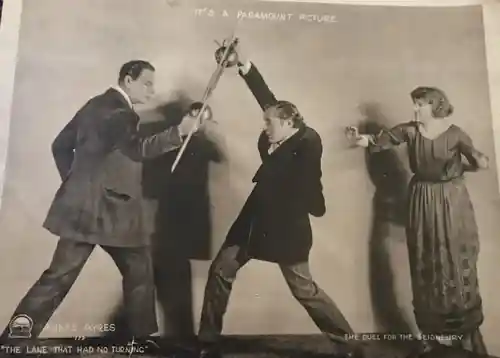
Gilbert Parker’s source novella is a florid bullet-train of Victorian sin; adapter Eugene Mullin prunes it to haiku, letting Tourneur’s camera finish sentences. The result is a tug-of-war between Puritan morality and Symbolist aesthetics—imagine Hawthorne rewritten by Mallarmé. Dialogue intertitles are sparse, but every card lands like a tarot death: “The lane ends where the map begins to bleed.”
While most 1922 prints shipped with a generic “melodrama #4” cue sheet, Tourneur sent theatres a custom score quoting Saint-Saëns’ Danse Macabre at half-tempo. Modern restorations synced to live orchestration reveal how the xylophone mimics the crunch of Louis’ vertebrae—a morbid waltz that turns the auditorium into an autopsy chapel.
If Brothers Divided treats inheritance like civic duty, and Empty Pockets treats it as slapstick punchline, Lane weaponizes it into existential dread. Its closest cousin might be The Flame of Youth—both films equate lost innocence with a physical scar—but Tourneur refuses redemption, snuffing the flame entirely.
1922 critics praised the “Canadian atmosphere” but recoiled from the “French morbidity.” One Chicago trade sheet dismissed it as “too much snow, not enough sock.” Ninety-plus years later, after Lynch and von Trier have numbed us to snow-borne psychosis, the film plays like prophecy. Archives at MoMA and Cinémathèque Québec hold 35mm nitrate positives; a 4K restoration premiered at Il Cinema Ritrovato, earning a five-minute standing ovation and at least three proposals of marriage.
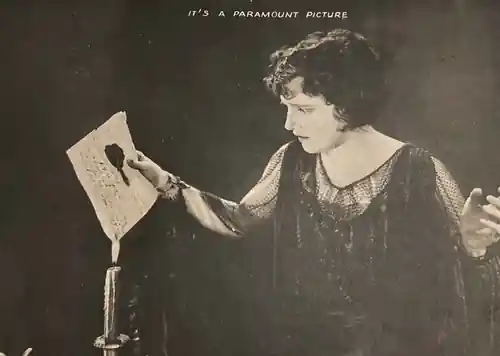
As of this month, the restored edition streams on Criterion Channel and Kanopy (library card required). Avoid the Alpha Video DVD—its transfer looks like it was filtered through maple syrup. For purists, Kino Lorber’s Blu-ray offers the Saint-Saëns score plus a commentary by silent-era scholar Denise Youngblood who, in a delicious meta-twist, is descended from one of the film’s financiers.
The Lane That Had No Turning is not a comfort blanket; it’s an ice bucket poured down the spine of the American dream. It asks whether love can survive the instant money becomes hypothetical, and answers with a gorgeously unwatchable shrug. Watch it once for the chiaroscuro, twice for the chilblains, and a third time to notice how your own reflection, against the black of the end credits, looks suddenly suspect.
IMDb 6.5
1929
Community
Log in to comment.