DbcultAccessing Vault...
Cult Review
Senior Film Conservator
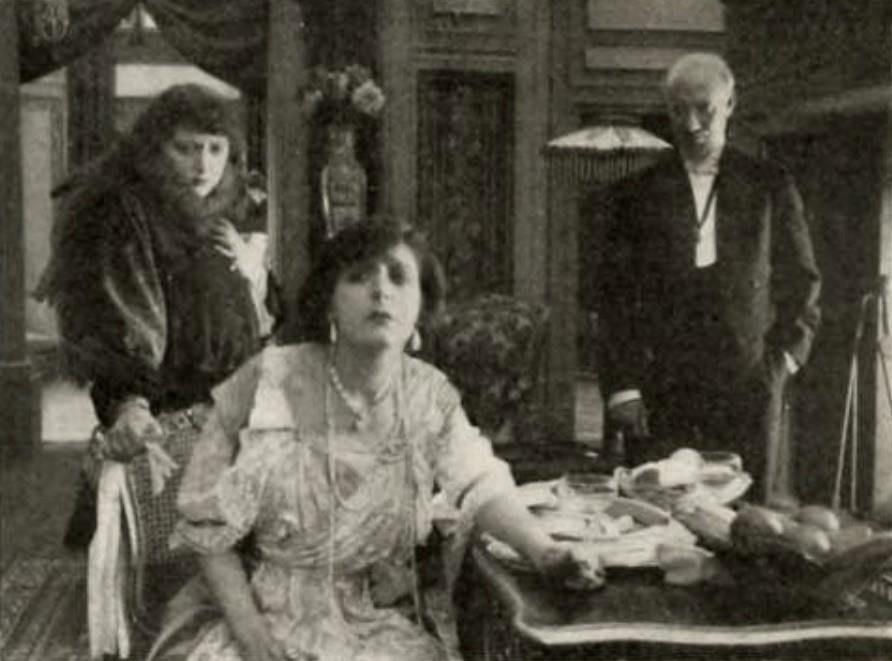
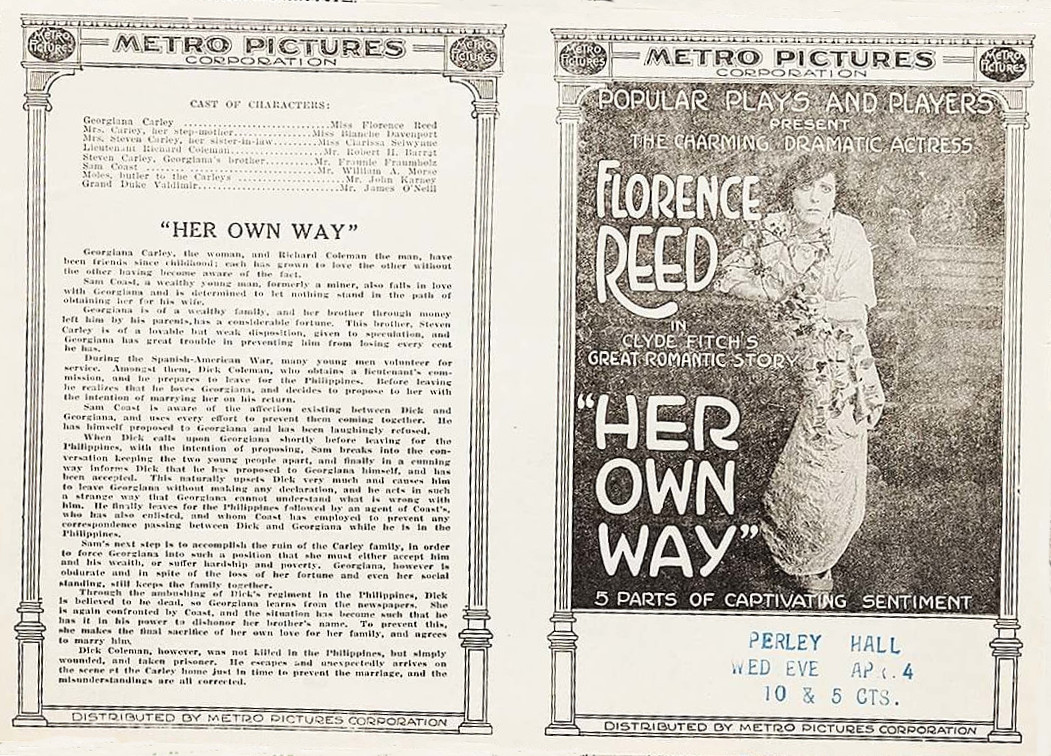
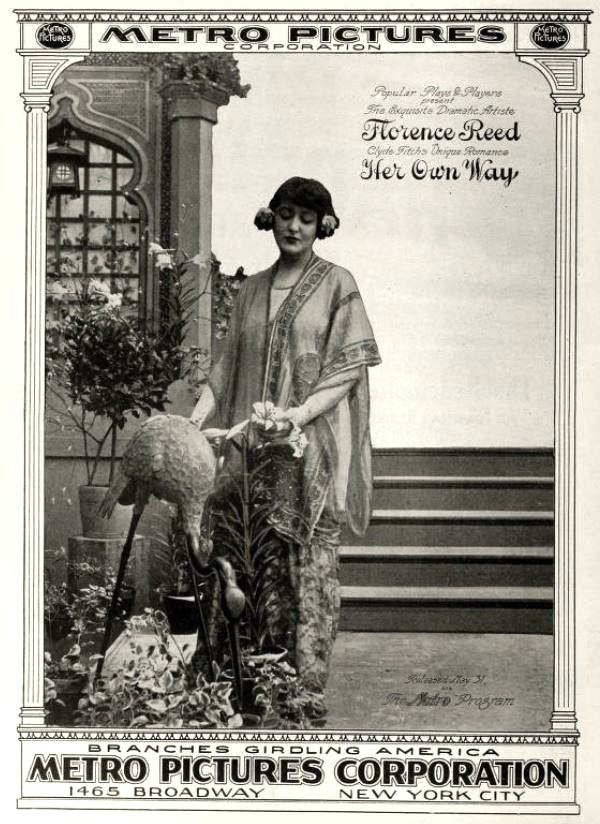
Clyde Fitch’s celluloid aria Her Own Way arrives like a tarnished locket snapped open: inside, the Victorian perfume of unspoken love mingles with cordite from a distant colony, and the hinge squeaks of class desperation. Florence Reed’s Georgiana is no fainting heirloom; she is a woman asked to pay for the sins of patriarchal speculation with her own body, and Reed lets the camera read every tremor of that transaction in the flare of her nostrils, the deliberate blink that halts a tear. The film’s grammar is 1915—medium two-shot, axial cut-in, a ghost of tint when passion or gunfire erupts—but the emotional syntax feels bracingly modern: consent as currency, gossip as artillery, absence as erasure.
Director John Karney—more remembered today for East Lynne—frames parlors in cavernous chiaroscuro: kerosene halos tremble over rosewood, while Manila’s jungle is merely suggested by a gauze scrim and a wind machine. Yet illusion works; the eye fills the blanks with sweat-soaked canvas and carabao mud. When Dick, played with bashful rectitude by Fraunie Fraunholz, receives his commission, the enlistment scene is staged against a cyclorama of sky so saturated it borders on Expressionist cobalt. One intertitle—"Tomorrow I sail where love must wait on powder."—flashes like a bayonet.
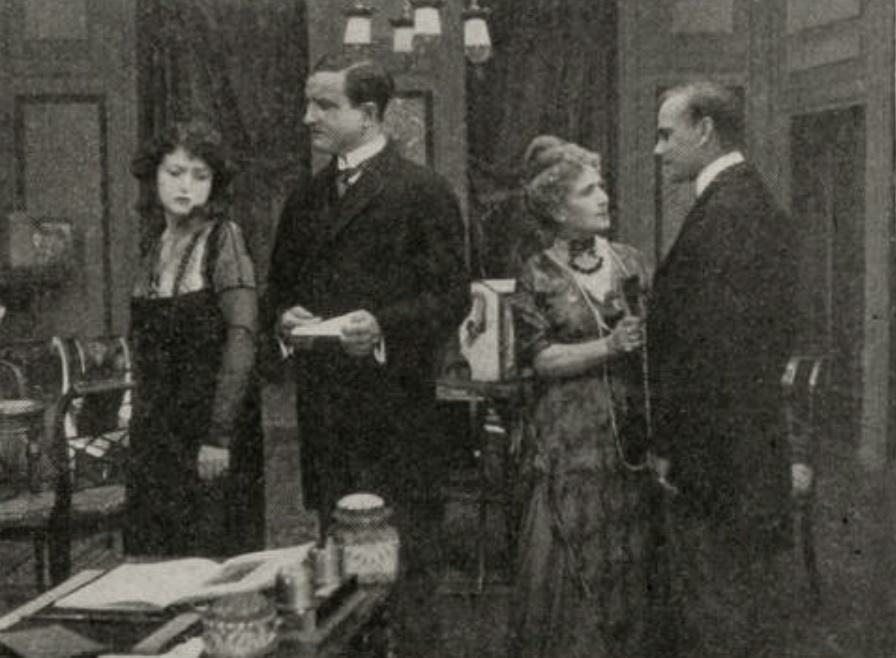
Sam Coast is the film’s true author of movement. William A. Morse plays him with a smile that never quite reaches the pupils, a man who has traded a miner's lamp for a silk hat but still thinks in seams and lodes: Georgiana is the mother-lode, her affections the vein to be stripped. His sabotage of the lovers’ correspondence is a wicked stroke that prefigures our age of algorithmic shadow-bans. Every intercepted letter tightens a corset of misinformation around Georgiana’s future, and Morse lets us see the almost sexual thrill that ripples across his face when another envelope is tossed into the campfire.
Georgiana’s battleground is the drawing room ledger. As Steven, her brother, hemorrhages inheritance on copper futures whispered by faceless tipsters, the camera watches Reed age in jagged cuts: a lace collar fraying between scenes, a once-buoyant bustle now deflated like morale. When creditors strip the Carley portraits from the walls, the empty rectangles of wallpaper become ghostly after-images of vanished status. Through it all Reed never begs for sympathy; her chin tilts with the stoic grandeur of a ship prow, recalling Salambo’s sacrificial priestess transplanted to Wall Street.
The Philippine front is kept off-screen for budgetary reasons, yet its phantom presence bleeds into every domestic shot. When news of Dick’s supposed death reaches the Carley hearth via telegraph, Karney superimposes a flickering newspaper over Georgiana’s stricken face: "LIEUT. COLEMAN AMONG SLAIN IN AMBUSH." The letters jut like coffin nails. Viewers in 1915 would still taste the real-world aftertaste of Balangiga; the film cannily weaponizes that raw nerve. Compare this economy of horror to the globe-trotting chase in Die Jagd nach der Hundertpfundnote, where spectacle trumps scars.
Karney’s cutting rhythm turns sadistic in the climactic nuptials. Sam, gloved in white like a surgeon of fate, stands at the altar while organ music (supplied by a theatre pianist in 1915) swells. Georgiana’s veil drags behind her like a comet of resignation. Cross-cut: Dick, ragged, sun-scabbed, leaps from a west-bound freight, trench coat flapping. The montage alternates ring and railroad spike, vow and muddy boot. Just as the priest intones "…let him speak now," a door explodes open—frame irising in like an eye contracting from too much truth. The halt is so abrupt that contemporary reports claimed nickelodeon patrons cheered themselves hoarse.
James O’Neill (father of Eugene) cameos as Rev. Alden, lending Bardic gravitas to the hurried vows; Clarissa Selwynne’s maid supplies comic oxygen, fluttering like a canary sensing gas-leak doom. But the film belongs to Reed and Morse—two magnetic poles. Reed’s micro-gesture when she fingers the discarded engagement ring—a thumb brushing the empty space where stone should glint—speaks louder than any subtitle. Morse, meanwhile, modulates villainy: his final collapse onto the church steps is not remorse but systems-failure, a tycoon realizing markets can’t purchase inevitability.
Clyde Fitch died in 1909; this posthumous adaptation distills his trademark vice—dialogue that scalds. Intertitles drip with epigram: "A woman’s ‘no’ is merely the ante in a gentleman’s poker." Such cynicism feels proto-Wilde, yet Fitch moralizes without sermon, letting the marriage market itself indict. The tension between theatrical verbosity and cinema’s mute eloquence births a hybrid creature: scenes hinge on letters unread, telegrams delayed, whispers behind cupped palms—plot devices impossible on proscenium yet perfect for the new visual grammar.
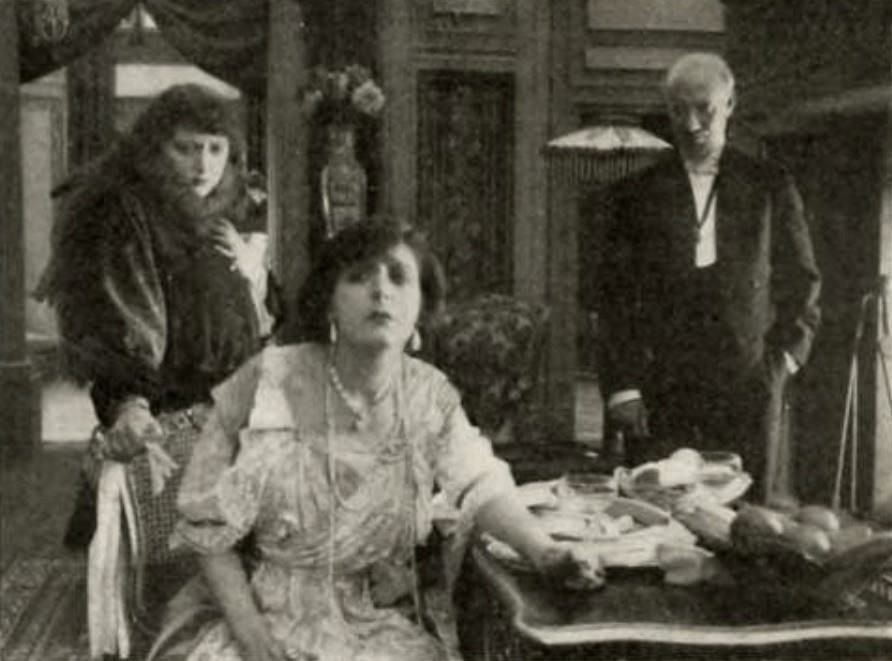
Though released five years before the term "pre-Code" gained currency, Her Own Way anticipates that era’s frankness: women as collateral, men as brokers, war as venture capital. Georgiana’s eventual reclamation of agency—refusing Sam even when starvation knocks—feels less sentimental than strategic. She weaponizes the very self-sacrifice demanded of her, turning it into a Trojan horse that smuggles Dick back into her life. Compare to The Hazards of Helen, where hazard is externalized train-track peril; here the hazard is ledger ink.
Only incomplete 35mm elements survive at MoMA, a single reel tinged amber like preserved maple. Yet even fragmentary, the film haunts. Modern restorers have synced a new score—low strings, distant snare—that underscores how little the machinery of coercion has aged. Swap telegraph for text, copper futures for crypto, Philippine jungles for Middle Eastern sands, and the narrative pulses anew. In an era where ghosting is digital and fortunes vanish in blockchain mist, Her Own Way feels less antique than cautionary.
Watch it for Reed’s incandescent steadfastness, for Morse’s predator in patent-leather armour, for the frisson of seeing 1915 wrestle with questions we still hashtag today: consent, class, the commodification of female survival. Imperfect, yes—some racial caricatures in Manila sequences grate, and the pacing stalls during Steven’s gambling exposé—but its bruised heart beats louder than many a technicolor epic. Her Own Way is not merely a curio; it is a mirror in which the attentive viewer will spot the genealogical line from Sam Coast to the venture-capital rom-coms still green-lit a century later. Let it flicker in your retina, and you may find yourself side-eying every modern suitor who promises rescue priced in stock options rather than soul.
Stream the reconstruction on specialty archival platforms, or chase down a rare 16mm print at your local cinematheque. Bring friends, debate afterward over bourbon: Who today still barters love for solvency? The answer, like Dick’s return, may crash through your own assumptions just in the nick of time.
IMDb 6.7
1930
Community
Log in to comment.