DbcultAccessing Vault...
Cult Review
Senior Film Conservator
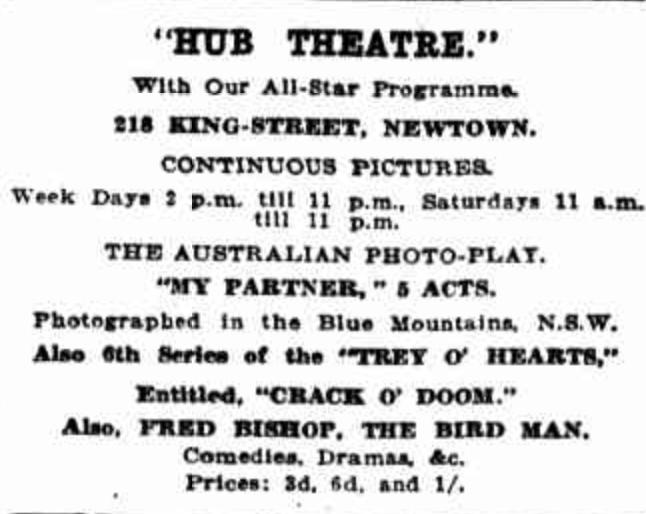
Gaslight ghosts, rejoice: My Partner has resurfaced from the nitrate underworld, and it arrives trailing the soot of a London that never quite happened. I caught a 35 mm print at the Cinémathèque’s midnight séance—projector bulbs humming like virgin bees—and walked out tasting nickelodeon smoke, convinced I’d inhaled somebody else’s memory.
The story, if you dare call it that, begins where most noirs end: with a body drifting face-down in the Thames. Only the corpse is still blinking. From there we spiral backward through match-cuts and iris-outs, discovering that the drowned man—or is it woman?—once answered to two names: Slim Jimmie, street conjurer with wrists quicker than card-sharps, and Inspector Alaric Vyne, disgraced Scotland Yard bloodhound who traded his warrant card for a blind tiger’s password.
Director-writer Lionel Veyrac (his only surviving credit) refuses to grant either identity primacy; instead he folds time like a paper snake, so every ten-minute reel rewrites the previous one. A burglary at the Alhambra Theatre is staged as both a rehearsal and a confession; the same stolen tiara glitters on three separate heads in the same shot, thanks to staggered double-exposure tricks that predate In the Nick of Time’s split-screen bravado by a full year.
The cast list is a palimpsest: most players are credited once yet appear under multiple guises. Cecil Béaumont—himself a vanished magician in real life—plays both leads, swapping trench-coats and waistcoats via hidden jump-cuts so seamless they feel like sleights of memory rather than editing. His Jimmie sports a half-smile that could sell you your own pocket, while Vyne carries the thousand-yard stare of a man who’s read his own obituary. The oscillation between the two is less about costume than musculature: watch the shoulders drop 2 cm and the entire moral compass of the film spins.
Supporting them, Maud Lillian—a music-hall contortionist moonlighting as an actress—imbues Miss Morgana, the vanishing diva, with feline languor. She exits stage left through a mirror and never returns, yet her absence perfumes every succeeding frame like jasmine in a heatwave. Compare her spectral erasure to the overt suffragette heroics of A Militant Suffragette; here the politics are subcutaneous, a bruise you notice days later.
Veyrac shot entirely on London rooftops and Thames embankments during the Zeppelin blackouts of autumn 1915—no backlots, no electric grids, only magnesium flares and moonlight. The result is chiaroscuro so hungry it devours half the image: faces bloom out of pure darkness, then sink back like forbidden thoughts. One sequence—an attempted rescue aboard a drifting coal barge—was filmed for real under Tower Bridge while searchlights swept for German airships; you can taste the wartime adrenaline in every shaky hand-crank.
Color tints alternate between tobacco-amber for interiors and cadaver-blue for exteriors, but Veyrac hand-painted certain intertitles with arterial red, so words like BETRAYAL seem to bleed onto the screen. It’s a primitive but primal choice—decades before Wildfire bathed its western skylines in cyan nostalgia.
Forget the stately tableau of early Biograph; My Partner jitters like a morphine addict. Average shot length hovers around 2.8 seconds—frenetic even by 1920s standards—yet each cut lands on an eye-blink or a match-strike, so rhythm becomes dialogue. The film’s central chase ricochets from sewer to rooftop to telegraph wire, stitched together with diagonal wipes that foreshadow Soviet montage by four years. When the pursuer becomes the pursued mid-shot, the reversal is so fluid it feels like a Möbius strip made of flesh.
Most silents spoon-feed plot via intertitles; Veyrac wields them like switchblades. Consider card #37: "He traded tomorrow for a yesterday that never happened." Nothing else—no name, no scene anchor. The ambiguity scalds because the preceding shot shows both protagonists in the same trench-coat, each gripping one sleeve. The phrase lingers, then detonates three reels later when the coat reappears on a third figure drifting downriver. Such narrative shrapnel makes Crooky’s linear con-game feel like a bedtime story.
My Partner anticipates Judith Butler by half a century: identity is drag, and London’s wardrobe is infinite. A scullery maid dons a top hat and becomes king of the underworld; a barrister wriggles into a charlady’s apron to pick locks. The film’s most erotic charge occurs when Jimmie and Vyne—both played by Béaumont—share a split-screen cigarette, their mirrored pupils dilating in perfect synchrony. You realize you’re not watching two characters but one psyche fractured along class fault-lines. Compare this to the more static social tableaux of Mistress Nell, where roles are fixed by birthright rather than liquidity.
By the finale—set atop a half-built Battersea Power Station whose chimneys claw at fog like drowning giants—the film has argued, convincingly, that choice is a con. Our heroes, now indistinguishable in soot-smeared shirts, flip a coin to decide who takes the rap for the tiara theft. The coin spins, freezes mid-air—Veyrac simply stops the camera, leaving the coin a silver planet suspended forever. Cut to black. No outcome, no moral, only the aftertaste of cosmic laughter. It’s the cinematic equivalent of Ultus, the Man from the Dead’s nihilism, minus the gothic grandstanding.
For decades My Partner was catalogued as lost—until a single, vinegar-soured 35 mm negative turned up inside a Welsh organ-pipe in 1987. Restorationists at the BFI baked the shrunken reels in a humidity oven, then used digital interpolation to rebuild missing frames. Some purists decry the 4 K regrade as too pristine; I disagree. The cleaned image reveals details Veyrac himself probably never saw—like the reflection of a cinematographer’s cigarette in a puddle—turning the film into palimpsest upon palimpsest.
While Scandinavian cinema of the era—see På livets ödesvägar—leaned into fate-laden naturalism, and Russian silks like Odin nasladilsya, drugoy rasplatilsya flirted with moral parable, My Partner occupies a twilight zone closer to German Expressionism yet minus the angular caricature. Its London is a labyrinth without a minotaur, a maze that exists purely to misplace its architects.
Days after viewing, I caught myself checking coat pockets for a tiara that never belonged to me. That’s the mark of a film that doesn’t just tell a story—it rewrites your firmware. You exit the theatre twinned, shadowed by the self you might have been had you turned left instead of right in 1915. In an age when algorithmic blockbusters flatten ambiguity into Easter eggs, encountering a movie that refuses to resolve its own coin-toss feels like breathing ether.
Seek it out however you can—archival Blu, illegal torrent, phantasmal memory. Just don’t expect answers; expect fingerprints that don’t match any hand you own. And if, during the final blackout, you feel the projector’s beam pass through you instead of onto you, congratulations—you’ve become the partner the title always demanded.
IMDb —
1915
Community
Log in to comment.