DbcultAccessing Vault...
Cult Review
Senior Film Conservator
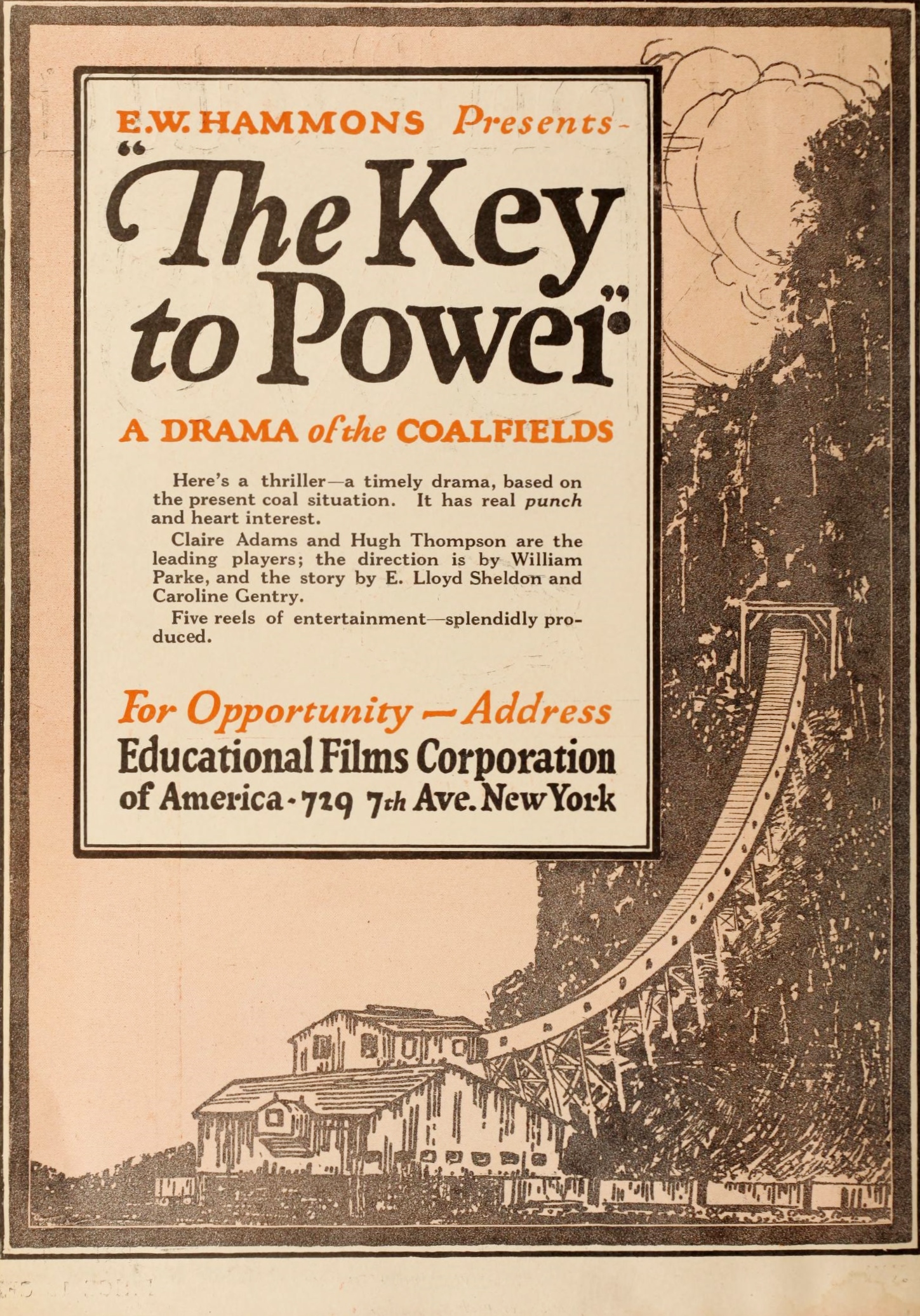
The cinematic landscape of 1918 was a churning vortex of patriotic fervor and burgeoning industrial realism. In the midst of this, The Key to Power emerges as a seminal, if often overlooked, artifact that dissects the dichotomy between the visible heroism of the battlefield and the invisible labor of the home front. Directed with a keen eye for the atmospheric pressures of the Appalachian coal country, this film transcends the typical propaganda of its time to offer a nuanced character study of Bruce Wendell, a man caught between the anvil of filial duty and the hammer of public perception.
Bruce Wendell, portrayed with a stoic vulnerability by Tom Burrough, represents the quintessential West Point graduate—a man groomed for the kinetic energy of war. However, the screenplay by Caroline Gentry and E. Lloyd Sheldon throws a wrench into this expected trajectory. The deathbed scene of James Wendell is not merely a passing of the torch but the imposition of a heavy, soot-stained yoke. The film posits a difficult question: Is it more courageous to charge into the fray or to stay behind and endure the scorn of one's peers to ensure the machinery of war remains fueled? This internal conflict is far more sophisticated than the melodramatic beats found in contemporary works like The Flight of the Duchess, where the stakes often feel more ornamental than existential.
The cinematography captures the West Virginia mines not as mere settings, but as living, breathing entities. The deep shadows of the shafts serve as a metaphor for Bruce’s internal state—obscured, misunderstood, and under immense pressure. Unlike the more stylized aesthetic of The Eternal Sappho, which leaned into the poetic and the classical, The Key to Power embraces a gritty, industrial Gothicism. The coal mine is the titular 'key,' a source of both literal energy and metaphorical social status, yet it becomes a prison for Bruce’s reputation.
The introduction of Meyer, the German agent, elevates the film from a domestic drama to a high-stakes espionage thriller. Henri Rolf Otte plays the villain with a calculated chill that avoids the cartoonish villainy often seen in the era. Meyer’s manipulation of Parrish, the railroad president, highlights the fragility of the American infrastructure during the war. This focus on the logistics of conflict—transportation, energy, and supply lines—aligns the film with the documentary-adjacent realism of America's Answer, yet it maintains the emotional core of a narrative feature.
The tension between Bruce and Parrish is a masterclass in silent-era blocking. Every interaction is charged with the subtext of Parrish’s unwitting complicity and Bruce’s desperate attempt to maintain his integrity without revealing the full extent of the threat. The film’s pacing mimics the slow build of pressure in a steam engine, leading inevitably to the explosive third act. This structural integrity reminds one of the rhythmic tension in The Whip, where the momentum is built through a series of escalating physical and moral hazards.
Claire Adams delivers a nuanced performance as Ann Blair, though her character serves as a cautionary tale regarding the superficiality of wartime patriotism. Her immediate dismissal of Bruce as a coward reflects the social toxicity of the period—a time when a man’s worth was measured solely by his presence in a uniform. Her arc from disdain to realization is handled with more grace than the somewhat abrupt character shifts in Love Is Love. When she is eventually abducted by Meyer, it isn't just a plot device to force a rescue; it is the physical manifestation of her own blindness to the true dangers lurking at home.
The dynamic between Bruce and Bobbie Blair (Ann’s brother) provides the film’s emotional anchor. Bobbie’s loyalty serves as a foil to Ann’s doubt, suggesting that true camaraderie transcends the superficial markers of bravery. The scene where Bobbie is buried in the mine explosion is filmed with a harrowing proximity that feels modern even by today's standards. The use of practical effects and the sheer scale of the debris create a sense of claustrophobia that rivals the most intense sequences in The Lure of Heart's Desire.
Visually, The Key to Power utilizes light and shadow to articulate its themes of secrecy and revelation. The contrast between the sun-drenched West Point parade grounds and the obsidian depths of the Wendell mine creates a visual dialectic that reinforces Bruce’s displacement. The director’s use of close-ups during the dying father’s monologue captures the sweat and desperation of a man trying to secure his legacy, a level of intimacy that was becoming the new standard in 1918 cinema, as seen in the psychological depth of The Wasp.
The explosion sequence is the film’s technical centerpiece. The editing here is frantic, cutting between the collapsing timber of the mine and the panicked faces of the workers. It is a cacophony of visual information that mirrors the chaos of the front lines Bruce was forbidden to join. This irony is not lost on the viewer; Bruce finds his war in the very place he was sent to avoid it. The rescue of Bobbie is not just a heroic act but a baptism in dust and fire, cleansing Bruce of the 'coward' label in the eyes of the audience, if not yet the characters.
When examining The Key to Power alongside its contemporaries, one notices a distinct shift toward industrial morality. While Destruction or Wrath focused on the grander biblical or social vices, this film is hyper-focused on the American labor machine as the heart of national survival. It shares a certain thematic DNA with Their Compact, particularly in its exploration of oaths and the heavy price of keeping them.
Furthermore, the portrayal of the 'enemy within'—the spy Meyer—reflects the burgeoning paranoia of the era, a theme also explored in War and the Woman. However, The Key to Power grounds this paranoia in the tangible reality of the coal industry, making the threat feel more immediate and less allegorical. It lacks the mythological grandeur of Bar Kochba, the Hero of a Nation, but it compensates with a gritty, localized urgency that resonates with the American experience of 1918.
In the final act, the capture of Meyer and his gang provides a cathartic release, yet the film’s most enduring image isn't the capture of the spies, but the reconciliation between Bruce and Ann. Their renewed vow is not merely a romantic resolution but a reconciliation of two different Americas: the one that demands visible glory and the one that understands the quiet necessity of production. This synthesis is what makes the film a vital piece of social history. It challenges the viewer to look beneath the surface—of the earth, of the man, and of the nation.
The film avoids the simplistic 'happily ever after' of A Very Good Young Man, opting instead for a conclusion that feels earned through trauma and labor. Bruce Wendell remains a man of the mines, his West Point uniform perhaps mothballed, but his honor restored through a different kind of service. The 'key to power' is ultimately revealed to be the ability to withstand the judgment of the world while doing what is fundamentally necessary for its survival.
In conclusion, The Key to Power is a sophisticated exploration of duty that remains relevant in any era where the definition of 'service' is contested. Its blend of industrial drama, espionage, and psychological depth places it at the forefront of late-1910s cinema. While it may not have the haunting expressionism of Die Würghand or the sprawling narrative of The Moonshine Trail, its focus on the moral weight of industrial responsibility provides a unique and compelling perspective on the American home front during World War I. For the modern viewer, it serves as a reminder that the most significant battles are often those fought in the shadows, far from the cheering crowds, in the very bedrock of our society.
IMDb —
1918
Community
Log in to comment.