DbcultAccessing Vault...
Cult Review
Senior Film Conservator

Her Reputation is a cinematic relic that captures the feverish paranoia of pre-Code Hollywood, where the line between truth and fabrication was as fragile as a moth’s wing. Set in the humid, oppressive expanse of Louisiana’s plantation country, the film opens with a slow-burn dread, its camera lingering on the moss-draped oaks and crumbling antebellum mansions that frame the tragic lives of its characters. At the heart of this tale is Jacqueline Lanier, a figure both pitiable and potent, portrayed with quiet ferocity by George Larkin. Her existence is a tightrope walk between innocence and accusation, a fate sealed by the machinations of a society that thrives on spectacle over substance.
The film’s opening acts are a masterclass in tension. Andres Miro, the ailing plantation owner, is a man whose grip on life—and power—is slipping. His decision to marry Jacqueline, not for love but for legal control over her inheritance, sets the stage for a collision of greed and desperation. Jack Calhoun, played with brooding intensity by Brinsley Shaw, is the embodiment of the thwarted outsider, his murder of Miro a visceral eruption of jealousy and wounded pride. Yet it is the aftermath of these deaths, orchestrated by a cunning journalist (Eugenie Besserer), that propels the narrative into a realm of Gothic horror. The reporter’s fabricated exposé, a piece of yellow journalism that reeks of Dawn of the East’s own sensationalism, transforms Jacqueline into a pariah, her name synonymous with scandal.
What elevates Her Reputation beyond a mere whodunit is its incisive commentary on the role of the press in shaping public perception. The journalist’s pen is not just a tool but a scalpel, dissecting Jacqueline’s life and displaying the fragments like trophies for an audience hungry for moral outrage. This theme resonates with the same urgency as The Forbidden Trail, though here the focus is less on frontier justice and more on the corruption of truth. The film’s most harrowing scenes are not the murders themselves but the quiet moments where Jacqueline’s world unravels—a glance of pity from a servant, a child’s whispered accusation, the shuttering of windows as neighbors turn their backs.
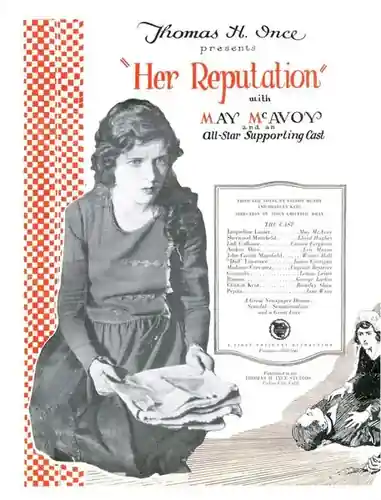
George Larkin’s performance is the emotional anchor of the film. He channels a vulnerability that is both haunting and magnetic, his portrayal of Jacqueline a study in restraint. There are no grand gestures here, no histrionics; instead, Larkin communicates volumes through a furrowed brow or a trembling hand. Opposite him, Brinsley Shaw’s Jack Calhoun is a tempest in a tailored suit, his volcanic rage simmering beneath a surface of affected civility. The chemistry between the two actors crackles with unspoken history, their interactions a dance of mutual destruction that culminates in the film’s most brutal scene: Miro’s death, a collision of ambition, love, and self-destruction.
The cinematography by Lloyd Hughes is a silent character in this drama, with its chiaroscuro lighting and deep focus shots that frame the characters like subjects in a chiaroscuro painting. The Louisiana setting is more than a backdrop—it is a living, breathing entity, its swamps and plantations a labyrinth of secrets. This visual style owes a debt to Chicken Hunting, though Her Reputation uses its environment to amplify the psychological stakes. The film’s score, sparse but effective, underscores the tension with dissonant strings that echo the unease of the characters.
The script, penned by Bradley King and Talbot Mundy, is a taut, dialogue-driven affair that thrives on subtext. There are no easy answers here, no moral binaries. Instead, the film presents a world where everyone is complicit, from the vengeful Jack to the opportunistic journalist. This moral ambiguity is what makes the film feel so modern, a quality it shares with Running Wild, though here the focus is on societal decay rather than personal rebellion. The film’s climax is a masterstroke of narrative tension, as Jacqueline’s attempts to clear her name unravel the threads of the town’s gossamer web of lies.
In the pantheon of pre-Code cinema, Her Reputation stands as a stark reminder of Hollywood’s ability to blend high drama with social critique. It is a film that lingers in the mind, its themes of reputation and redemption as timeless as the bayou itself. While it may not have the audacious experimentation of Edgar's Jonah Day, it makes up for it in emotional depth and narrative precision. For those drawn to the darker corners of human nature, this is a film that demands to be revisited, its shadows as illuminating as its light.
IMDb 6.3
1919
Community
Log in to comment.