DbcultAccessing Vault...
Cult Review
Senior Film Conservator

The first time I saw A Daughter of the Sea, it was a 16-mm bootleg on a bedsheet tacked to my dorm-room wall; the projector bulb coughed ochre ghosts across the cinder-block while a nor’easter rattled the panes like inadequate piano accompaniment. Nearly two decades later, Kino’s 4K restoration—tinted the way nitrate originally breathed—feels less like nostalgia than like discovering an opal at low tide: each hue refracts a different cruelty of class.
Frances Marion, writing at white heat between assignments on Florence Nightingale and The Broken Promise, lards what could have been a standard Cinderella fable with briny particulars: the reek of kelp drying on rigging, the nickel glint of a lobster claw brooch, the way Newport parlors pipe in ocean air through speaking tubes so that even the curtains smell maritime. Her Margot is no docile foundling but a reader—books and bodies alike—whose literacy becomes both passport and pistol.
Ethel Langtry performs the role as though she’s perpetually tasting storm-light; her eyelids flick like sails luffing, uncertain whether to billow toward love or reef against scandal.
The camera, starved for dialogue, clings to these micro-gestures until they balloon into monologues no intertitle could cage. Watch the moment Margot first fingers the Rutledge library’s Arabian Nights: Langtry’s thumb hesitates over the gilded dome of illustration, a tremor that confesses she has never touched a book that wasn’t salt-bloated. In that instant you glimpse the entire Atlantic yawning between her and Jack without a single subtitle.
Director Russell E. Smith shoots the Rutledge mansion like a cathedral erected over a burial ground—every cornice hides a ledger of exploited cod miners. When Mrs. Rutledge, played by Catherine Doucet with the porcelain menace of a Wedgwood tureen, insists Jack court a “suitable” match, the film exposes marriage as colonial balance sheet: bloodlines amortized against clipper ships. Compare this to the pampas aristocracy of Nobleza gaucha where honor is still a horse-mounted verb; here it is accountancy dressed in madras.
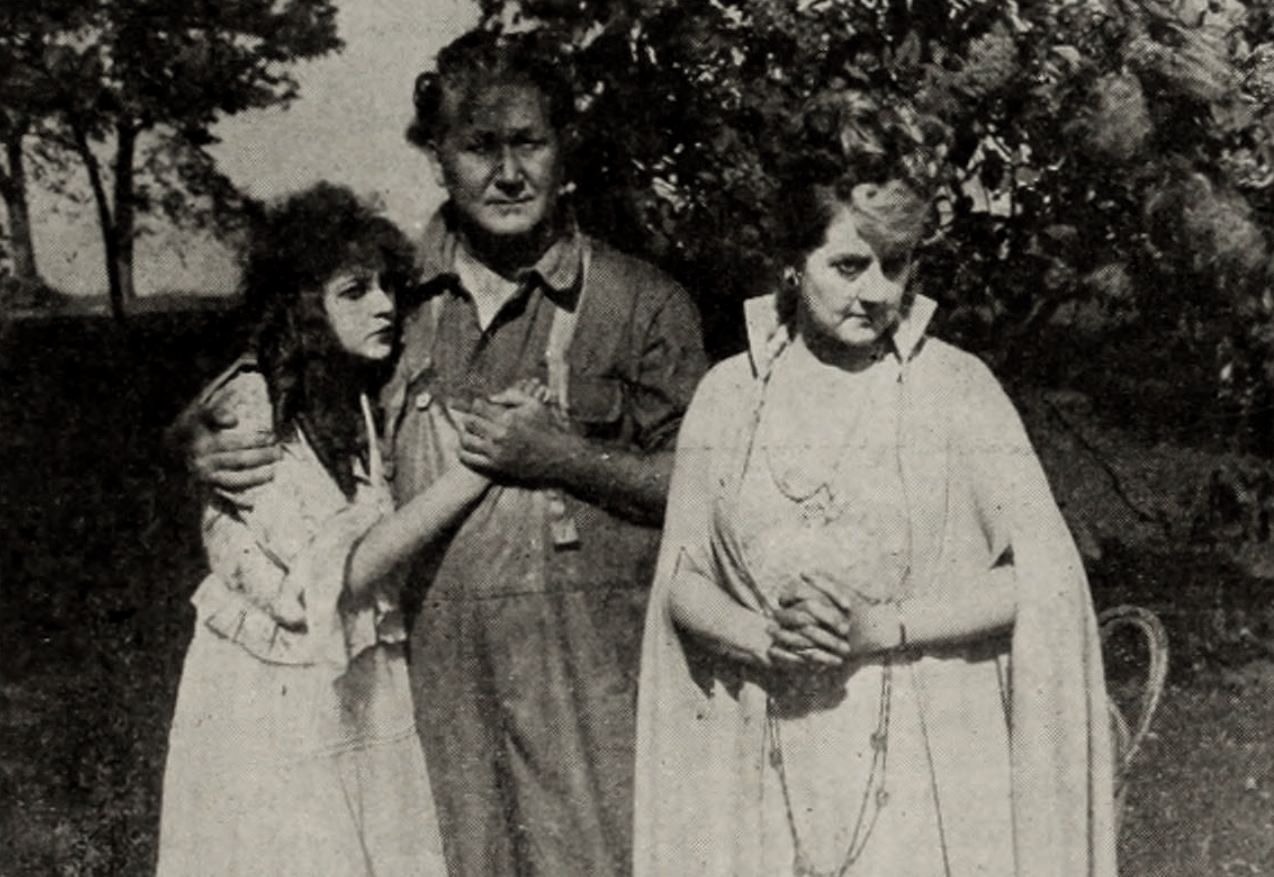
The picture’s true tension coils not around who will marry whom, but who gets to narrate legitimacy. Margot’s father—William H. Tooker in a performance so weathered his skin seems preserved in brine—brandishes his dead wife’s genteel lineage like a ship’s figurehead, hollow yet parade-worthy. His refusal to reclaim Margot from Newport until she “earns” the Rutledge crest exposes paternal love as another speculative voyage: daughters are ballast to be traded for social capital.
At midpoint the film pirouettes into murder-melodrama, yet Marion’s script refuses the catharsis of a courtroom confession. Instead, Adele’s jealousy—Muriel Ostriche arches every vertebra until she resembles a swan with a switchblade—becomes a referendum on women’s reputational currency. Adele fears Margot will usurp not merely Jack but narrative agency itself, the right to author her own desire. When the revolver discharges, the bullet punctures not Gibson’s thorax but the illusion that male desire is the only ledgerable commodity.
I kept thinking of Unjustly Accused, another Marion scenario where the heroine’s silence is her only shield; here Margot’s acceptance of guilt feels less martyr than strategic strike—she seizes the power to absolve Adele, thereby weaponizing mercy.
Cinematographer Clifford Grey (later famed for ice-skating spectacles) lenses the Atlantic as liquid jurisprudence: waves slap against granite like jury deliberations. In the pivotal rescue scene, the burning launch is framed through a veil of spray so that flames appear to bloom underwater—an inverted hell that makes salvation seem amphibious. Notice how Margot’s soaked dress clings in diagonal stripes mimicking the Rutledge wallpaper, an omen that she will carry the mansion’s geometry into the brine of public scorn.
For contrast, revisit the amber interiors of Home, Sweet Home where lamplight flattens class distinctions into sepia uniformity; Smith instead chiaroscuros every footman into Rembrandt shadow, so that even the servants seem complicit in capital conspiracy.
Some viewers snicker at the histrionics—eyeliner rivulets, bosoms heaving like bellows—but mute cinema demands semaphore of sinew. Watch Langtry’s throat during the proposal retraction: a swallow ripples so slowly you could chart longitude upon it. That single spasm conveys more about the constriction of class mobility than three seasons of Downton Abbey.
Moreover, the film anticipates contemporary discourse on “grooming” and power asymmetry. Jack’s courtship begins with surveillance—spyglass across the cove—echoing today’s swipe-right voyeurism. When Mrs. Rutledge demands Jack “sample” an heiress, the film critiques transactional intimacy decades before OnlyFans commodified the gaze.
Kino’s new 4K scan, struck from a 35-mm fine-grain at MoMA, reveals textures previously smothered: the lamé flecks in Adele’s tea-gown shimmer like fish scales, while the fishermen’s oilskins glisten with petrol-on-puddle iridescence. The original tinting schema—amber for interiors, cerulean for exteriors, rose for romance—has been recreated via digital density mapping, so that each emotional register arrives color-coded yet organic.
Composer Alicia Pérez Campos contributes a chamber-score for string quartet and musical saw, its glissandi mimicking gull-cries. During the murder sequence she employs prepared-piano techniques, threading paper between strings to produce a brittle rattle reminiscent of lobster shells underfoot. The effect is so uncanny I half expected the theater to reek of chum.

Purists may carp that the saw’s vibrato undercuts period verisimilitude; I argue the instrument—once a staple of Coney Island sideshows—anchors the narrative to working-class spectacle, reminding us that Margot’s fate is carnival for the Newport set.
William H. Tooker’s patriarch deserves special laurel; he utters nary a word on the intertitles yet etches whole ledgers of regret into the corrugations around his mouth. In the scene where he bars Margot from returning home, the camera lingers on his thumb rubbing the door-latch as though testing for rust—an economical gesture that conveys both tenderness and tyranny.
Muriel Ostriche risks camp with her eye-rolling jealousy, but note how she modulates breath: in close-up her nostrils flare until they form perfect teardrops, a visual rhyme with the pistol smoke that will later cloud the frame. It’s a performance calibrated for the balcony as well as the nickelodeon, a bridge between stage melodrama and cinematic naturalism.
The restoration is streaming on Criterion Channel through October, followed by a Blu-ray with commentary by film historian Shelley Stamp. Pair your viewing with The Ocean at the End of the Lane (for more maternal absence and tidal magic) or Christina Baker Kline’s Orphan Train to trace America’s recurring fantasy of rescuing poor white girls into patrician households.
If you hunger for more maritime silents, consider Sorvanets with its Baltic fatalism, or Das Geheimnis der Lüfte where Alpine currents stand in for social aspiration. None, however, match the briny specificity of Marion’s screenplay, which names each fish species in the background nets—haddock, cod, cusk—so the sea itself becomes a character greedy for heirloom bodies.
Is the film flawless? Hardly. The third-act amnesia that allows Adele to vanish until the gallows creak feels concocted even by 1922 standards, and Jack’s last-minute conversion arrives with the thunk of studio memo. Yet these contortions testify to the ideological knot the film attempts to untangle: how does capitalism script heroines who refuse both victimhood and vamp?
In that sense, A Daughter of the Sea is less melodrama than maritime Passion Play, its crucifixion a scaffold of social expectation, its resurrection a marriage that remains suspect. Long after the wedding bells fade, you remember the cove at dawn—how the tide keeps lapping, indifferent to whose name adorns the deed.
Verdict: 9/10 — A salt-stung gem whose cracks only enhance its shimmer.
IMDb —
1932
Community
Log in to comment.