DbcultAccessing Vault...
Cult Review
Senior Film Conservator
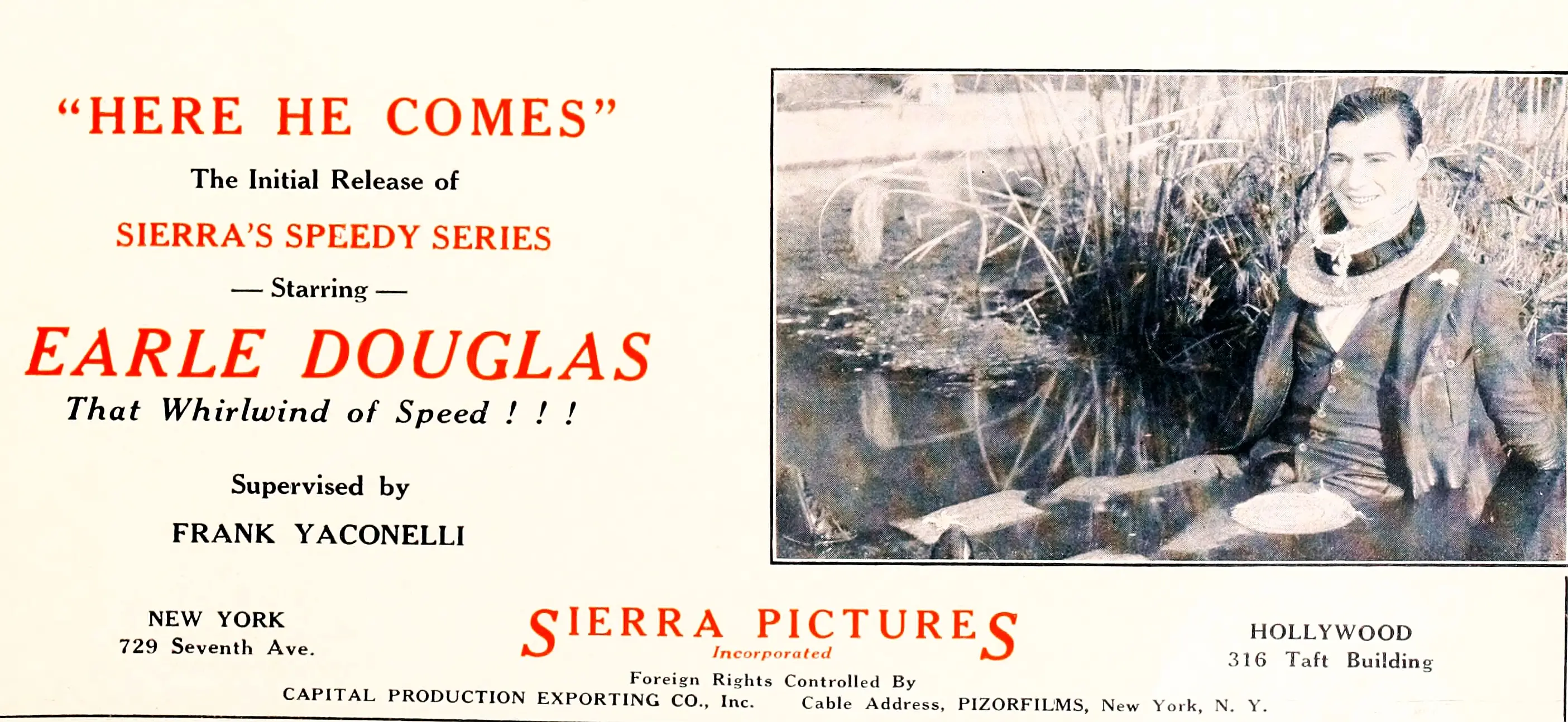
Is Here He Comes a forgotten masterpiece of the silent era? Short answer: No, but it is an essential piece of kinetic history that every action fan should witness once. This film is for the cinematic archaeologist and the gearhead who appreciates the terrifying lack of safety standards in 1920s filmmaking; it is decidedly not for those who require a complex emotional arc or high-definition clarity to stay engaged.
Here He Comes is a fascinating historical artifact that provides a raw, unfiltered look at 1920s car racing culture. While the narrative is thin, the practical stunts performed by Earl Douglas offer a visceral thrill that modern digital effects cannot replicate. If you want to see the literal foundations of the car-chase genre, this film is a mandatory viewing experience.
1) This film works because of its raw, unpolished energy and the genuine danger palpable in every frame of the racing sequences.
2) This film fails because it lacks a cohesive secondary plot, making the moments between races feel like filler.
3) You should watch it if you want to see how the 'Speedy' archetype was born before it was refined by later silent icons.
When we look back at 1927, we often think of the sophisticated dramas like Manhattan, but Here He Comes represents the blue-collar heart of the cinema. Frank Yaconelli didn't set out to create high art; he set out to capture the sensation of wind hitting a goggles-clad face at sixty miles per hour. The film operates on a frequency of pure motion. Every time Earl Douglas climbs into the cockpit of his stripped-down racer, the movie finds its pulse.
The cinematography is surprisingly aggressive for the period. While many films of the era, such as Still Waters, favored a more static, theatrical presentation, Here He Comes feels like the camera is trying to escape its tripod. There are low-angle shots of spinning spokes and dust clouds that feel remarkably modern. You can almost smell the castor oil and unrefined gasoline. It is loud. It is dirty. It is honest.
Earl Douglas carries the film with a frantic, wide-eyed energy. He isn't the polished hero we see in The Masquerader; he is a man constantly on the verge of a nervous breakdown or a mechanical failure. This vulnerability is what makes the comedy work. When he fumbles with a wrench or misses a gear, it isn't just a gag—it’s a threat to his survival in the upcoming race.
There is a specific scene where Douglas has to repair a leaking fuel line while the car is in motion. The way he dangles over the hood, the road blurring beneath him, is a testament to the era's 'do it for real' ethos. There are no green screens here. There are no stunt doubles. It is just a man, a machine, and a very brave cameraman. This level of commitment makes the thinness of the script forgivable. You don't need a motive when the stakes are written in the physics of a high-speed turn.
The Yaconelli brothers understood that pure racing could become monotonous, so they peppered the film with 'touches of comedy.' However, calling these 'touches' is an understatement. The comedy is the connective tissue. It provides the necessary breathers between the high-octane sequences. Unlike the more structured humor in The Poor Boob, the laughs in Here He Comes are situational and physical.
One of the standout moments involves a pre-race inspection that turns into a chaotic ballet of falling parts and misplaced tools. It’s a classic silent trope, but Douglas executes it with a rhythm that feels unique to the 'Speedy' character. He is faster than his own brain, leading to a delightful friction between his intentions and his actions. However, I will argue that the comedy occasionally undercuts the tension. It’s hard to fear for a man’s life when he just spent three minutes getting his thumb stuck in a radiator cap.
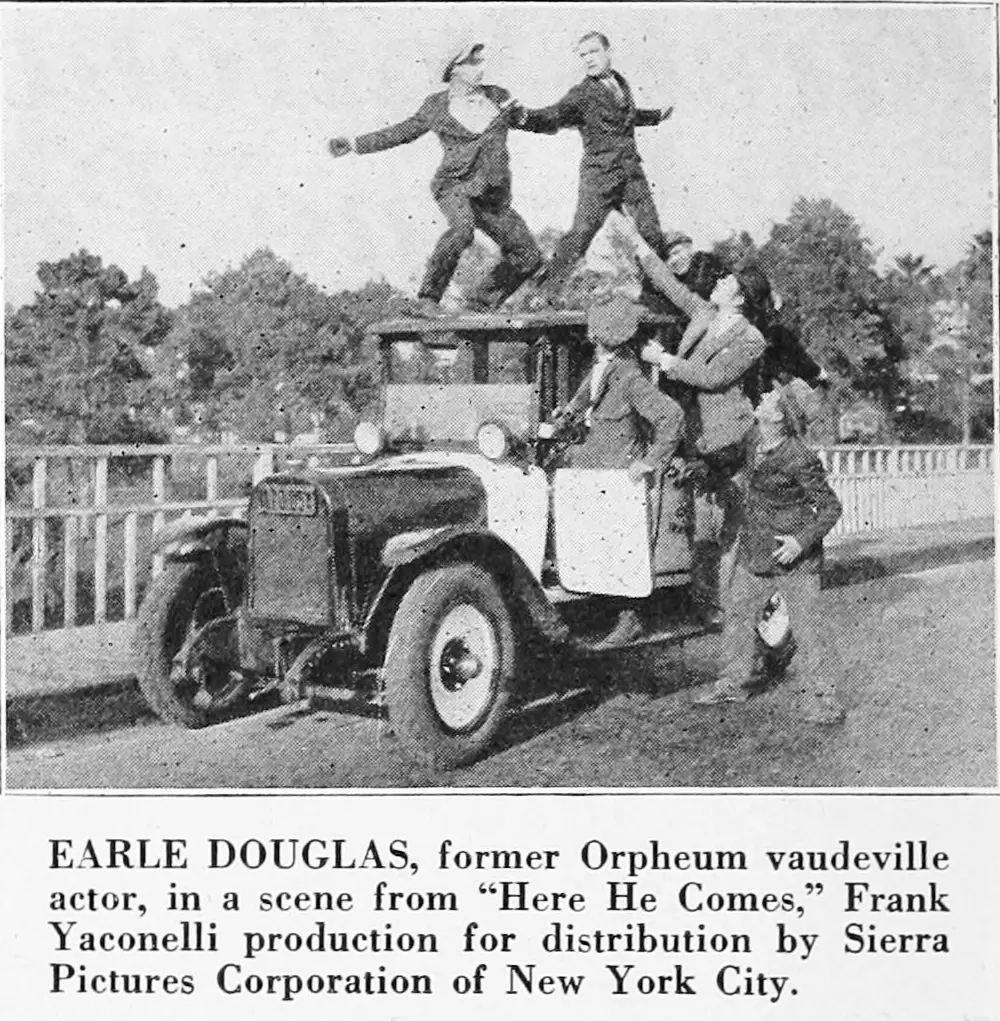
To truly appreciate Here He Comes, one must place it alongside its contemporaries. While Anita Jo was exploring different thematic territories, this film was catering to a specific American obsession with the automobile. It exists in the same lineage as The Fatal Sign, where the thrill of the chase is the primary draw. But where other films might use the car as a tool, Here He Comes treats the car as the co-star.
The film also serves as a fascinating contrast to European offerings like Dämon und Mensch. While the Europeans were experimenting with shadows and psychology, Yaconelli was experimenting with how many cars he could fit into a single frame without causing a real-life pileup. It is a populist cinema in its purest form. It didn't want to change your mind; it wanted to make your heart race.
The pacing of Here He Comes is its greatest asset and its biggest flaw. The racing scenes are edited with a frantic energy that feels decades ahead of 1927. The cuts are quick, the angles are varied, and the sense of momentum is unrelenting. However, the moments in between—the 'comedy touches' and the light romance—often feel like they are running on a different, much slower engine. It is a stop-and-go experience.
The tone is similarly bifurcated. At one moment, you are watching a life-and-death struggle on a dirt track, and the next, you are watching a slapstick routine involving a bucket of water. This tonal whiplash was common in the era, but here it feels particularly jarring because the racing is shot with such gritty realism. It works. But it’s flawed. The film never quite decides if it wants to be a serious sports drama or a lighthearted farce.
Pros:
- Authentic 1920s racing footage that serves as a time capsule.
- Earl Douglas delivers a high-energy performance that defines the 'Speedy' character.
- Innovative camera placement for the era.
- A short runtime that ensures the gimmick doesn't overstay its welcome.
Cons:
- The plot is virtually non-existent beyond the 'win the race' objective.
- Some comedic bits feel dated even by silent-era standards.
- The transition between action and comedy is often clunky.
If you are a student of film history, the answer is a resounding yes. Here He Comes is one of those rare films that prioritizes the visceral over the intellectual. It captures a moment in time when the world was moving faster than it knew how to handle. While it may not have the emotional depth of something like Marga, Lebensbild aus Künstlerkreisen, it has a kinetic joy that is infectious.
For the casual viewer, it might be a harder sell. The flicker of the film and the lack of a complex narrative can be taxing. However, I would argue that even a casual viewer can find something to admire in the sheer audacity of the stunts. There is a purity to this kind of filmmaking that has been lost in the age of CGI. It’s a reminder that once upon a time, 'action' meant putting a man in a metal box and pushing him toward the horizon.
Here He Comes is a rough, rattling, and remarkably fun piece of silent cinema. It doesn't ask much of its audience other than to sit back and enjoy the ride. Earl Douglas proves himself to be a capable, if somewhat frantic, lead, and Frank Yaconelli's production values are surprisingly high for what was essentially a B-movie series opener. It isn't a masterpiece, but it is a thrill. It is a film that understands exactly what it is: a love letter to the internal combustion engine and the fools brave enough to tame it. If you have any interest in where the *Fast & Furious* franchise truly began, look no further than this 1927 dust-up. It is fast. It is loud. It is simple. And in the end, that is more than enough.
IMDb 6.6
1933
Community
Log in to comment.