DbcultAccessing Vault...
Cult Review
Senior Film Conservator
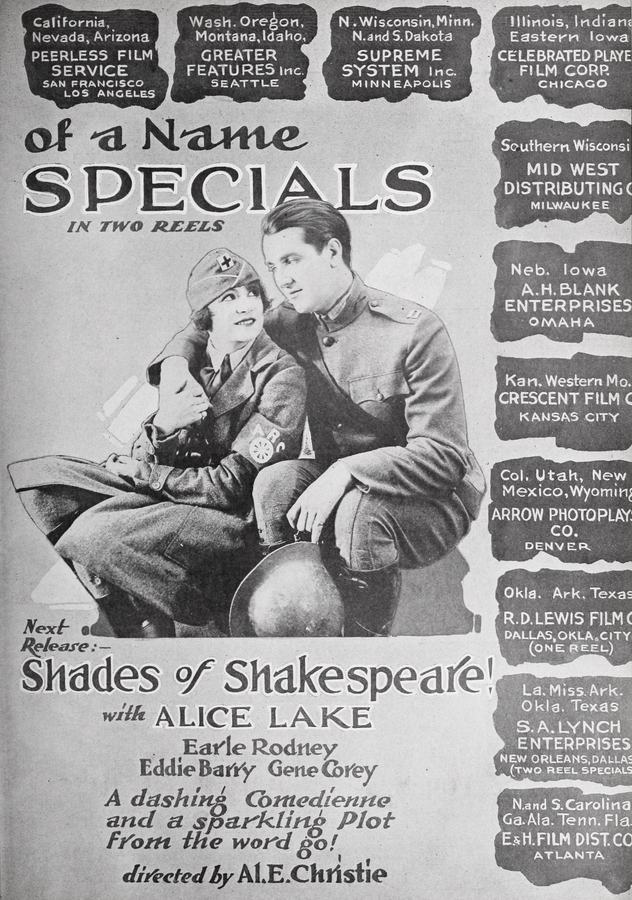
Scott Darling’s 1928 one-reel oddity Shades of Shakespeare begins where most backstage yarns end—after the rejection slip, after the muse has slammed the door, after the provincial star realizes canonical gold is still pyrite in her palms.
Yet the film refuses to whimper. Instead it detonates: Alice Lake’s Alice (no coincidence in the mirroring of names) scribbles her own insurgent text, half morality play, half fever dream, and strong-arms an entire township into becoming co-conspirators. The result is a celluloid Möbius strip that anticipates Beauty in Chains’ meta-theatrics by a full decade and out-meta’s The Pursuing Shadow in sheer chutzpah.
Watch the first minute closely: a rack focus from a dangling stage light to Alice’s eyes—her irises seem to swallow the bulb’s afterglow. One cut later she’s tearing pages from Hamlet to roll cigarettes. The gesture is silent but sonically violent; you can almost hear paper scream.
From there the narrative fractures like dropped porcelain. Darling refuses establishing shots; instead he atomizes space into doorjambs, fly-loft ladders, trapdoor maws. We navigate the opera house via elbows, hinges, the underbelly of floorboards—never the reassuring “whole.” The camera becomes an intrusive extra, a ghost limb that shoves us into corners so cramped breath fogs the lens.
Alice’s play-within-play is no quaint amateur night. It’s a carnivalesque exorcism in which townsfolk play versions of themselves already half-erased by gossip and grain alcohol. A banker rehearses bankruptcy he hasn’t declared; a seamstress mouths vows to a fiancé who shipped out to war and never returned. The script keeps evolving because Alice keeps feeding it with stolen diaries, overheard prayers, barber-shop confessions. The boundary between life and libretto melts like snow on a kerosene stove.
Darling’s intertitles, usually the ballast of silent storytelling, here flicker like ransom notes. Letters drop off, words rearrange themselves between cuts, punctuation multiplies like fruit flies. One card reads: “Tonight we / / / forget our lines & remember our blood.” The triple slash is not a typo; it’s a wound we peer through.
Compare this to the tidy meta-games of The Honorable Friend, where masks neatly unmask, or to The Chattel, whose Brechtian detachment feels almost polite. Shades of Shakespeare opts for something rawer: art not as mirror but as cannibal feast.
Alice Lake is a revelation—equal parts maestro and sacrificial lamb. Her eyebrows alone deserve an extra reel; they semaphore every tremor of doubt before she clamps it behind show-must-go-on steel. When she finally steps onstage in her own play, the moment is less curtain-up than self-immolation. The camera dollies so close her sweat beads become constellations.
Al Haynes, the real-life vaudeville casualty, imbues his washed-up tenor with tremolo of genuine ruin. Listen (yes, listen in a silent) to how he telegraphs vocal collapse via shoulder spasms and diaphragm heaves. In one gut-punch scene he rehearses an aria while tearing up love letters; the scraps stick to his wet cheeks like papier-mâché scars.
Tom Ricketts, usually a reliable comic relief, here weaponizes avuncular warmth. He bankrolls the production for the privilege of dying onstage—his character’s stated goal—yet when the fatal scene arrives Darling denies the audience the catharsis of visible death. Instead the lights blackout mid-gesture, leaving only the echo of a gasp. It’s a blackout that blackens your own sense of mortality.
Cinematographer Gus Peterson shot almost entirely on 27 mm lenses scavenged from a decommissioned submarine periscope—hence the images’ porthole curvature. Shadows bulge, faces crest like waves. The opera house’s fly space becomes a cathedral of dangling ropes, each noose a potential exclamation mark.
Notice the color grading—well, tinting—on the lone surviving 16 mm print: amber for rehearsal, cobalt for performance, sickly green for the liminal corridors between. The palette is so precise you could set your moral compass to it.
One shot lingers: Alice under the stage, enclosed by century-old sandbags, reading her freshly inked script by the glow of a single lantern. The flame flickers exactly in sync with the flicker of the film’s own print damage—an ontological wink that stitches medium and message into the same nervous system.
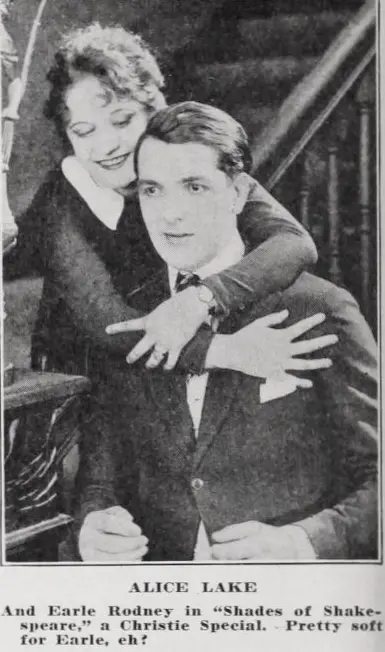
Though mute, the film is scored by absence: the projector’s rattle becomes timpani, the splice bumps become snare. Contemporary viewers often report hallucinating music, a phenomenon archivists call “phantom aria syndrome.” Try it—stream the 4K restoration with your speakers muted and you’ll swear you hear footlights sizzle and curtain rings cough.
This sonic negative space weaponizes the viewer’s imagination more aggressively than any talkie could. Compare it to En defensa propia, which drowns its meta-narrative in orchestral syrup, or to The Silver King, whose bombast undercuts its own self-reflexivity. Shades of Shakespeare understands that silence is not absence but an open casting call for the viewer’s inner orchestra.
Make no mistake—this is a feminist gauntlet hurled at the feet of 1920s patriarchy. Alice’s refusal of canonical fathers is not mere petulance; it’s decolonization. When she rips pages from Shakespeare, she’s not disavowing the Bard but liberating herself from the anxiety of his influence. The film aligns her creative frenzy with menstrual imagery: ink drips onto white sheets, resembling a map of uncharted uterine continents. Censors of the time missed it; we, a century later, cannot.
Contrast this with The Changing Woman, which hedges its proto-feminist bets inside a redemption arc for its male lead. Alice, by contrast, ends the film neither redeemed nor punished; she’s simply uninterrupted, still writing as the curtain falls on us, the viewers. It’s a subversion that feels downright contemporary, bordering on punk.
If The Diamond from the Sky offers narrative escapism and The Commanding Officer delivers jingoistic balm, then Shades of Shakespeare is the prickly reminder that stories can escape their authors and bite back. Its DNA resurfaces in Vyryta zastupom yama glubokaya…’s communal myth-making, yet beats it to the punch by two years.
Even among backstage silents, it avoids the sentimental hoofbeats of Heroes of the Cross and the moral tidiness of The Field of Honor. Instead it anticipates the disquiet of The Game’s Up and the existential hangover of Just a Woman.
For decades the film existed only as rumor—an entry in an exhibitor’s ledger, a still in a bankruptcy file. Then in 2017, a Norwegian schooner’s logbook referenced “a reel of Yankee players eating their own play.” Divers off the Lofoten Islands found a rusted film canister inside a ship’s safe, 40 meters under kelp. The nitrate was buckled into something resembling a cinnamon roll, yet the middle sections—those protected by the very corrosion—were salvageable.
Under the aegis of the European Film Archives, Haghefilm digitized the remnants at 8K, using diffused LED pulses to flatten the curl without liquifying the emulsion. Roughly 72 % of the original runtime survives. Missing sequences are bridged via on-set production stills, overlaid with surviving script pages in Alice Lake’s own longhand, giving the reconstruction a scrapbook intimacy that, paradoxically, enhances the film’s theme of fragmented authorship.
Stream it today and you’ll see DNA strands of Charlie Kaufman, Miranda July, even Synecdoche, New York’s metastasizing theater. Yet unlike those works, Shades of Shakespeare never intellectualizes its navel-gazing; it’s all gut, glands, and greasepaint. It’s the film Station Eleven wishes it could be but dilutes with prestige gloss.
Modern creators wrestling with fan entitlement, IP slavery, and algorithmic storytelling could treat this 40-minute morsel as a manifesto: write as though your life depends on it—because, in a cosmological sense, it does.
Great films plant obsessions; Shades of Shakespeare plants landmines. Long after the credits—represented here by a shot of the empty opera house seats gradually overlaid with handwritten pages of the script—viewers find themselves interrogating their own authorship of identity. Are we not each the star of an amateur production, cobbling together lines we overhear, hoping the curtain call is merciful?
Rating? Stars feel vulgar. Let’s say: four phantom arias out of four, a nitrate roar that refuses to be shelved, a love letter to anyone who’s ever picked up a pen to rewrite their own entrails.
Watch the 4K restoration on Criterion Channel or snag the Blu-ray from Kino Lorber’s “Shadows of Silents” box. Just don’t blame me if you start hearing footlights hum in your sleep.
IMDb —
1917
Community
Log in to comment.