DbcultAccessing Vault...
Cult Review
Senior Film Conservator
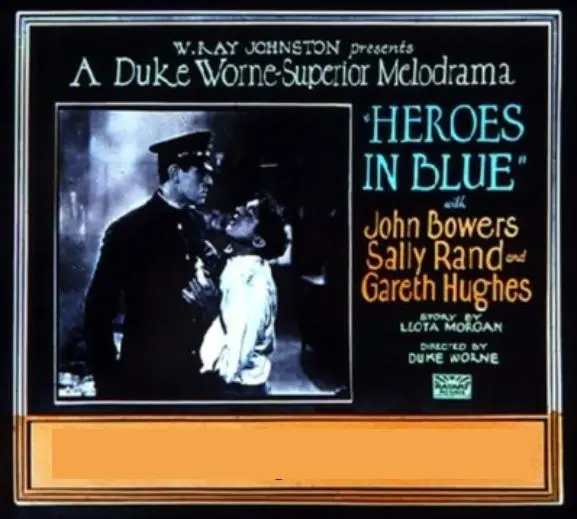
Is Heroes in Blue a hidden gem of the silent era? Short answer: yes, but only if you have the patience for the deliberate, heavy-handed morality of 1920s melodrama.
This film is for the dedicated film historian and the viewer who appreciates a tragic, Shakespearean arc in a gritty urban setting. It is definitely not for those who demand high-octane action or the polished nuance of modern police procedurals.
1) This film works because it leans into the psychological horror of pyromania long before the term was common in cinema, creating a visceral sense of dread around the antagonist's actions.
2) This film fails because the middle act loses momentum, spending too much time on domestic scenes that don't effectively raise the stakes before the final tragedy.
3) You should watch it if you want to see a rare 1920s film that refuses a happy ending, choosing instead to highlight the devastating consequences of personal vengeance.
If you are looking for a definitive answer on whether to track down a print of this 1924 relic, the answer depends on your tolerance for silent-era tropes. For the average viewer, it may feel dated. However, for the cinephile, the performance of John Bowers and the grim narrative trajectory offer a fascinating look at how early cinema handled the concept of the 'anti-hero' father figure.
The film thrives on the friction between its two central families. On one side, we have the 'Blue'—the symbol of order, represented by the law enforcement family. On the other, we have a family defined by fire. This isn't just a metaphor. The presence of a pyromaniac in the rival family serves as a literal threat to the community. It’s a bold choice for writers George W. Pyper and Leota Morgan. They don't just make the villain a thief; they make him a force of nature.
Consider the scene where the 'bad boy' first toys with a match near the detective’s home. The lighting here—even in a silent format—manages to convey a flickering instability. It’s a moment of quiet menace that stands out against the more theatrical acting found in contemporary films like The Heart of a Police Officer. While that film dealt with the nobility of the badge, 'Heroes in Blue' is more interested in the fragility of the peace that badge provides.
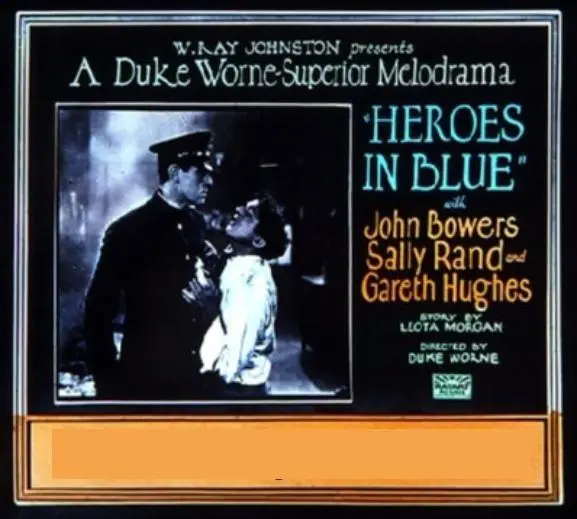
Gareth Hughes brings a surprising level of sensitivity to his role. Often cast as the 'eternal boy' of the silent screen, Hughes here has to navigate a world that is rapidly darkening. His interactions with John Bowers provide the film’s emotional anchor. Bowers, who would later become a tragic figure in Hollywood history himself, plays the father with a stoic intensity that makes his final descent into vigilantism feel earned rather than forced.
Sally Rand, long before she became a household name for her fan dancing, appears here in a more conventional dramatic capacity. Her presence adds a layer of vulnerability to the law-enforcement side of the story. It is interesting to compare her role here to the female leads in Cheated Love. In 'Heroes in Blue', the women are often the ones left to pick up the pieces of the men's prideful wars.
While 'Heroes in Blue' doesn't have the experimental flair of Autour de la roue, it uses its urban locations effectively. The claustrophobia of the tenements and the starkness of the police station create a world that feels lived-in. The pyromania sequences are the technical highlights. The way the smoke is captured on the orthochromatic film stock of the era gives the fires a ghostly, suffocating quality.
The pacing is where the film struggles. Like many films from 1924, such as Youth and Adventure, it suffers from a bloated second act. There are several sequences involving Lydia Yeamans Titus and George Bunny that, while providing character depth, feel like they belong in a different movie entirely. They lean toward a lighter domestic comedy that clashes awkwardly with the impending double-murder.
The most debatable aspect of the film is its conclusion. In an era where the 'Hays Code' (though not yet fully implemented) was starting to push for moralistic endings where the good guy always wins, 'Heroes in Blue' takes a darker turn. The father avenges his friend and son, but he doesn't get to walk away. He dies. This isn't a poetic death; it's a messy, tragic consequence of a cycle of violence.
This choice elevates the film from a standard 'cops and robbers' flick to something closer to a Greek tragedy. It suggests that even the 'Heroes' in the title are susceptible to the same destructive impulses as the criminals they hunt. It’s a cynical observation for a 1924 film. It works. But it’s flawed in its execution, often rushing through the emotional aftermath to reach the final title card.
When we look at other films of the period, like The Red Circle or A Daughter of Two Worlds, we see a recurring theme of family identity. However, 'Heroes in Blue' is more aggressive in its depiction of how that identity can be a burden. The 'Blue' isn't just a uniform; it's a weight that eventually crushes the father. This thematic depth is what keeps the film from being entirely forgotten.
"The fire that burns the city is nothing compared to the fire of a father's grief."
This sentiment echoes through the final third of the film. While films like The Sleep Walker played with more surreal concepts, 'Heroes in Blue' stays grounded in a dirty, smoke-filled reality. It is an ugly film in many ways—not in its craft, but in its soul.
Heroes in Blue is a fascinating anomaly. It is a film that wants to be a crowd-pleasing police drama but ends up being a meditation on the futility of revenge. The acting is superior to many of its contemporaries, particularly the work of Bowers and Hughes. While it stumbles in its pacing and occasionally falls back on tired tropes, its willingness to kill off its hero in the pursuit of a 'just' cause makes it a significant, if overlooked, piece of silent cinema history. It isn't a masterpiece, but it has teeth.
IMDb —
1929
Community
Log in to comment.