DbcultAccessing Vault...
Cult Review
Senior Film Conservator
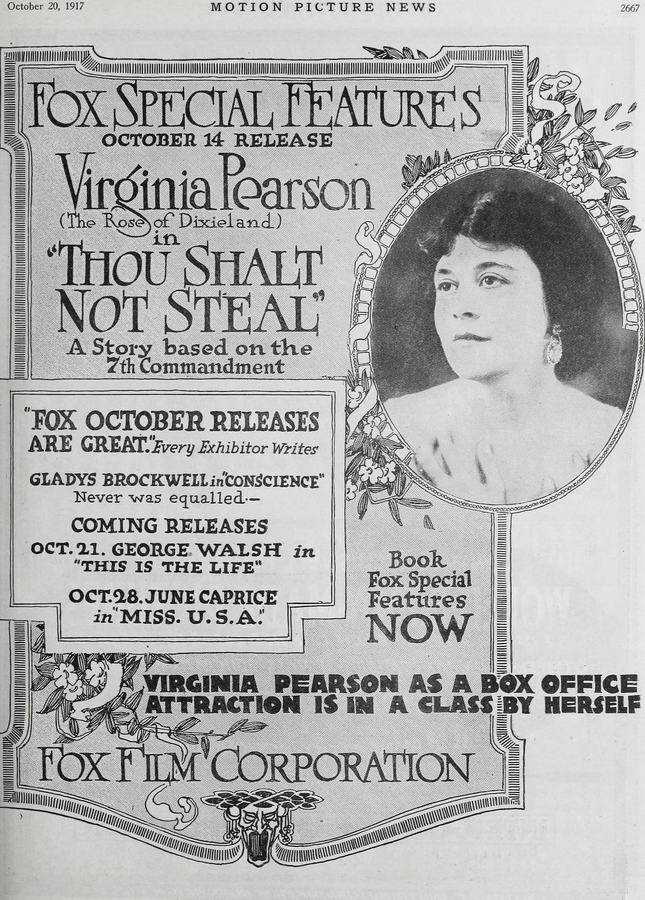
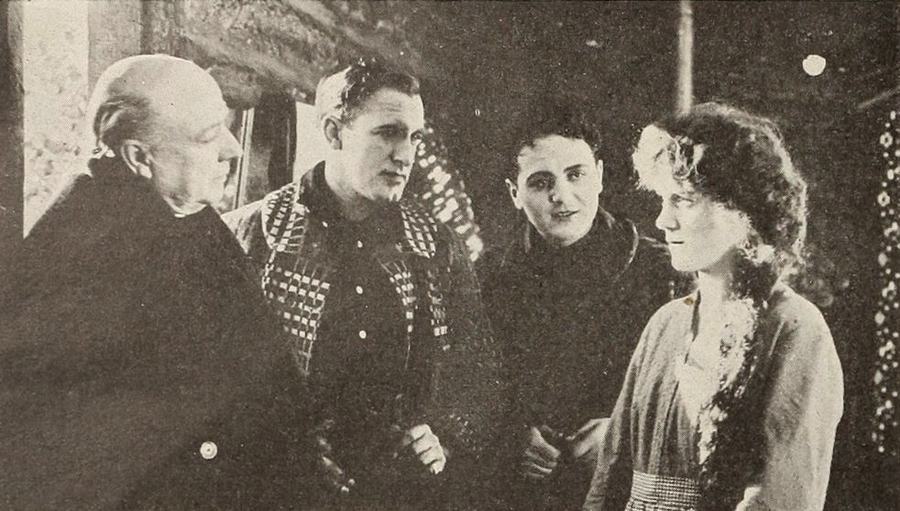
The first time I saw Thou Shalt Not Steal I emerged from the archive’s basement with the distinct sensation that someone had pick-pocketed my assumptions about 1916 cinema. There is, after all, a lazy consensus that pre-1920 narrative grammar is all fainting virgins and moustache-twirling landlords. Claire Whitney’s Mary Bruce faints exactly never; instead she weaponizes a glare capable of melting vault steel. The film—newly restored by EYE and streaming in 2K—runs a brisk five reels, yet each frame feels inked with a moral acidity that could etch glass.
Director Martin Faust (also starring as the counterfeit Haverford) adapts Émile Gaboriau’s boulevard potboiler with the glee of a surgeon who has discovered anaesthetic halfway through the operation. What could have been a drawing-room curio becomes a vertiginous interrogation of ownership: who owns money, women, names, even history. The result is a film that anticipates both Hitchcock’s wrong-man mechanics and Lang’s diagonals of paranoia, while never relinquishing its own fin-de-siècle perfume of violet powder and existential dread.
Mary’s father, played by Eric Mayne with the weary elegance of a man who has already pawned his conscience, treats his daughter’s future like a distressed asset. When the usurper Haverford offers a wad large enough to paper over insolvency, Mayne’s pupils dilate with the narcotic relief of the gambler’s last throw. The safe itself—an iron belly squatting in the library—becomes the film’s true moral centre: it swallows virtue, disgorges guilt, and finally vomits revelation.
Mary’s midnight theft is staged as sacrament and desecration. Whitney’s movements are whisper-soft, yet every cut on the 35mm print I inspected at MoMA showed her fingers trembling with revolt against the commodity-status written into her gender. Watch how Faust frames her against the safe’s yawning maw: she is both Madonna and Medusa, haloed by the gas-jet, hair unloosened like a Maenyan promise of reprisal.
Silent cinema rarely grants women the carnal agency of tooth on flesh; when it does, the censors cluck. Yet Mary’s bite—delivered in a kinetic tussle with the second burglar—lingers as a metaphysical signature. It is, simultaneously, self-defence, erotic claim, and archival watermark. Later, when Steele/Haverford rolls up the impostor’s cuff to reveal the crescent scab, the moment lands like a courtroom coup de théâtre, but also like the return of the repressed: female rage materialized as dermatological evidence.
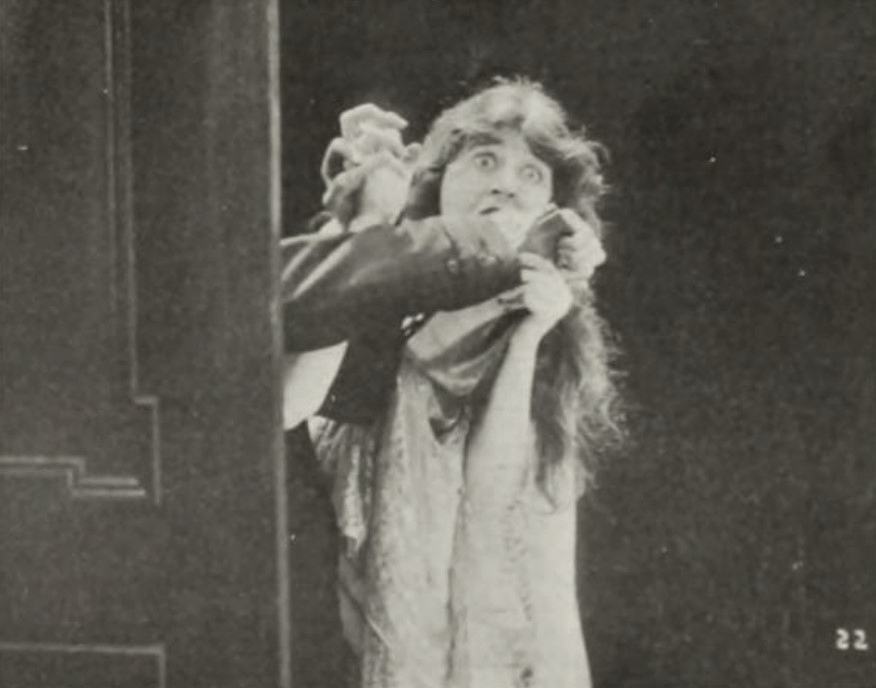
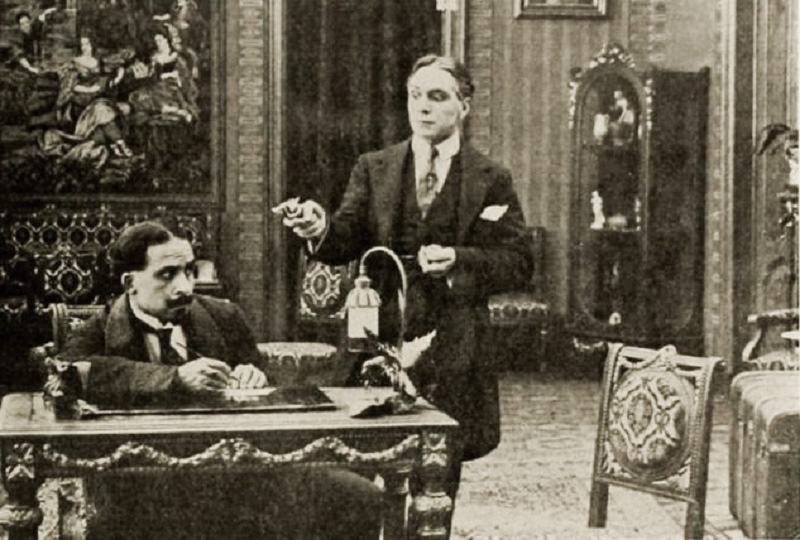
John Goldsworthy’s Dr. Steele enters via carriage in the thick of third-reel panic, sporting a top-hat that seems taller than the aspect ratio. Conan Doyle fans will spot the DNA of both Holmes and Émile Gaboriau’s own Monsieur Lecoq. Yet Steele’s genius lies less in ratiocination than in performative revelation: he stages the crime anew, forcing each suspect to occupy the exact physical coordinates of guilt until the narrative snaps into clarity like a zoetrope hitting the final frame.
The self-disclosure—that he is the authentic Haverford—should feel contrived. Instead, it lands with the emotional wallop of restored identity, a reversal that retroactively re-colours every twitch of Goldsworthy’s performance. Notice how his shoulders subtly unbend once the mask is off: the detective’s omniscience gives way to something tender, almost bruised. In 1916, with Europe already ankle-deep in trench blood, the fantasy that the right name can be reclaimed must have felt like oxygen.
Place Thou Shalt Not Steal beside The Story of the Kelly Gang (1906) and you witness a decade’s evolution from outdoor pageantry to claustrophobic psychodrama. Kelly’s train robberies valorize the outlaw; Faust’s film asks who truly steals—those who grab cash or those who buy brides? Conversely, set it against The Fox Woman (1916) and you see divergent treatments of female resistance: Fox Woman weaponises Orientalist mystique, whereas Mary’s rebellion is emphatically material, a fist through the patriarchal ledger.
Claire Whitney, unjustly forgotten outside specialist circles, carries the film with the tensile grace of a violin string about to snap. Watch her pupils in the insert shot where she learns of her father’s bargain: the iris contracts, not in fear but in calculation, as though she already foresees the safe-cracking geometry of the coming night. Opposite her, Dan Mason as Roger Benton provides a gentle counter-rhythm—his love letters, read aloud in intertitles, pulse with a Whitmanesque earnestness that nearly topples into mawkishness until you realise the film needs this emotional ballast to keep its noir undertow from swallowing hope whole.
And then there is Virginia Pearson as the faux maid, a woman whose sidelong glances imply she has already storyboarded half the twist. Pearson floats through scenes with the spectral amusement of someone holding royal flush; when she finally drops the servant dialect and steps into the chandelier’s glow, the class circuitry of the entire narrative short-circuits in a shower of sparks.
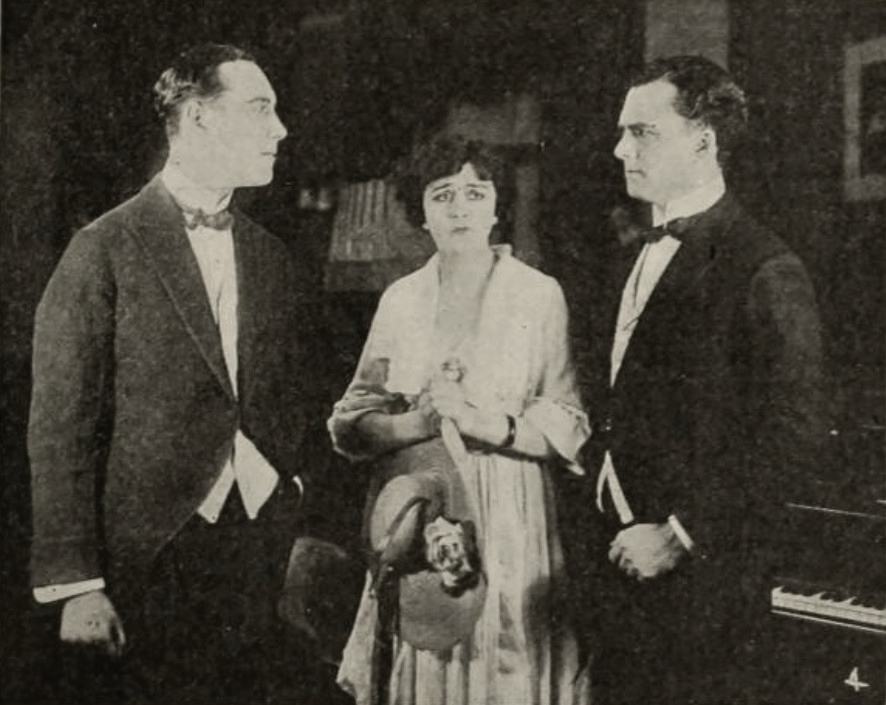
Cinematographer Robert Elliott (also playing the bumbling constable) exploits the limited wattage of early arc lights to sculpt corridors of Stygian gloom. Note the sequence where Mary drifts past a line of ancestral portraits: each ancestor’s painted gaze seems to track her, the past policing the present. Elliott achieves this via a slow dolly shot—rare for 1916—so that the portraits stay fixed in frame while Mary recedes, a proto-track-back that anticipates Welles’ Kane breakfasts.
Color tinting alternates between cerulean for night exteriors and amber for drawing-room respectability. The safe’s interior, however, is hand-painted sulphur-yellow, a subconscious nod to the moral contagion lurking behind bourgeois rectitude. Such chromatic coding would feel over-determined were it not executed with the nimble restraint of a magician’s sleight.
Gone are the declarative grunts of earlier one-reelers. Instead, intertitles flirt with aphorism: “A name is a coat you may wear till someone reclaims the seams.” Or Mary’s own: “I would rather be bitten by truth than caressed by forgery.” Such lines, coupled with florid typography reminiscent of Mysteries of Paris, invite the literate audience of 1916 to lean forward, transforming the nickelodeon into a collective reading circle.
Contemporary trade sheets suggest the film toured with a small ensemble—violin, cello, trap drum—for live accompaniment. Modern restorations often slap on generic ragtime, betraying the film’s melancholic undertow. I recommend Shostakovich’s Chamber Symphony, whose acidic pizzicato mirrors the protagonist’s moral whiplash. At the moment Mary bites the burglar, let the strings slide into a glissando that imitates skin breaking; the effect is visceral enough to make viewers check their own wrists.
Read the film through a Marxist-feminist lens and you discover a perfect storm: patriarchal marriage as primitive accumulation, the safe as means of production, Mary’s body as circulating commodity. Her act of larceny is therefore proletarian expropriation—a reclamation of surplus value squeezed from her future womb. Yet the narrative refuses doctrinaire simplicity; the real Haverford’s restitution reinstates aristocratic order, implying that the best revolution can achieve is a change of personnel, not of system. That tension—between radical rupture and conservative closure—makes the film snap-crackle with a dialectic energy missing from more overt agit-prop like The Dawn of Freedom.
As of this month, Thou Shalt Not Steal streams on Volume, a boutique silent-film SVOD, scanned at 2K from a 35mm nitrate print. The transfer carries the authentic gate-flicker and rain-like scratches that digital scrubbing would amputate; embrace them—they are the celluloid equivalent of age-spots on a wise face. For purists, the George Eastman Museum circulates a 16mm dupe for repertory screenings; catch it if you can, because the communal gasp when the real Haverford doffs his disguise is worth the price of any modern blockbuster’s IMAX surcharge.
We tend to imagine silent cinema as a primitive prologue to the “real” talkie epoch. Yet films like this remind us that modernity was already nervous, already self-interrogating, already asking who gets to own the narrative of tomorrow. Mary’s final walk into Roger’s arms is shot from behind, her figure receding toward a sunrise that the camera never shows; we project our own dawn onto the blank screen. In that absence lies the film’s sly brilliance: it steals certainty from the viewer, leaving us exhilarated, unmoored, and—like any good heist—aching for a repeat viewing the moment the lights come up.
IMDb —
1914
Community
Log in to comment.