DbcultAccessing Vault...
Cult Review
Senior Film Conservator
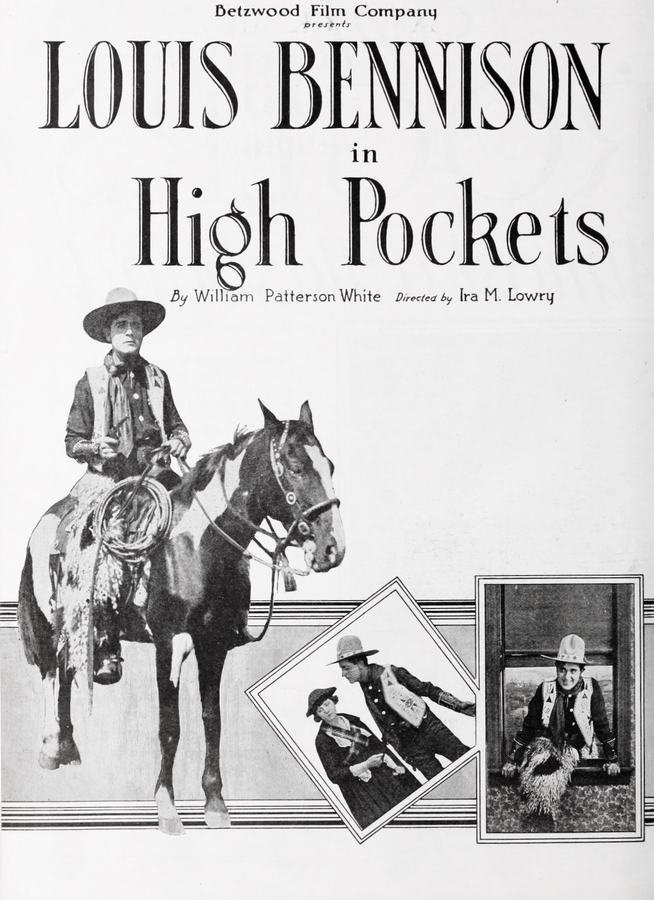
The 1919 feature High Pockets emerges from the dust of the silent era not merely as a relic of early American cinematography, but as a fascinating study in the transition of the Western genre from simple morality plays to complex psychological landscapes. Directed by the often-underappreciated Adrian Gil-Spear and penned by William Patterson White, the film situates itself in the aptly named town of Farewell—a moniker that suggests both a departure from civilization and a finality for those who dare to cross its borders. Unlike the more whimsical shorts seen in Chase Me Charlie, High Pockets demands a certain gravitas, leveraging the stark contrast of the black-and-white medium to paint a world where shadows harbor more than just outlaws.
The opening sequence, where Louis Bennison’s 'High Pockets' Henderson discovers the lifeless form of Bud Blythe, sets a somber, almost elegiac tone. It is a moment of profound stillness that contrasts sharply with the kinetic energy usually associated with the Western. Here, the lens captures the vastness of the American West as a character in its own right—indifferent, beautiful, and inherently lethal. The discovery isn't just a plot point; it’s a thematic anchor that explores the fragility of life on the edge of the known world.
Louis Bennison delivers a performance that feels surprisingly modern for 1919. While many of his contemporaries were still leaning into the exaggerated gesticulations of the stage, Bennison’s Henderson is a model of restrained masculinity. His moniker, 'High Pockets,' suggests a man of height and perhaps a certain awkwardness, yet he moves with a predatory grace. This is a man who understands the weight of the badge, a precursor to the weary lawmen we would later see in the mid-century Westerns of John Ford.
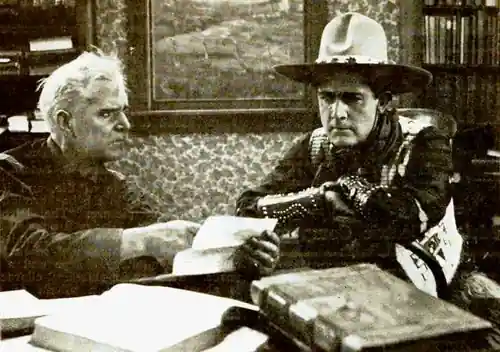
What makes Henderson compelling is his fallibility. The narrative hinges on a moment of human curiosity—his handling of a photograph of Joy Blythe. This tactile interaction, leaving behind the damning fingerprints, introduces a proto-forensic element to the film that feels remarkably ahead of its time. It transforms the Marshal from an untouchable icon of justice into a fugitive of circumstance. This shift in power dynamics keeps the audience engaged, as we watch a master of the law become entangled in its often clumsy machinery. This level of character depth is far more sophisticated than the theatrical tropes found in The Spirit of '76.
Katherine MacDonald, often billed as the 'American Beauty,' provides more than just a visual counterpoint to the rugged scenery. Her portrayal of Joy Blythe is one of resilience under duress. When she is introduced, Joy is a woman at a crossroads, her dreams of a ranching life shattered by her brother's murder. MacDonald manages to convey a deep sense of vulnerability without ever surrendering to the 'damsel in distress' trope entirely. Her confrontation with Max Manon in her own home is a testament to her character’s steel.
The chemistry between MacDonald and Bennison is built on a foundation of mutual respect rather than mere romantic convenience. When High Pockets intervenes at the hotel, saving her from the lecherous advances of Manon’s cohorts, it isn't just an act of chivalry; it’s a recognition of her autonomy. He doesn't just save her; he provides her with the means to sustain herself by finding her work at the general store. This pragmatic approach to romance is a refreshing departure from the melodramatic excesses of The Easiest Way.
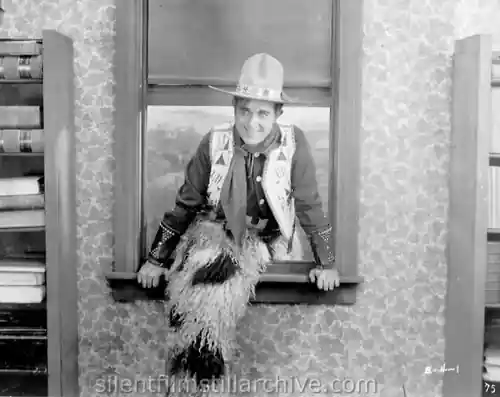
Technically, High Pockets utilizes its environment with a keen eye for composition. The scene where Henderson lassoes Max Manon from a window and drags him to the ground is a standout piece of action choreography. It’s a sequence that emphasizes verticality in a genre that is typically obsessed with the horizontal horizon. The use of the rope as an extension of the Marshal’s will serves as a powerful metaphor for the reach of the law in a lawless land. The lighting in these night scenes employs a proto-noir aesthetic, using high-contrast shadows to heighten the tension.
The cinematography captures the grit of the frontier in a way that rivals The Canyon Hold-Up. There is a tactile quality to the film—you can almost feel the dust on the characters' coats and the splintered wood of the general store. This commitment to verisimilitude is what elevates the film above its contemporaries. The director, Gil-Spear, understands that the environment must reflect the internal turmoil of the characters.
Perhaps the most brilliant aspect of High Pockets is its climax. The introduction of Bud Blythe’s twin brother (a classic melodramatic trope) is handled with a psychological sophistication that borders on the macabre. By convincing Manon’s sweetheart that the brother is actually Bud’s ghost, Henderson taps into the deep-seated superstitions of the era. This isn't just a clever trick; it’s an exploration of guilt and the haunting nature of one’s sins.
The scene where the woman screams, believing she is seeing a specter from the grave, is a masterclass in silent film tension. The lighting becomes more ethereal, the pacing slows, and the focus shifts from physical action to psychological breakdown. This use of the 'supernatural' to elicit a confession reminds one of the darker undertones in The Unknown, where the line between reality and madness is constantly blurred. It’s a sophisticated resolution that avoids the cliché of a simple shootout, opting instead for a victory of the mind.
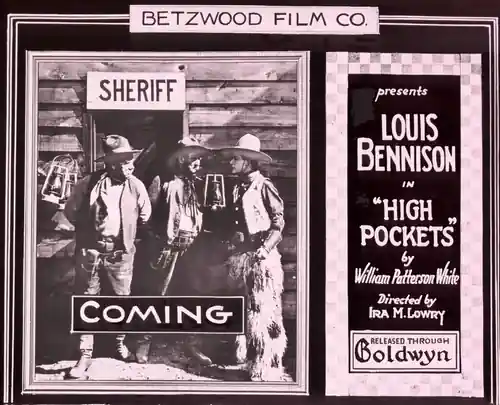
The subplot involving the sheriff’s attempt to arrest High Pockets for murder serves as a critique of bureaucratic incompetence. The sheriff is portrayed not as a villain, but as a man blinded by the very evidence that should lead him to the truth. The irony of Henderson being trapped by his own fingerprints—a tool of his trade—is not lost on the audience. It highlights the transition from the old West, where a man’s word was his bond, to a new era where scientific evidence and bureaucratic procedure begin to take hold.
Henderson’s decision to imprison the sheriff and his aides is a bold narrative choice. it suggests that sometimes, the law must be broken to preserve justice. It’s a theme that resonates throughout the history of the Western genre, questioning whether true morality can ever be fully codified by the state. This tension between personal ethics and legal duty is handled with far more nuance here than in many of the propaganda-heavy films of the period, such as For Freedom.
As the film reaches its inevitable conclusion—the rounding up of the gang and the marriage of High Pockets and Joy—there is a sense of hard-won peace. The marriage isn't just a happy ending; it’s a pact of survival. In the world of Farewell, companionship is the only true defense against the encroaching darkness. The final frames of the film leave the viewer with a sense of the cyclical nature of life on the frontier—the struggle continues, but for now, the shadows have been pushed back.
High Pockets stands as a testament to the creative ambitions of 1919. It combines the rugged appeal of the Western with the structural complexity of a mystery and the emotional depth of a character study. While it may not have the epic scale of With Our King and Queen Through India, its intimate focus on the human condition makes it a far more enduring piece of cinema. The performances, particularly those of Bennison and MacDonald, remain vibrant and engaging, bridging the gap between the silent era and the modern audience.
In the grand tapestry of early cinema, High Pockets is a thread of deep crimson and dusty gold. It captures a moment in time when the American Western was finding its voice, moving away from the simplistic and toward the profound. It is a film that rewards close viewing, offering a wealth of visual detail and thematic complexity. For those who appreciate the artistry of the silent screen, this is a journey to Farewell that is well worth taking. It stands tall, much like its eponymous hero, in the landscape of film history, a reminder of the power of visual storytelling to transcend the limitations of its era.
Review by the Editorial Staff at Farewell Film Critique.
IMDb —
1931
Community
Log in to comment.