DbcultAccessing Vault...
5.9/10
Senior Film Conservator
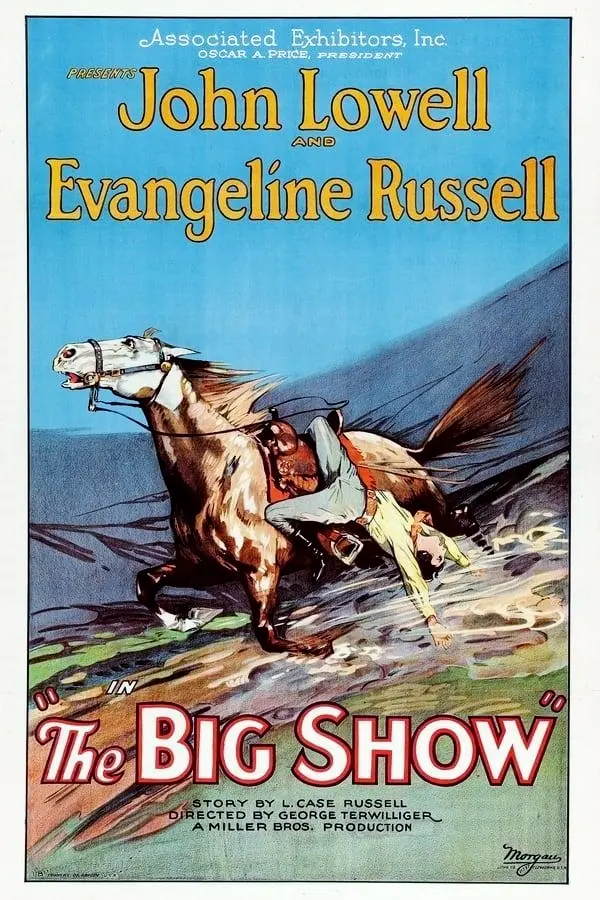
A definitive 5.9/10 rating for a film that redefined the boundaries of cult cinema. The Big Show remains a cornerstone of transgressive art.
Can a century-old silent film, centered on a Wild West circus and a dastardly villain, still capture the imagination of a contemporary audience? The short answer is yes, but with significant caveats that demand a particular kind of viewer. "The Big Show" is a fascinating relic, a window into early cinematic storytelling, brimming with melodrama and the earnest, physical performances characteristic of its era.
This film is absolutely for those who appreciate film history, silent cinema, or the foundational tropes of Westerns and romantic dramas. It is definitively NOT for viewers seeking fast-paced action, complex character studies, or modern dialogue-driven narratives. Expect a slower pace, exaggerated expressions, and a reliance on intertitles to convey crucial plot points.
Let’s cut straight to the core of it.
This film works because: It offers an authentic, if somewhat simplistic, glimpse into early Hollywood's approach to popular entertainment, showcasing the raw energy of silent acting and the visual storytelling techniques that predate synchronized sound. Its melodramatic plot, while predictable, is executed with a charming earnestness that can be genuinely engaging for those attuned to its style.
This film fails because: Its narrative simplicity, reliance on broad character archetypes, and the inherent limitations of silent film production in 1926 can make it feel dated and slow for modern viewers. The dramatic stakes, while clear, lack the nuanced emotional depth that contemporary audiences often expect, and certain plot conveniences strain credulity even within its own context.
You should watch it if: You are a student of film history, a silent film aficionado, or someone curious about the evolution of cinematic language. It’s also a surprisingly good choice for those who enjoy classic Western tropes with a romantic twist, presented in a uniquely antique package.
Lillian Case Russell’s "The Big Show" (1926) plunges us into a world where the theatricality of the circus ring bleeds into the very lives of its performers. At its heart is a classic battle of good versus evil, embodied by two brothers: a virtuous cowboy, the salt of the earth, and his conniving sibling. This foundational conflict, a staple of early cinema, is amplified by the vibrant backdrop of a Wild West show, a setting that inherently allows for grand gestures and heightened drama.
The plot, penned by Russell herself, is a straightforward melodrama. The villainous brother, a smooth talker played with suitable smarm by Joseph C. Miller, arrives to disrupt the cowboy's (John Lowell) humble existence. His target? The innocent daughter of the circus owner, portrayed by Alice Lecacheur. The speed with which he sets about his nefarious plans, simultaneously wooing the daughter and callously stringing along another performer, underscores the clear-cut morality often found in films of this period. There are no shades of grey; only heroes and villains.
The central conflict escalates with the revelation of stolen oil lands, a plot device that anchors the personal drama in tangible, high-stakes greed. John Lowell's cowboy, burdened by the knowledge of his brother's misdeeds, attempts to use this evidence as a moral lever. This struggle for ethical redemption, however, is swiftly complicated by the theft of the evidence itself, a narrative turn that feels both predictable for the genre and effective in ratcheting up the tension. It’s a simple story, yes, but one told with an undeniable, if quaint, charm.
In the absence of spoken dialogue, the burden of conveying emotion and intent falls squarely on the actors' physical prowess and expressive faces. Maida Blatherwick, while not the central romantic lead, delivers a performance that epitomizes the silent era's reliance on clear, often exaggerated, gestures. Her portrayal of the strung-along performer is a masterclass in conveying heartbreak and betrayal through posture and a well-timed tear, a stark contrast to the understated acting we value today.
John Lowell, as the heroic cowboy, embodies the stoicism and earnestness expected of his archetype. His heroics are less about nuanced internal struggle and more about decisive action and unwavering moral rectitude. He communicates courage through his upright stance and concern through furrowed brows, a visual language that was universally understood by audiences of the time. His performance, while lacking modern psychological depth, is perfectly suited to the film’s melodramatic needs.
Joseph C. Miller, the villain, is perhaps the most compelling performance. He revels in his character's villainy, using broad smiles and menacing glares to establish his deceit. His ability to switch from charming suitor to ruthless schemer with a mere shift of expression is a testament to the skill required of silent actors. Without his clear antagonism, the hero's journey would lose much of its impact. The supporting cast, including Dan Dix and Evangeline Russell, fill their roles adequately, serving primarily to advance the plot and provide emotional reactions.
The use of intertitles, while sometimes jarring to a modern viewer, is crucial here. They are not merely dialogue substitutes but narrative signposts, providing exposition and emotional context. Lillian Case Russell, as both writer and director, understands this, integrating
IMDb —
1932
Community
Log in to comment.