DbcultAccessing Vault...
5.8/10
Senior Film Conservator
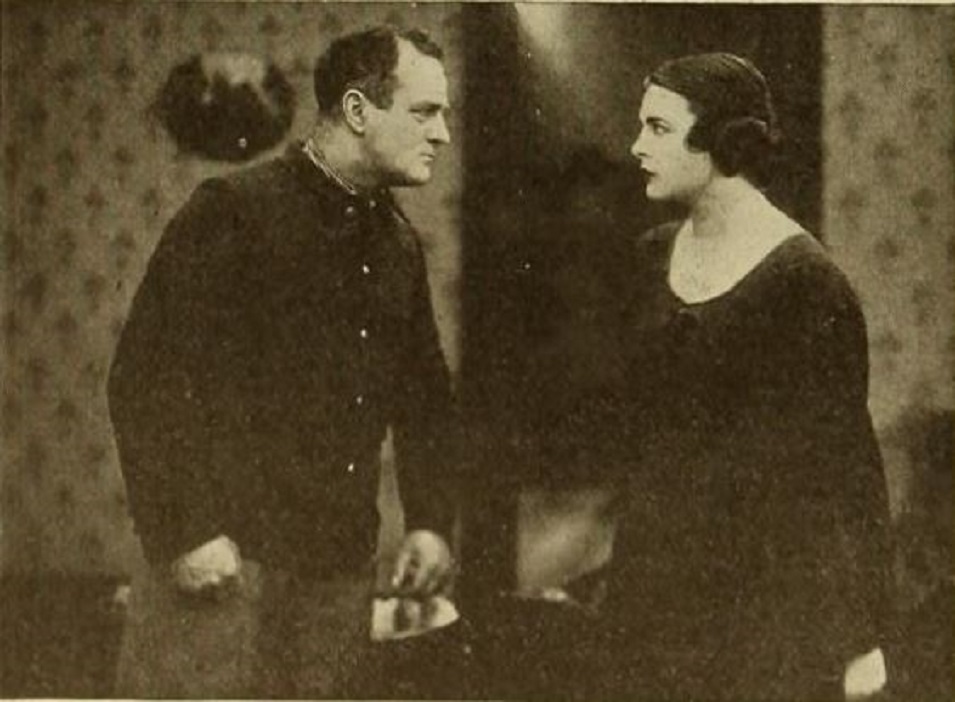
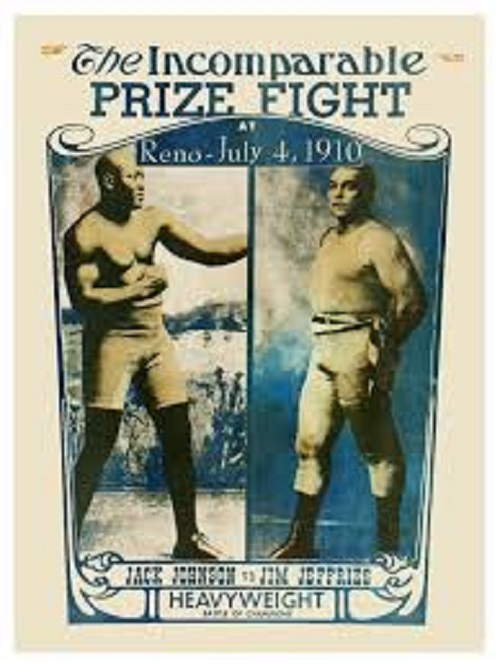
A definitive 5.8/10 rating for a film that redefined the boundaries of cult cinema. Jeffries-Johnson World's Championship Boxing Contest, Held at Reno, Nevada, July 4, 1910 remains a cornerstone of transgressive art.
There are moving pictures that record sport; then there is this 8-minute nitrate earthquake that obliterated an entire social order one jab at a time.
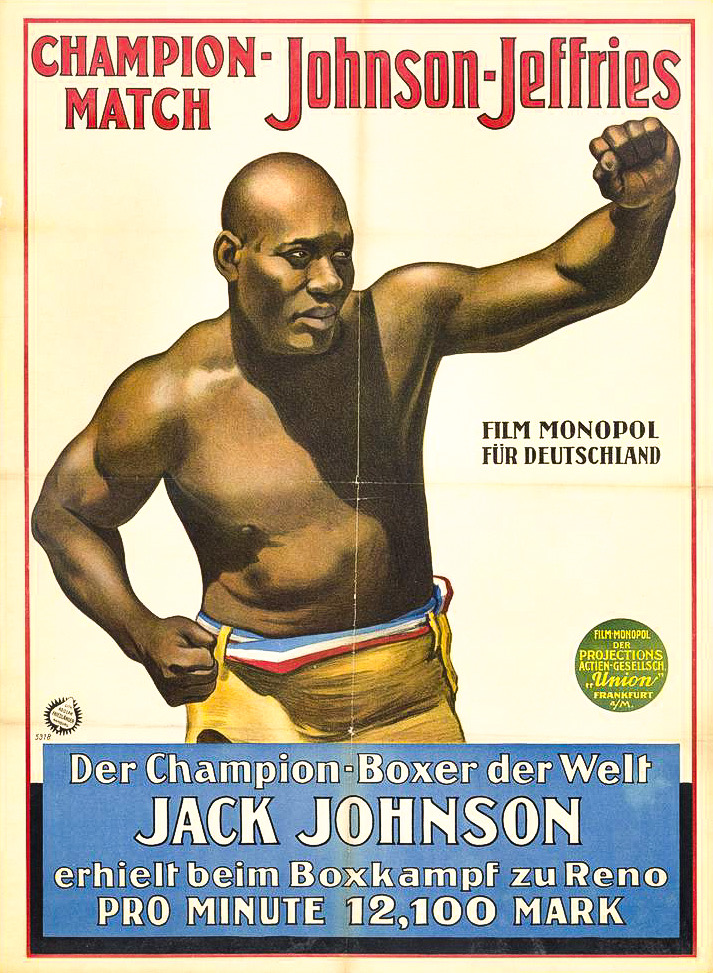
When the Edison crew cranked their tripod on that scalding Independence Day, they thought they were simply trapping two titans inside a roped square. Instead they bottled lightning: Jack Johnson—genial, cigar-bright smile, the most hated and adored athlete on the planet—versus James Jeffries, the farmer-strong colossus coaxed out of pork-belly retirement to “restore the title to the white race.” What unfurls is not a fight but a public bloodletting of national myth, a slow-motion beheading broadcast to 120-degree heat and, within days, every newspaper inkpot across the republic.
The footage—grainy, flickering like a wounded candle—carries no score, no talking-head hindsight. Its silence is surgical. Johnson glides clockwise, a panther in bespoke trunks, while Jeffries plods, bullish, still convinced that providence outweighs physics. Round 4: Johnson’s right splits the ex-champion’s lip; the camera jump-cuts, almost wincing. By Round 10 Jeffries’ left eye has swollen into a purple plum, the lens hovering close enough to count pores and bruises. Each subsequent exchange is a referendum on 40 acres and a mule, on Plessy vs Ferguson, on every lynching postcard smuggled in a hip pocket. When the 15th canto ends and Jeffries’ corner tosses in the towel, the image quivers—not from print decay but from the cameraman’s own tremor: history has just flipped on its axis.
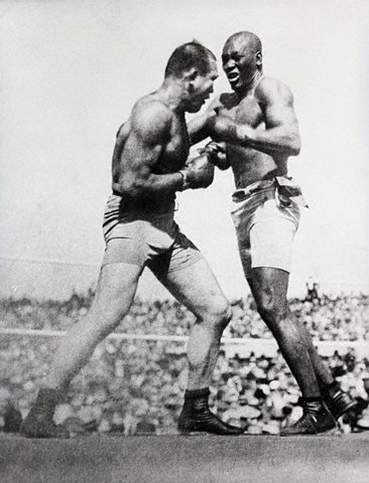
Compare it to the earlier Corbett-Fitzsimmons spectacle—all gentlemanly waltz and Queensberry restraint—or the carnival hucksterism of Jeffries-Sharkey. This Reno document is lean, mean, stripped of vaudeville filler. There are no dime-museum reenactments, no orchestral bleating. The cut is raw, almost avant-garde: ringside gamblers surge like wheat in a storm; referee Tex Rickard’s starched shirt darkens to a Rorschach of sweat; Johnson’s gold-tooth grin flashes between combinations, a subversive wink at the machinery of white terror he is dismantling with each piston-like straight right.
White America wanted a morality play; the camera gave them a snuff film starring their own fragility. Exhibitors were forced to segregate theatres: Black patrons cheered so thunderously that urban fire marshals sweated bullets; white crowds rioted from Harlem to Atlanta, burning projectors to cauterize the shame. Censors slashed prints, Congress debated outlawing fight films, and eight states passed statutes that kept the footage buried for decades. Yet the images—Johnson standing over the vanquished Great White Hope, arm raised in regal triumph—escaped on flea-circuit reels, metastasizing into protest art, into Langston Hughes’ verses, into Zora Neale Hurston’s collected folklore. Cinema had become civil-rights munitions.
Watch the interplay of high-noon desert light: the canvas burns white, the ropes cast zebra-shadows across Johnson’s torso, a living chiaroscuro that anticipates film noir by three decades. The camera occasionally tilts up, catching clouds like bruised peaches—brief pastoral reprieves before gravity yanks us back to the carnage. These compositional choices, accidental or not, prefigure the kinetic anxiety of At Break-Neck Speed and the ethnographic tension of Halfaouine. The fight film becomes a proto-cinéma-vérité artifact, its shaky handheld urgency influencing everything from wartime newsreels to the Beats’ amphetamine jump-cuts.
Because the footage is mute, every spectator supplies their own soundtrack: Bessie Smith’s gravelly contralto, the crackle of a lynch mob’s pine tar torches, the jazz clarinet drifting from a nearby brothel. This participatory void weaponizes the imagination; you swear you hear Johnson’s gloves thud like plantation drums, Jeffries’ gasp the last wheeze of antebellum certainty. In that absence, the film mutates with each era—Depression-era audiences read it as labor-vs-capital allegory; 1960s activists projected it alongside Black Power manifestos; today, in HD restoration, it plays like a Twitter thread of clenched fists.
Johnson’s swagger—hands low, hips rolling—terrified white patriarchy because it oozed erotic autonomy. He didn’t merely defeat Jeffries; he flirted with the camera, winking at phantom lovers, turning the ring into a burlesque of emasculation. Censors condemned the film for “inciting racial amalgamation,” a euphemism for the primal fear that Black victory equaled sexual conquest. Thus the footage was doubly illicit: pugilistic pornography and a Mandingo fever dream. Even now, streaming on mute, Johnson’s body language radiates irrepressible carnality, a one-man rebellion against Victorian moralism and the celibate Jesus epics of early Christendom cinema.
The 4K scan by the Library of Congress reveals micro-details previously smothered in emulsion decay: the twisted hemp texture of the ropes, the arterial spray of crimson on Johnson’s trunks, a single spectator’s tear beading like mercury. Tinting returns the sky to its blistering cobalt, while digital stabilization smooths the image without ironing out the jitter that keeps viewers ducking phantom punches. Pair this with the contemporary Burns-Johnson bout footage and you can trace an evolutionary arc: from static wide-shot tableau to visceral, almost modern montage.
Within a year Madison Square Garden promoters were staging “Fight of the Century” knock-offs; Hollywood cribbed the narrative for melodramas like The Climbers; Congress levied the first federal sin tax on boxing gate receipts. Johnson’s victory becomes the template for Ali’s shuffle, for Michael Jordan’s global branding, for every athlete who recognizes that performance and politics share the same bloodstream. Yet no successor—not even the high-definition bombast of pay-per-view—has replicated the seismic jolt of these eight flickering minutes where one man rewrote the American dream with his fists.
Essential, incendiary, and uncomfortably alive, this film is less archival curiosity than cultural detonation you can still feel in your marrow a century later. Approach expecting mere sports memorabilia and you’ll exit with singed retinas and a re-calibrated moral compass. Watch it twice—once for the spectacle, once for the ghosts—then try to tell yourself cinema can’t change the world.
Community
Log in to comment.