DbcultAccessing Vault...
Cult Review
Senior Film Conservator
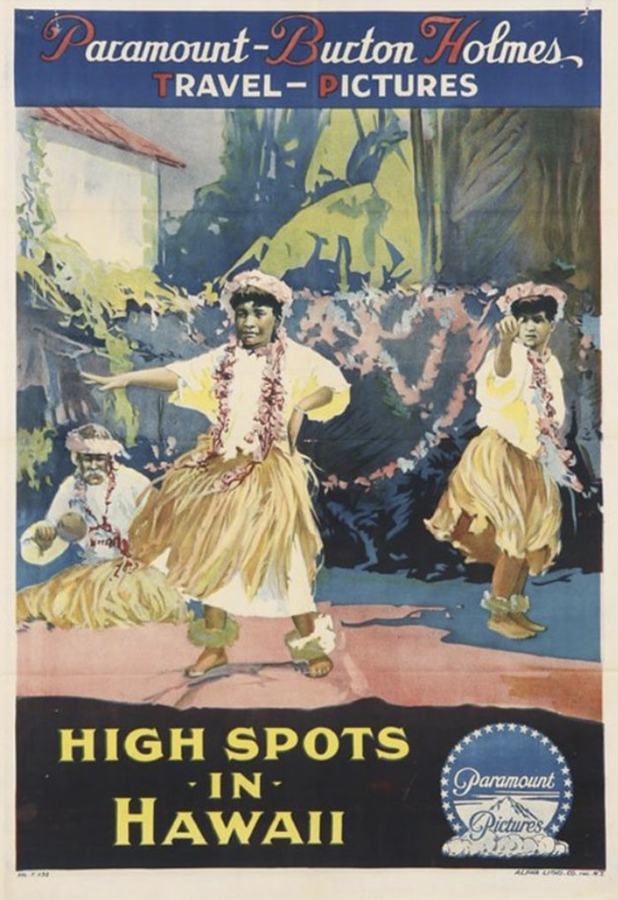
Stepping back into the annals of early cinema, one occasionally unearths a forgotten treasure, a celluloid artifact that transcends its historical context to offer a profound glimpse into a bygone era. Such is the case with High Spots of Hawaii, a film whose very title promises an expedition, a visual odyssey to a land then considered the epitome of exotic wonder. This isn't just a film; it's a time capsule, an ethnographic marvel disguised as a travelogue, offering a window into the Hawaiian Islands long before mass tourism reshaped its shores and its cultural fabric.
Released during an era when moving pictures were still finding their voice, High Spots of Hawaii stands as a testament to the power of the visual medium to transport, educate, and inspire awe. While specific details regarding its cast and writers remain elusive – as is common with many early documentary-style productions where the 'stars' were the landscapes and the people themselves, and the 'writers' were the uncredited filmmakers capturing reality – its impact is undeniable. The film’s narrative, if one can call it that, is one of pure observation, a gentle, guiding hand leading the viewer through a series of meticulously framed tableaux that celebrate both the formidable power of nature and the serene beauty of human existence in harmony with it.
From its opening frames, High Spots of Hawaii announces its ambition to be more than a mere collection of scenic shots. The cinematography, though bound by the technical limitations of its time, is nothing short of revolutionary. The filmmakers demonstrate an acute understanding of composition, utilizing long takes that allow the viewer to truly absorb the grandeur of the Hawaiian landscape. Consider the sequences dedicated to the volcanic activity of Kilauea. Instead of rapid cuts or sensationalist framing, the camera holds steady, capturing the mesmerizing, slow-motion ballet of molten rock and steam. This patient observation imbues the volcanic landscapes with a primal, almost spiritual, energy that few modern documentaries manage to replicate. It's a stark contrast to the more frenetic pacing often found in narrative films of the period, such as the dramatic intensity of The Pride of New York, which relied on quick cuts to build suspense and action.
The use of natural light is particularly striking. Sun-drenched beaches shimmer with an ethereal glow, while dense rainforests are depicted with a nuanced interplay of light and shadow, revealing a spectrum of greens and browns that must have been breathtaking even in monochrome. The filmmakers clearly understood the unique qualities of the Hawaiian sun, harnessing its intensity to highlight textures and forms, from the glistening spray of waterfalls to the intricate patterns on traditional fabrics. This attention to detail elevates the film from a simple record to a genuine work of art, placing it in a lineage of visual storytelling that prioritizes aesthetic beauty alongside informational content. One might draw a parallel to the careful atmospheric construction in a film like The Moth, which, despite being a fictional drama, similarly uses its setting to convey mood and character, albeit through a different lens.
Beyond the geological wonders, High Spots of Hawaii dedicates significant screen time to the indigenous people and their way of life. This is where the film truly distinguishes itself. Unlike some contemporary ethnographic films that veered into sensationalism or overt exoticism, this production appears to approach its subjects with a remarkable degree of respect and curiosity. We are shown glimpses of daily activities: women meticulously crafting leis, their nimble fingers weaving delicate blossoms into vibrant garlands; men engaged in traditional fishing, their outrigger canoes gliding effortlessly across the waves; and children playing on the shore, embodying a carefree existence. These scenes are not staged for dramatic effect but rather captured with an observational integrity that feels almost ahead of its time.
The segments featuring the hula are particularly poignant. The rhythmic movements and expressive gestures are presented not as a mere spectacle for foreign consumption but as an integral part of Hawaiian identity and storytelling. The filmmakers allow the dances to unfold, respecting their cadence and cultural significance. This approach offers a stark contrast to the often-romanticized or stereotypical portrayals of non-Western cultures prevalent in many narrative features of the era, such as the dramatic plots found in Nina, the Flower Girl or A Jewel in Pawn, which often used exotic locales as mere backdrops for contrived melodrama. Instead, High Spots of Hawaii strives for an authenticity that resonates even today, offering a valuable historical record of a culture on the cusp of significant change.
The film's structure is largely episodic, moving from one 'high spot' to another, yet it maintains a coherent flow, a subtle narrative thread woven through the progression of landscapes and cultural vignettes. There's an implied journey, a sense of discovery that guides the viewer without the need for an explicit plot or dramatic arc. This is where the film’s strength as an early documentary shines. It doesn't impose a story; it allows the story of Hawaii to unfold organically. The pacing is deliberate, meditative, inviting contemplation rather than demanding immediate emotional response. This measured tempo allows for a deeper appreciation of the visual information presented, much like the careful historical chronicling seen in Sixty Years a Queen, which similarly prioritizes comprehensive observation over dramatic license.
Intertitles, though sparse, are used effectively to provide context and geographical information, serving as gentle signposts rather than intrusive explanations. They complement the visuals, enhancing understanding without detracting from the immersive experience. This elegant balance between visual storytelling and textual guidance is a hallmark of sophisticated silent filmmaking, demonstrating a keen awareness of how to engage an audience without sound. In an era where many films, like The Leap of Despair, relied heavily on melodramatic intertitles to convey complex emotional states, High Spots of Hawaii's restraint speaks volumes.
Placing High Spots of Hawaii within the broader context of early cinema reveals its unique contributions. While other travelogues of the period, such as A Coo-ee from Home, captured distant lands with varying degrees of success, High Spots of Hawaii distinguishes itself through its consistent aesthetic quality and its seemingly empathetic engagement with its subjects. It avoids the overt colonial gaze that sometimes marred similar productions, instead fostering a sense of shared wonder. The film feels less like an inventory of exotic curiosities and more like an invitation to experience, albeit briefly, the essence of a place.
When contrasted with narrative features of the time, the film’s observational style becomes even more pronounced. Films like Balettprimadonnan or Should a Woman Divorce? focused on intricate human dramas and societal questions, often within studio-bound settings or controlled urban environments. High Spots of Hawaii, conversely, finds its drama in the raw power of nature and the unscripted rhythm of daily life. Even disaster documentaries like Temblor de 1911 en México, while capturing real-world events, often did so with a sense of urgency and chaos. High Spots of Hawaii maintains a sense of serene discovery, even when depicting the awesome force of volcanic eruptions.
The film also stands apart from the more overtly propagandistic or nationalistic travelogues that would emerge in later decades. Its purpose seems purely to inform and enchant, to share the beauty of Hawaii with a global audience. There's no overt political agenda, no explicit promotion of tourism in the modern sense. It's a pure expression of curiosity and admiration, a visual poem that precedes the commercialization of paradise. This purity of intent is a rare quality, making the film a valuable artifact for understanding early 20th-century perspectives on exploration and cultural exchange, far removed from the narrative complexities of films like The Cloister and the Hearth or the character-driven journeys of The Yankee Way.
What then is the lasting legacy of High Spots of Hawaii? It is, first and foremost, an invaluable historical document. It preserves images of Hawaii that have long since vanished or been irrevocably altered. The film captures a particular moment in time, offering a visual record of landscapes, traditions, and lifestyles before the full impact of globalization and modern development. For historians, anthropologists, and film scholars, it provides rich material for understanding both early 20th-century Hawaii and the evolution of documentary filmmaking. Its commitment to showcasing the everyday, the seemingly mundane, gives it a verisimilitude that many more ambitious, fictional projects of the time lacked. While films like Kennedy Square focused on the dramatic narratives of a bygone era, High Spots of Hawaii offers a direct, unvarnished look at a living history.
Beyond its academic value, the film retains a captivating beauty that transcends its age. The sheer artistry of its visual composition, the patient observation, and the genuine reverence for its subject matter continue to enchant. It reminds us of a time when cinema was still a nascent art form, capable of astonishing audiences simply by presenting the world to them in a new way. It evokes a sense of nostalgia not just for Hawaii, but for the innocence and wonder of early film itself. The natural splendor captured on celluloid, from the dynamic coastlines to the serene inland waterways, continues to resonate, demonstrating the timeless appeal of the islands' unique charisma.
In an age of rapid-fire edits and CGI spectacle, there is something profoundly refreshing about the deliberate pace and authentic imagery of High Spots of Hawaii. It invites us to slow down, to observe, and to appreciate the intricate details of a world both distant and familiar. It serves as a powerful reminder that some of the most compelling stories are not invented, but discovered, patiently and respectfully, through the lens of a camera. The film isn't just a relic; it's a vibrant, living testament to the enduring allure of Hawaii and the pioneering spirit of early cinema. Its quiet power lies in its ability to transport us, not just geographically, but temporally, connecting us to a past that continues to echo in the present. Even without a traditional narrative or named cast, its 'characters'—the land, the sea, the people—leave an indelible impression, a testament to the power of pure observation and artistic integrity. Its profound simplicity is its ultimate sophistication, making it a film that continues to speak volumes without uttering a single word, much like the silent, introspective quality found in a film like En la sombra or the visual poetry of Mouchy, which rely heavily on atmosphere and imagery to convey meaning.
IMDb —
1916
Community
Log in to comment.